Relaxation is one of the keys to falling asleep quickly. Learn to relax your body and mind. And if you want to promote healthy sleep even more, focus on the mattress you sleep on. Isn’t it time to replace it? It can be a barrier to sleep.
Why is sleep so important?
You fall asleep at night and get up in the morning. How simple. But there’s a lot going on in your body while you sleep. It alternates between REM and non-REM sleep phases, which are important for the physiological and psychological changes that happen in your body during sleep. Quality rest is the key not only to good health, but also to falling asleep quickly and maintaining good physical and mental health in the long term.
During sleep, the endocrine system secretes important hormones. These include, for example, growth hormone, which is important for the renewal of old tissue and the formation of new tissue. It also circulates the muscles and lowers blood pressure. The cardiovascular and immune systems are strengthened.
Did you know that when you sleep, your brain doesn’t sleep? During sleep, the brain:
plays the contents of the memory,
reinforces memories,
regenerates rational functions,
it undergoes neuroplastic changes important for a properly functioning memory.
6 tips on how to fall asleep fastest
Techniques for falling asleep better usually focus on reducing stress before bedtime and inducing calm. If you are wondering how to fall asleep as quickly as possible, you should learn these techniques. Plus, they can help you not only with falling asleep, but also with relieving pain, anxiety and other conditions that interfere with restful sleep.
So as part of your bedtime routine, make time for relaxation techniques that will improve your sleep habits and allow you to fall asleep faster. Be sure to start your exercise early enough so you don’t cut into your sleep.
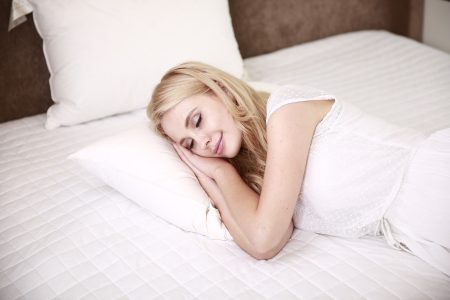
Image: Invoke calm before sleep.
1. Military method of falling asleep
Soldiers often don’t have the best sleeping conditions, which can negatively affect their sleep patterns. They often have to sleep in cold, damp and noisy conditions. What exercise helps them fall asleep?
Close your eyes and breathe slowly.
Relax the facial muscles. Start from the forehead and work downwards.
After relaxing the face, proceed with relaxing the rest of the body. Start from the neck through the shoulders to the right and left arms.
During the release, breathe slowly and evenly.
Once your arms are relaxed, inhale, exhale and relax your chest.
Begin to relax the right and left leg gradually from the thigh through the calf and ankle to the foot.
Imagine a peaceful environment, such as a lake, nature or a cosy space.
2. Relaxing music
Excessive noise can negatively affect sleep quality. Therefore, try to keep noise in the bedroom to a minimum. Listening to relaxing music, however, can relax you and help you to drown out outside noise that you cannot otherwise control. Choose songs that are about 15 to 20 minutes long, which is the time equivalent to sleep latency (the time that elapses between going to bed and falling asleep).
Listen to the songs before bed every night. This will create a sleep routine. If meditation music is too distracting for you, try listening to white noise .
3. Progressive muscle relaxation
This relaxation is a combination of breathing and muscle techniques. It helps to relieve physical stress and promotes relaxation. How to do it?
Lie down in bed, close your eyes and start breathing slowly.
Tense all facial muscles for 10 seconds. Then relax them and take several deep breaths.
Tense the muscles in your shoulders for 10 seconds. Then relax them, inhale and exhale.
Continue in this way over all the muscle groups on the body. From the shoulders, continue to the feet. Avoid the areas that hurt.
4. Controlled imagery
Recall a peaceful memory or an environment that makes you feel good. Take a slow, deep breath and focus all your senses on the image. Engage not only in visualization, but also try to imagine sounds and smells to best recall the environment.
5. Mindfulness
A popular relaxation technique in which you focus on the here and now. You focus on the present moment and don’t think about anything. You will come to relax and fall asleep better. For example, concentrate on feeling the warmth, the blanket lying on top of you, the softness of the blanket, feeling the darkness, etc.
6. The 4-7-8 breathing method or how to fall asleep in one minute
The 4-7-8 method, developed by Dr. Andrew Weil, is a simple technique based on breathing regulation that helps to quickly calm the nervous system and induce a sense of relaxation. Based on techniques from Eastern medicine, this method is effective not only for falling asleep, but also in situations where stress needs to be managed.
How do you do that? Close your eyes and breathe in through your nose for 4 seconds. Then hold your breath for 7 seconds and then exhale through your mouth for 8 seconds. Repeat this cycle four times. The technique helps to slow the heart rate, lower blood pressure and release tension, which greatly speeds up the process of falling asleep.
More proven tips to help with falling asleep
In addition to these exercises, you can try other methods to fall asleep:
Herbal tea – ideal is passionflower, saffron, chamomile, lemon balm.
Hot bath – relaxes the whole body, you can add soothing aroma oils such as lavender to the bath.
Relaxing scents – scent your room with lavender, sage, chamomile or rosemary.
What happens to your body when you sleep?
When you sleep, your body goes through several important processes. Rapid eye movements are typical in the REM phase, which is crucial for dreaming. There is a drop in blood pressure, which helps reduce the strain on the heart. Your body relaxes, but cramps may occur as you fall asleep. During sleep, cells are also renewed, which rejuvenates the skin, and the immune system is strengthened, which then fights infections better. In addition, the body grows, which is especially important for children and adolescents.
Bedroom temperature and its effect on falling asleep
Bedroom temperature plays a key role in falling asleep, especially if you’re trying to figure out how to fall asleep quickly. The ideal temperature for sleep is between 17°C and 21°C. Too high a temperature can cause discomfort and interrupted sleep, while too low a temperature can prevent you from achieving deep sleep. If you’re thinking about getting to sleep, focus on regular ventilation and keeping the air in the room fresh. When it’s cooler outside, keep a window open, which allows natural air circulation.
In addition to temperature, it is also important to pay attention to bedding. Using breathable materials such as cotton or linen helps the body regulate temperature during sleep. Lightweight blankets are ideal for warm nights, while in the winter months it is advisable to use warmer options that will keep you warm without overheating you. The right environment can make a significant contribution to falling asleep quickly and achieving quality sleep.
The effect of blue light on sleep
The use of electronic devices such as mobile phones, tablets, computers and watching TV just before bed can negatively affect sleep quality. The screens of these devices emit blue light that interferes with the production of melatonin, a hormone that regulates the sleep cycle. So eliminating electronics in the bedroom is the answer to getting to sleep.
Melatonin usually starts to form in the evening when it gets dark, but the blue light from screens signals the brain that it’s still daytime, slowing down the process of falling asleep and making it harder to fall asleep quickly.
To improve sleep quality and fall asleep faster, it is advisable to limit the use of electronic devices at least one hour before bedtime. If you can’t do without them, try using night light modes that reduce blue light or wear glasses with a blue light filter. This will encourage natural melatonin production, which will help you fall asleep quickly and achieve a deep sleep.
What are the consequences of long-term poor quality sleep?
If you have been struggling with poor quality sleep for a long time, you are setting yourself up for a number of unpleasant problems. Initially, they will appear:
fatigue and exhaustion,
concentration disorders,
bad mood,
irritability,
reduced alertness,
impaired perception,
greater error rates at work or school, for example.
If the sleep problems last longer than 4 weeks, it will affect your health. How specifically? For example:
by weight fluctuations,
elevated blood pressure,
with anxiety conditions,
mental illness (depression),
memory impairment,
problems with motor functions, etc.
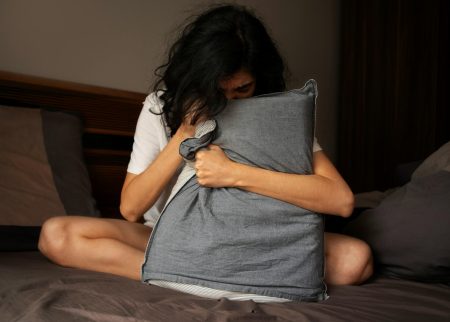
Image: Poor quality sleep contributes to a bad mood.
Common sleep disorders include insomnia
Insomnia or insomnia is manifested by disturbed falling asleep or problems during sleep. Either you can’t fall asleep or you fall asleep but wake up during the night and have trouble falling asleep again. Insomnia is divided into:
transient – usually caused by stress, insomnia lasts about 1 week,
acute – it bothers you for about 1 month and you should see a doctor,
chronic – lasts more than a month, with symptoms appearing at least 3 times a week.
Why can’t you sleep? Maybe you’re sleeping on the wrong mattress
If you’ve ever had trouble sleeping, you’ve probably wondered: Why can’t I sleep? Did you know that the cause may not just be stress or an unsuitable bedroom environment, but also a poor quality mattress?
How do I know if the mattress is not right for me?
Although many manufacturers declare the lifetime of a mattress to be 10, sometimes even 20 years, from a hygienic point of view it is recommended to replace the mattress every 7 years. Just imagine sweating up to 0.5 to 1 litre of sweat every night. Some of it evaporates, but some of it stays in the mattress. Add to that dust and microscopic skin flakes and after 7 years of use you have a mattress that is an ideal environment for bacteria and mould to grow. Find out how to extend the life of your mattress.
You wake up in the morning with headaches, cervical spine, hips, discs, etc.
There’s an unpleasant smell coming from the mattress.
You can feel that the mattress is stretched or has wrinkles.
The mattress squeaks or is torn.
There are visible changes to the mattress (e.g. dents, lumps, etc.)
How to choose the right mattress for quality sleep
Choosing a mattress is not only about comfort, but also about health. When choosing a mattress, it is important to consider your sleeping position. If you sleep on your back, you need a medium-firm mattress that provides enough support for your spine and prevents sagging. Side sleepers should choose a softer mattress that conforms to the curves of the body and ensures proper spinal positioning. Conversely, those who prefer to sleep on their stomachs should reach for a firmer mattress.
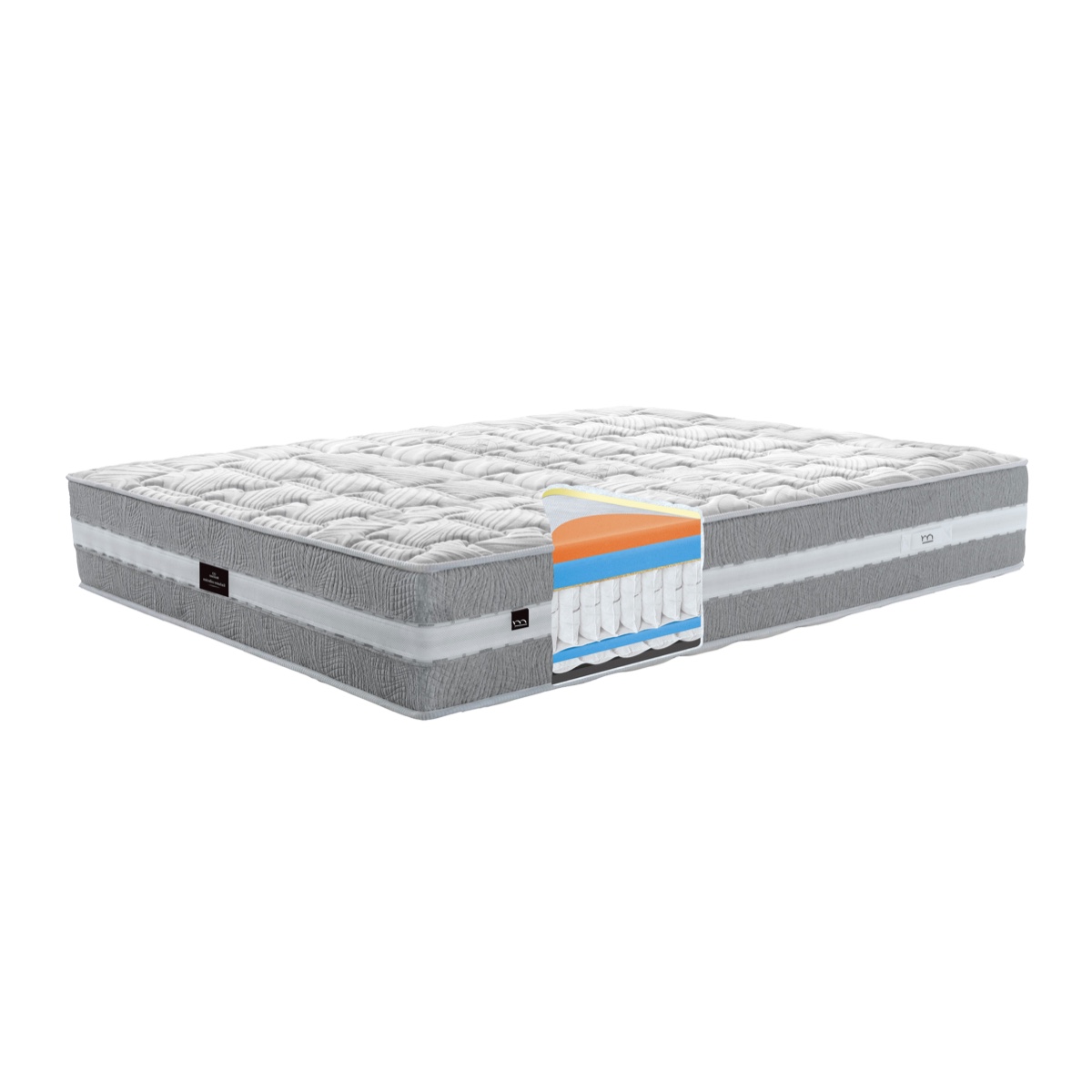
Good choices are memory foam mattresses, pocket spring mattresses or sandwich mattresses, which combine different materials for maximum comfort and support. Memory foam conforms to the shape of your body and relieves pressure, while spring mattresses add firmness and stability to the bed. Choosing the right mattress will not only support the quality of your sleep, but also the long-term health of your back and joints.
How do you choose a new mattress?
So that you no longer have to worry about why you can’t fall asleep, choose a mattress that perfectly matches your requirements for quality sleep and allows you to fall asleep quickly.
Mattress length – the mattress should be about 20 to 25 cm longer than your height.
Height – remember that the higher the mattress, the better the quality of sleep. The optimum mattress height is between 17 and 22 cm. However, you can also find mattresses with a height of around 30 cm, which are ideal for the elderly, but of course not only for them.
Load-bearing capacity – to make sure the mattress lasts as long as possible and doesn’t fall apart soon, it should have a load-bearing capacity of about 5 kg more than your weight.
Firmness – Choose the firmness of your mattress based on your age, preferred sleep position, weight and health problems. Softer mattresses are suitable for beds for the elderly, people with musculoskeletal pain and sleepers with lower weight. Harder mattresses ensure quality sleep for people with higher weight, middle-aged sleepers, or people who prefer to sleep on their stomachs.
Image: the higher the mattress, the more comfortable the sleep.
The choice of production material is of course important. Each material has specific properties and you should know if it is the right one for you.
Latex– is a natural softer foam that easily adapts to the curves of the sleeper. It is less breathable and therefore not suitable for people who sweat more. It will suit those who prefer sleeping on soft. Since it is a natural material, the latex mattress is also suitable for those with allergies.
PUR foam – the most common material for mattresses. Popular for its low purchase price. It is ideal especially for occasional sleeping. If you want to sleep on a PUR foam mattress every day, reach for a sandwich mattress, which combines PUR foam with other materials.
Cold foam – often combined with PUR foam. It is more elastic, breathable and dimensionally stable compared to PUR foam.
Lazy foam – changes its firmness based on the body temperature and weight of the sleeper. It adapts perfectly to the curves of any sleeper. It is a great choice for people who suffer from joint and support system pain. Allergy sufferers will also appreciate it because the lazy foam is hypoallergenic.
Bio foams – natural oils are used for their production. They resist allergens, microbes and moulds, so even people with respiratory diseases can sleep on them.
Spring mattresses – are often made from a combination of materials. In addition to springs, the mattress may also contain comfort foams (memory, cold) and natural materials such as coconut boards. Spring mattresses are medium-firm mattresses that are suitable for people with a higher weight. People who sweat more will also sleep perfectly on them.
In addition to choosing the right mattress, you also need to choose the right mattress grid. For example, foam mattresses are best suited to flexible slatted mattresses. Spring mattresses are placed on top of a firm board or slatted mattress. We can help you choose a spring or foam mattress.
Don’t let sleeping problems bother you, get a quality mattress and try relaxation techniques that will slowly lull you into a restorative sleep.
Abychom poskytli co nejlepší služby, používáme k ukládání a/nebo přístupu k informacím o zařízení, technologie jako jsou soubory cookies. Souhlas s těmito technologiemi nám umožní zpracovávat údaje, jako je chování při procházení nebo jedinečná ID na tomto webu. Nesouhlas nebo odvolání souhlasu může nepříznivě ovlivnit určité vlastnosti a funkce.
Funkční
Always active
Technické uložení nebo přístup je nezbytně nutný pro legitimní účel umožnění použití konkrétní služby, kterou si odběratel nebo uživatel výslovně vyžádal, nebo pouze za účelem provedení přenosu sdělení prostřednictvím sítě elektronických komunikací.
Předvolby
Technické uložení nebo přístup je nezbytný pro legitimní účel ukládání preferencí, které nejsou požadovány odběratelem nebo uživatelem.
Statistiky
Technické uložení nebo přístup, který se používá výhradně pro statistické účely.Technické uložení nebo přístup, který se používá výhradně pro anonymní statistické účely. Bez předvolání, dobrovolného plnění ze strany vašeho Poskytovatele internetových služeb nebo dalších záznamů od třetí strany nelze informace, uložené nebo získané pouze pro tento účel, obvykle použít k vaší identifikaci.
Marketing
Technické uložení nebo přístup je nutný k vytvoření uživatelských profilů za účelem zasílání reklamy nebo sledování uživatele na webových stránkách nebo několika webových stránkách pro podobné marketingové účely.