Keeping your bed hygienically clean is extremely important for your health, but also for a good night’s sleep. A person sweats out up to 1.5 litres of water per night, which is partly absorbed into the mattress, sheets and bedding. In addition, microscopic skin particles, as well as hair and dust, remain in the bed. This combination is a breeding ground for bacteria, mould and other ailments that are definitely not good for you. So how do you take care of your bed?
How to clean and protect the mattress?
The mattress contributes significantly to the quality of sleep. In order to have a healthy sleep, during which a number of regenerative processes take place in the body, you need to sleep in a suitable environment. Insufficient rest will affect your physical and mental state. You will be exhausted, tired, distracted and may even experience anxiety. So be careful what you sleep in.
Why clean the mattress and how often to change it?
Wondering why you should care for your mattress? Mainly because it is home to microscopic mites that feed mainly on the scales of your skin. How do I clean my mattress of dust mites? You can’t get rid of them completely, but with regular maintenance you can reduce their reproduction.
In addition to dust mites, bacteria and moulds also seek refuge in the mattress. The conditions the mattress offers are ideal for them. They breed in a moist and warm environment where no air circulates. Mould can be responsible for respiratory diseases and allergies. It is therefore important to ventilate the mattress regularly, vacuum the mattress of dust and keep the mattress protector, topper or mattress cover clean. A properly selected mattress topper, which should match the mattress, also contributes to the ventilation of the mattress. Find out how to choose a bed, mattress, pillow and duvet for an allergy sufferer.
Replacement after 7 years of use is generally recommended. Although it may not be damaged yet, it is primarily a matter of hygiene. After 7 years, mattresses become unhygienic. How do you know when it’s time to replace?
The mattress lasts more than 7 years.
The mattress has visible damage: it is tearing or has worn through the dowels.
For example, if you feel that the mattress springs are pressing on you or there are lumps in the mattress.
You hear the mattress creaking.
You wake up in the morning unrefreshed and with pain in your support system.
Principles of mattress cleaning
What are the general guidelines for keeping a mattress in perfect condition?
Turn the mattress regularly – for double-sided mattresses, swap the top side for the bottom side and vice versa. For mattresses without zones, you can also change the position of your head and feet. This prevents the mattress from sagging quickly.
Ventilation of the mattress – by ventilating the mattress, you remove moisture and thus eliminate the formation of mould and the growth of bacteria and mites. As soon as you get up, leave the mattress uncovered for at least an hour and be sure to ventilate the bedroom sufficiently.
Cleaning – Vacuum the mattress every 14 days using the upholstery attachment. Try to remove any stains as soon as possible. Adapt the cleaning method to the nature of the stain.
Follow the manufacturer’s instructions – always check the manufacturer’s recommended methods and warnings before you start cleaning.
Watch out for moisture – the mattress should not get too damp. Only wash the foam mattress. For other types, dry or wet cleaning with a wet vacuum cleaner is recommended. The most important thing is to allow the mattress to dry thoroughly so that mould does not form.
Protect your mattress – so you don’t have to spend too much time on maintenance, use mattress protectors and covers that are easily machine washable.
Image: Keep the mattress sufficiently ventilated.
How to remove the most common stains from the mattress and how to refresh it?
The most common stains on a mattress are blood and urine stains.
How to clean blood from the mattress?
For all stains, it is generally recommended to clean them as soon as possible, and this is especially true for blood. If the bloodstain is fresh, cold water and gentle rubbing with a clean cloth will do. If the stain does not disappear, sprinkle salt on it and leave it for 30 minutes. Then rinse everything off.
How to remove dried blood from the mattress?
To remove dried blood from the mattress, try the so-called dry way. Sprinkle baking soda on the stain, rub it gently into the mattress and leave it on for more than 10 hours. Then vacuum up the powder with a vacuum cleaner. You won’t remove the stain completely, but you won’t damage the mattress.
How to clean the mattress from urine?
The removal of urine is difficult, but not impossible. To keep the mattress from smelling, you need to use 3 tablespoons of baking soda, 240 ml of hydrogen peroxide and 2 drops of dishwashing liquid. Rub the stain with this mixture, but do not scrub it. Leave the damp spot to dry.
Refreshing and vacuuming the mattress
Always vacuum with the special upholstery attachment. Vacuum not only the bed and bottom surface, but also the sides of the mattress. Don’t forget to pay close attention to the creases. After vacuuming, sprinkle salt on the mattress using a sieve. The layer of salt may be higher.
Use a brush to work the salt into the mattress. Scrub as if you were cleaning the floor. That way the soda will get deep into the mattress. You can leave the soda on all day. If you want the mattress to smell nice, add a few drops of your favourite essential oil to the soda. Then vacuum the soda. Soda can absorb moisture, odour and grease.
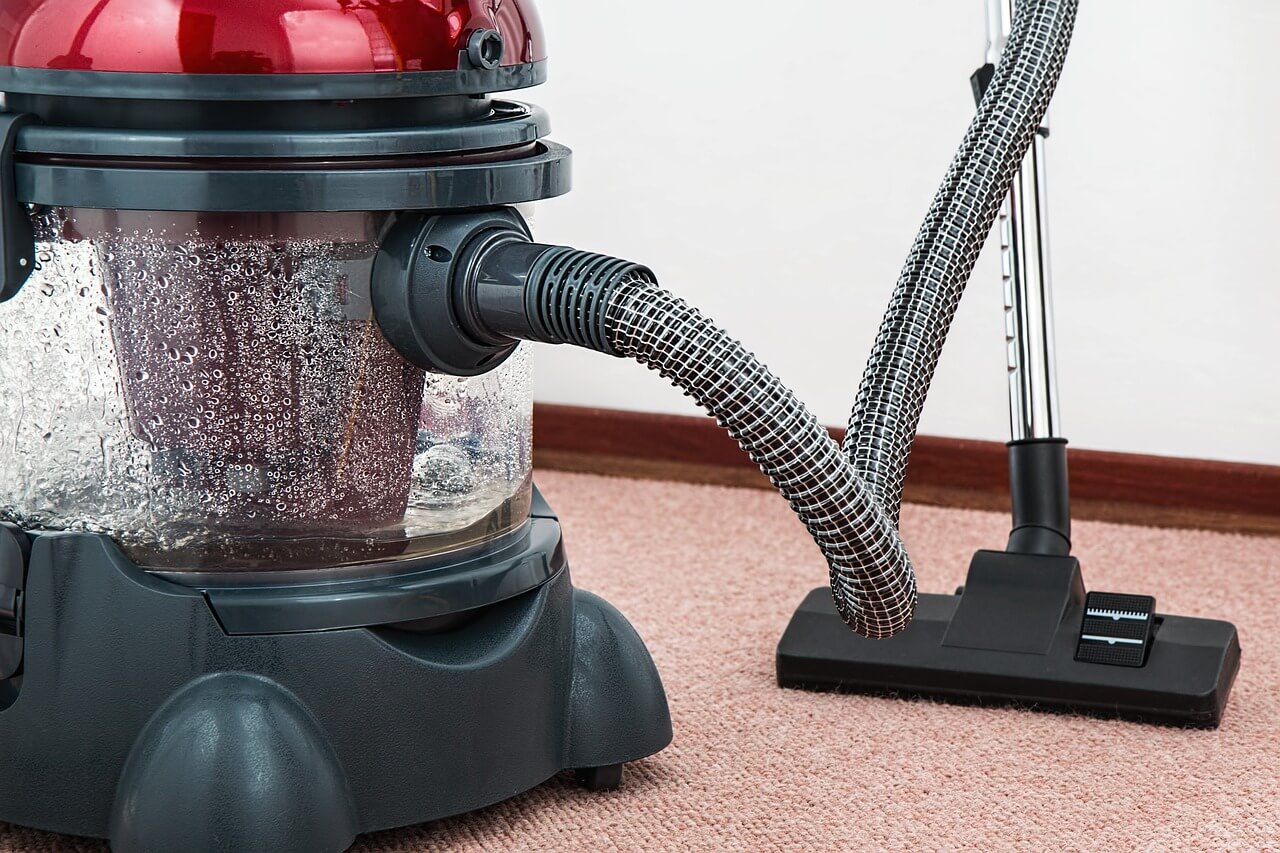
Image: Vacuum the mattress regularly.
Accessories for mattress protection
If you want to protect your mattress from liquids, urine, dust and other contaminants, you can protect it with a topper, protective pad or cover.
Topper is a thin protective mattress topper that enhances a comfortable sleep but also protects the mattress.
Protective mattress pad – can be textile, but also made of impermeable materials, so it protects against contamination by liquids. It is attached to the mattress with rubber bands.
Cover– is a mattress protector that looks like a sheet. The mattress is simply inserted into the cover. The cover can also have an impermeable finish.
How to wash duvets, pillows and bed linen?
Not only does proper care of the mattress contribute to a clean bed, but also to the care of the bedding. When washing sheets, blankets and pillows, it is important to follow the manufacturer’s advice.
How to wash duvets and pillows?
It makes a difference whether you wash down comforters and pillows or down duvets and pillows. Washing memory foam is also treated differently.
How to wash a feather pillow and duvet? Unless the manufacturer prohibits washing, down comforters and feather pillows should be washed at 30 °C. Your washing machine may also have a special programme for washing feathers. Use only products designed for down. Avoid detergents with enzymes as these can degrease the down. Dry either outdoors, but not in direct sunlight, or in the dryer.
Image: wash feathers in enzyme-free detergent.
How to wash duvets made of hollow fibre?
Hollow fibre blankets and pillows are easier to wash than down ones. Most hollow fibre products are machine washable. Because rayon gets quite full, make sure your washing machine is only one-third full. Use a mild detergent for washing and wash at a maximum of 40 °C. Hollow fibre can be tumble dried.
How to wash a memory foam pillow?
Remember that memory foam does not belong in the washing machine or dryer. It must therefore be washed by hand using liquid detergent. Let the pillow dry freely after thoroughly rinsing.
How to wash bed linen?
When choosing sheets and bed linen, pay attention not only to the aesthetic appearance, but also to the ease of maintenance. Linen should be changed and washed at least once every 14 days. In general, washing at 40 °C is recommended, as higher temperatures can lead to colour fading. For lightweight materials, including microfibre and satin, it is better to wash only at 30 °C. It is worth washing the linen on the reverse side.
Take our advice and enjoy a good night’s sleep in a perfectly clean bed.
Abychom poskytli co nejlepší služby, používáme k ukládání a/nebo přístupu k informacím o zařízení, technologie jako jsou soubory cookies. Souhlas s těmito technologiemi nám umožní zpracovávat údaje, jako je chování při procházení nebo jedinečná ID na tomto webu. Nesouhlas nebo odvolání souhlasu může nepříznivě ovlivnit určité vlastnosti a funkce.
Funkční
Always active
Technické uložení nebo přístup je nezbytně nutný pro legitimní účel umožnění použití konkrétní služby, kterou si odběratel nebo uživatel výslovně vyžádal, nebo pouze za účelem provedení přenosu sdělení prostřednictvím sítě elektronických komunikací.
Předvolby
Technické uložení nebo přístup je nezbytný pro legitimní účel ukládání preferencí, které nejsou požadovány odběratelem nebo uživatelem.
Statistiky
Technické uložení nebo přístup, který se používá výhradně pro statistické účely.Technické uložení nebo přístup, který se používá výhradně pro anonymní statistické účely. Bez předvolání, dobrovolného plnění ze strany vašeho Poskytovatele internetových služeb nebo dalších záznamů od třetí strany nelze informace, uložené nebo získané pouze pro tento účel, obvykle použít k vaší identifikaci.
Marketing
Technické uložení nebo přístup je nutný k vytvoření uživatelských profilů za účelem zasílání reklamy nebo sledování uživatele na webových stránkách nebo několika webových stránkách pro podobné marketingové účely.