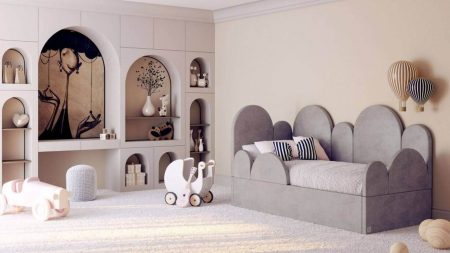
Healthy sleep is linked to your mental and physical well-being. If you are under-rested, you will experience a bad mood, gloom and a feeling of general exhaustion. Do what’s best for yourself and your health and equip your bedroom with the perfect bed with a quality mattress and mattress. We will advise you on how to choose them.
How to choose a bed?
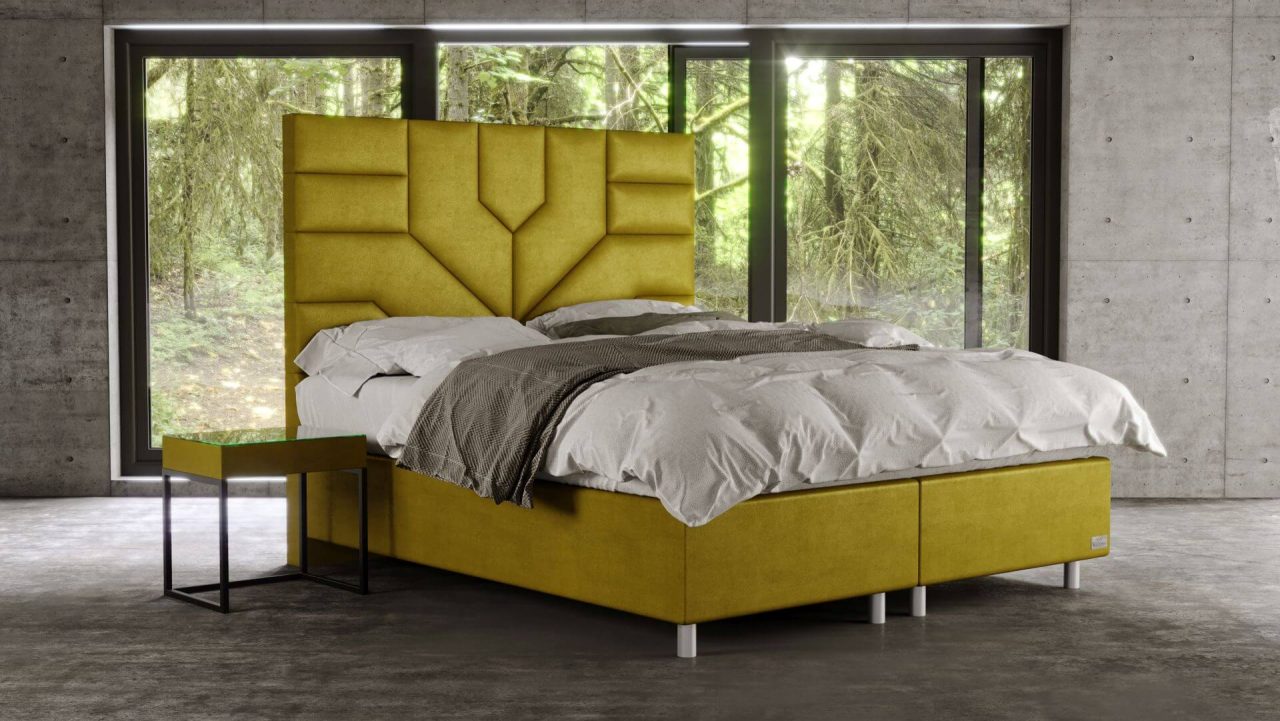
The upholstered bed is the most important piece of furniture in the bedroom. Most people think of a complete bed, including mattress and mattress topper. However, the bed frame, into which the mattress and mattress are then inserted, also plays an important role in the selection process. Where to buy a good quality bed? Choose a retailer who specialises in making beds and has a long tradition in this field. What to look for when choosing a bed frame?
Size to fit the dimensions of the bedroom
When choosing a bed frame, think about how big your bedroom is. The layout and size of the furniture in the room have ergonomic reasons. Remember that there should still be bedside tables on either side of the bed. The bed should be comfortably accessible from both sides. There should be a gap of at least 50 cm between the wall or wardrobe and the bed so that you can walk around the bed.
The width and length of a standard double bed is 180 × 200 cm. The extended version can be 210-220 cm long. Always choose the length according to the taller partner and remember to add an extra 25 cm.
To get up and down in bed comfortably, it is best if the sleeping surface is about 50 cm off the ground. For the elderly and people with musculoskeletal conditions, a bed height of 60 cm is even more comfortable. You will be protected from draughts, but also from dust that settles on the floor. The height of the sleeping surface is influenced not only by the bed frame but also by the height of the mattress.
Bed frame and design processing
The bed frame can be made of different materials. Most often you will come across solid wood, metal and laminate. Solid wood and metal is the best choice for the bedroom. These are natural materials that are anti-allergic, so even an allergy sufferer can sleep in such a bed. However, with metal, you need to remember that it is cold, which may not suit everyone. Laminate beds are popular for their modern look and low purchase price. However, more sensitive people and allergy sufferers may have a reaction to the adhesives used.
When choosing, pay attention to the quality of the frame. Focus on the strength of the joints that contribute to the life of the bed. The bed should not wobble or creak. It should be strong and stable.
If you’re after a design treat, reach for an all-upholstered bed frame. Fabric upholstery is not recommended for allergy sufferers as it traps dust. Others, however, can reach for the upholstery without fear. If you vacuum the upholstery regularly, you can enjoy perfect bed hygiene.
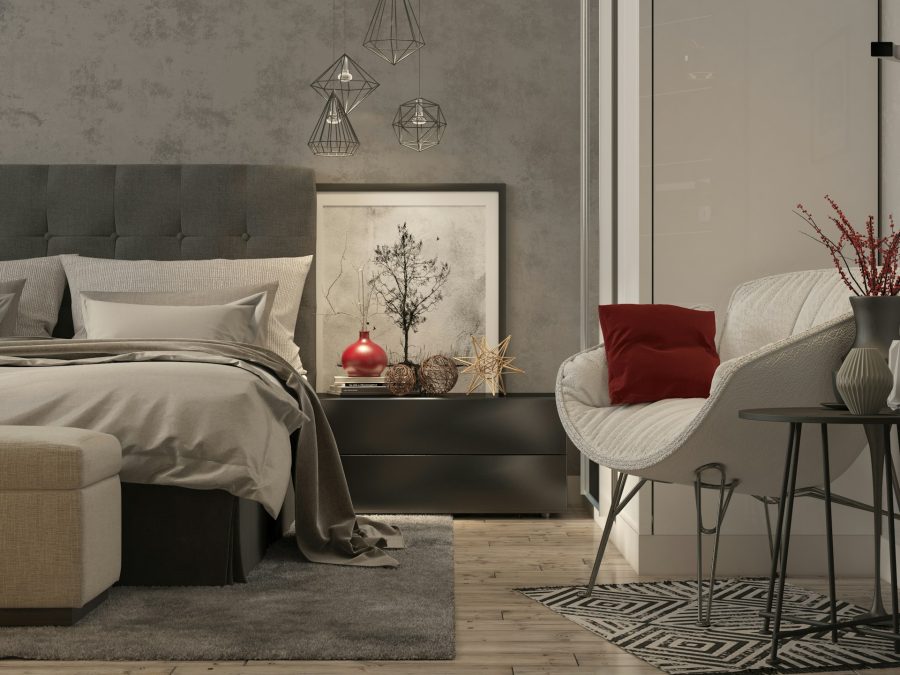
Image: choose the size of the frame according to the size of the room.
With or without storage space?
The choice of frame is also related to the choice of storage space. If you have plenty of storage space at home, you can choose a continental bed with a special boxspring system that ensures perfect rest.
If you’re fighting for every inch of space at home, treat yourself to a bed with storage space. It’s located under the sleeping surface and can be accessed from the side or from the feet. Never fill the storage space up to the sleeping surface. The mattress needs space to ventilate well. Proper air circulation will take care of sweat and mold will not form in the mattress.
How to choose a mattress?
Once you’ve chosen your frame, it’s time to choose your mattress, which is also related to the choice of the mattress. The right choice of mattress will significantly affect the quality of your sleep. Products are available on the market in a variety of designs. You will come across medical mattresses, which you can recognise by their certification, but also orthopaedic mattresses. Orthopaedic mattresses provide sophisticated support for the skeletal system and correct weight distribution.
Remember that it is best tochoose a mattress in person. Everyone has individual requirements, different health restrictions, weight or preferred sleeping position. Where to buy a quality mattress? Choose a retailer who will take the time to ask for important information about your health, weight, sleeping position, mattress, etc.
When making your choice, you will be faced with the question of what material to choose and what stiffness and height to opt for. How do you choose the mattress that best suits your needs?
Image: It is recommended to choose the mattress in person. Each person has different requirements.
Production materials
Mattresses are available in a variety of materials, each with different properties. So choose according to your requirements.
Latex mattresses – are made of natural rubber. These are soft mattresses whose key features include natural origin and high elasticity. They are suitable for slatted mattresses.
PUR foam mattress – it is a foam. Its biggest advantage is its low purchase price, good elasticity and shape stability.
HR cold foam mattress – has larger pores compared to PUR foam, making it more breathable. It has better dimensional stability and higher elasticity. It boasts good breathability which eliminates the occurrence of dust mites. HR foam is often combined with PUR foam.
Lazy foam mattress – changes its firmness based on the temperature of the human body. It softens on contact with the body and thus adapts perfectly to its curves. It is the optimal choice for people with back and joint pain or those suffering from bedsores. If this is the case look for an anti-couch or anti-bedsore mattress.
Organic mattressesfoam – renewable resources in the form of natural oils are used for their production. Their production therefore does not burden the planet. The mattresses are more resistant to microbes and moulds and are therefore also suitable for people with allergies.
Spring mattresses – boast a long service life and excellent breathability. Mattresses with bonell or pocket springs are available. They are not suitable for reclining mattresses.
You may also encounter the term sandwich mattresseswhich means that different foams with different stiffnesses are used to make them. The best base for foam mattresses are slatted mattresses.
Closely related to firmness is the concept of mattress zoning. A mattress can have several zones that differ in firmness. The best products have 7 different firmness zones that correspond to a specific part of the body. For example, the head and ankle area is softer than the back and hip area, where the pressure on the mattress is highest.
Correct mattress dimensions
The mattress should fit exactly into the bed frame.
Length – remember that the length of the mattress should be about 25 cm more than your height.
Height – choose the height of your mattress based on how often you sleep on it, your weight, any health problems you have, and also the grid. For occasional sleeping, you can reach for mattresses with a height of around 16 cm. If you want a healthy and full sleep, choose a high mattress with a height of 30 cm.
Width – the width of the mattress corresponds to whether it is a single or double bed. A classic single bed is 90 cm wide, a double bed is 190-200 cm wide.
Mattresses for children
If you are choosing a mattress for children, their age will be an important indicator for you. Mattresses for babies and newborns have only one zone and firmness. Harder mattresses with a height of 7-10 cm are ideal. In terms of material, HR or PUR foam, coconut fibre or eco-friendly biogreen foams are suitable.
Image: A mattress for babies should have only one firmness.
Mattress accessories
To prolong the life of your mattress or to make your sleep even more comfortable, you can equip your mattress with several accessories.
Topper– is a thinner top mattress that is part of boxspring beds. However, you can get it with any other mattress. The topper is a comfort layer between the body and the mattress. It is made of different materials: memory foam, cold foam, gel foam or latex. The height is usually between 5-7 cm.
Mattress protector – is placed on the mattress and is attached with 4 rubber bands that catch on the corners of the mattress. It is usually stitched and has no filling. It serves as a protection for the mattress against dirt. Mattress protectors made of impermeable materials are suitable for cots and beds of patients suffering from urine leakage.
Protective mattress cover – this is basically a “cover” into which the mattress is placed. It is machine washable. Some have antibacterial treatments. They protect the mattress, extending its life and increasing hygiene.
How to choose a bed grate?
Sleep comfort is influenced not only by the mattress, but also by the bed mattress, which helps with the optimal distribution of the pressure exerted. In addition, it ensures that the mattress is sufficiently ventilated, which improves its hygiene and eliminates bacteria and mould. What should I choose a bed grate for?
Basic selection factors
Your weight plays an important role in the selection process. Choose the load capacity of the grate accordingly. The type of mattress is also important. Not every mattress is compatible with every mattress. Take your health into account . For example, people who have had surgery will appreciate a reclining mattress. If you have storage space in your bed, reach for a flip-up grate.
Positioning of the grate
The positioning of the grid allows you to adjust the optimum height in the head or leg area. Some grates allow you to adjust both. You can choose how to position it. Manual reclining grates are available, as well as electrically reclining grates.
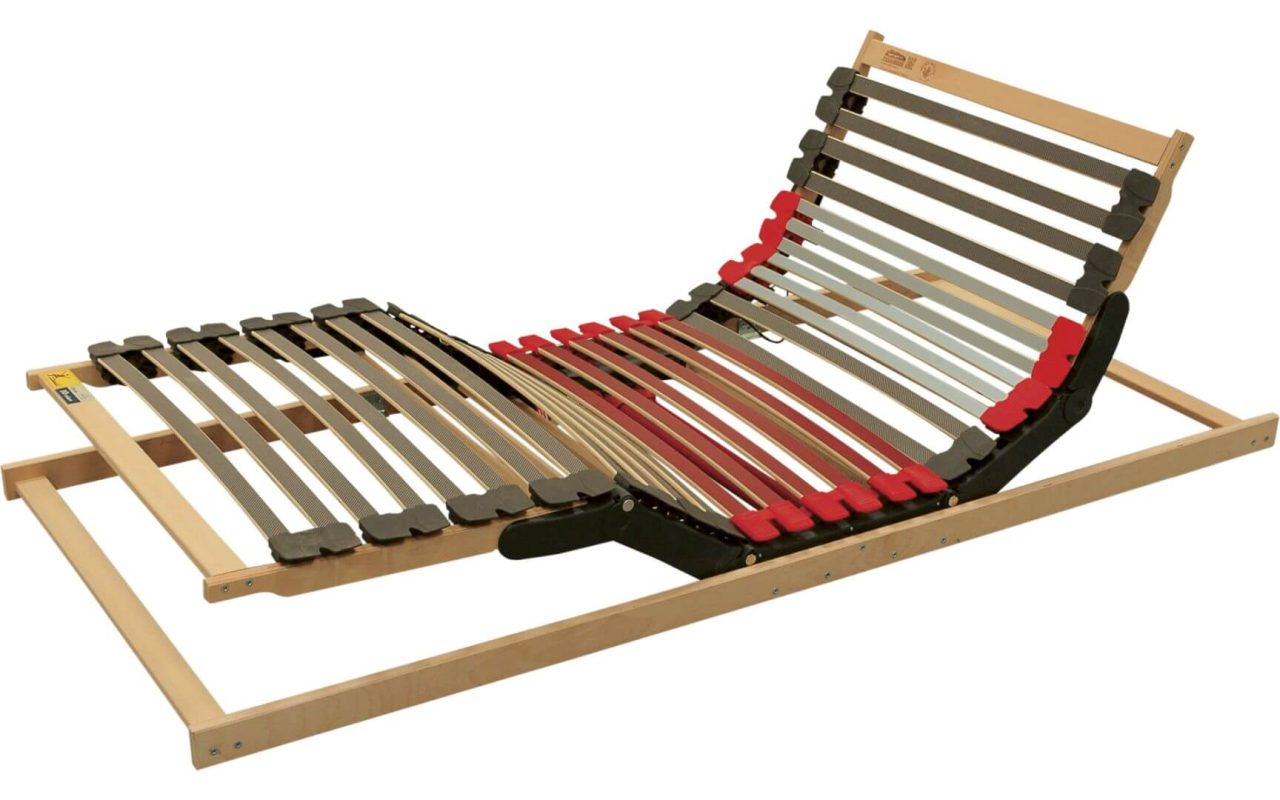
Image: you can choose a positioning or static grid
Types of bed grids
You can choose from 2 basic types of grates.
Slatted bed grate – does not spring too much, but provides excellent air circulation. It is suitable for spring or foam mattresses with a higher core.
Slatted bed mattress – quality slatted mattresses have at least 28 slats and will get on well with foam mattresses.
The right combination of bed frame, mattress and mattress will ensure a healthy and comfortable sleep.
Abychom poskytli co nejlepší služby, používáme k ukládání a/nebo přístupu k informacím o zařízení, technologie jako jsou soubory cookies. Souhlas s těmito technologiemi nám umožní zpracovávat údaje, jako je chování při procházení nebo jedinečná ID na tomto webu. Nesouhlas nebo odvolání souhlasu může nepříznivě ovlivnit určité vlastnosti a funkce.
Funkční
Always active
Technické uložení nebo přístup je nezbytně nutný pro legitimní účel umožnění použití konkrétní služby, kterou si odběratel nebo uživatel výslovně vyžádal, nebo pouze za účelem provedení přenosu sdělení prostřednictvím sítě elektronických komunikací.
Předvolby
Technické uložení nebo přístup je nezbytný pro legitimní účel ukládání preferencí, které nejsou požadovány odběratelem nebo uživatelem.
Statistiky
Technické uložení nebo přístup, který se používá výhradně pro statistické účely.Technické uložení nebo přístup, který se používá výhradně pro anonymní statistické účely. Bez předvolání, dobrovolného plnění ze strany vašeho Poskytovatele internetových služeb nebo dalších záznamů od třetí strany nelze informace, uložené nebo získané pouze pro tento účel, obvykle použít k vaší identifikaci.
Marketing
Technické uložení nebo přístup je nutný k vytvoření uživatelských profilů za účelem zasílání reklamy nebo sledování uživatele na webových stránkách nebo několika webových stránkách pro podobné marketingové účely.