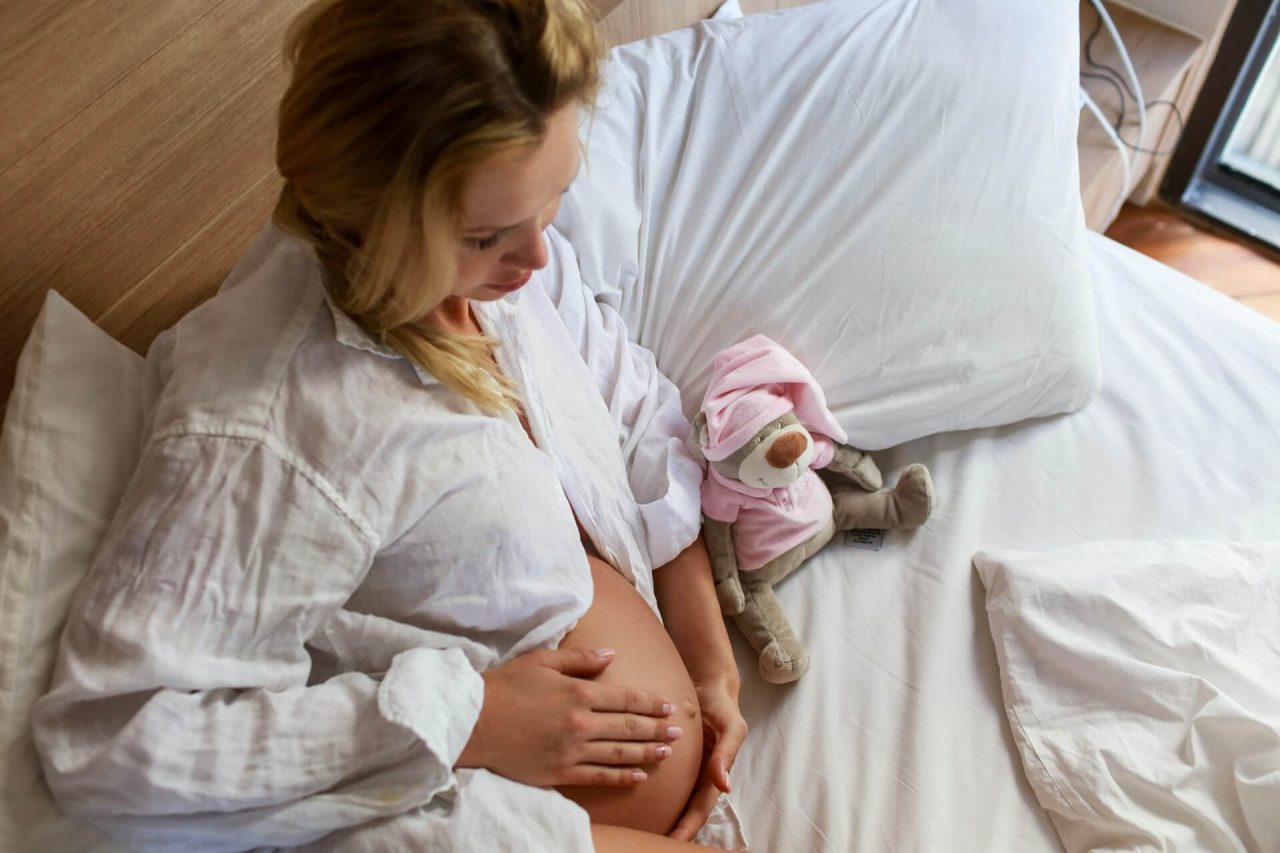
Restful sleep in pregnancy? It may seem that because of the growing tummy, hormonal changes and the kicking and wiggling of the baby, quality rest is impossible. However, there are plenty of precautions to help you get a good night’s sleep and get through the whole pregnancy rested.
Body changes = changes in sleep
The changes that accompany your body and mind will be reflected in the quality of your sleep. What can pregnant women’s nights and evenings look like?
He’s going to the toilet more often,
solves nausea,
to fight off heartburn,
their lower back hurts,
they have leg cramps,
they have disturbing dreams,
looking for the best sleeping position,
they wake up more often,
have a light sleep,
they have a harder time falling asleep after waking up at night.
Expectant moms need more sleep, because their body is going through a burdensome test. But they don’t always get as much or as good a rest as they need. Problematic sleep, especially in the first and third trimesters, may be to blame:
changes in body temperature,
the transformation of the body,
hormonal changes,
digestive problems,
constipation,
snoring.
Sufficient and quality sleep is important not only for future moms, but also for the children who grow up in them. Prolonged sleep problems can increase the risk of premature birth or postpartum depression. In addition, they can cause excessive weight gain in pregnancy. You can help yourself to get healthy sleep with appropriate sleep positioning and other simple yet effective measures.
The best sleeping positions in pregnancy
As soon as your tummy starts to grow, you sleep most comfortably on your side with your knees bent. This position promotes healthy circulation. Which side to sleep on during pregnancy? Doctors recommend the left side. This protects your liver and ensures increased blood flow to your heart, kidneys and, most importantly, your baby. In addition, the necessary oxygen and nutrients reach the baby. By sleeping on your left side, you reduce the likelihood of swollen ankles and feet, which is uncomfortable in both summer and winter.
You shouldn’t sleep on your right side, especially because you put unnecessary pressure on your liver. However, according to experts, it’s okay if you sleep on your right side for short periods.
Good advice: Did you know that you sleep the longest in the sleep position you fall asleep in? So fall asleep on your left side and let yourself be comforted by the feeling that you are doing the best for your body and your baby.
How to sleep comfortably on the left side?
If you have been sleeping on your stomach or back, it can be hard to get used to your new sleeping position. To help you get used to it and enjoy sleeping on your side, take a few simple precautions:
Roll onto your side and bend one or both knees. This will support your back.
Lay out the cushions. You can put a pillow between your knees, pad your tummy or lower back. Pregnancy pillows are popular for your head, tummy and legs.
Sleep on a mattress that relieves the pressure on your hips. For example, a memory foam mattress is ideal. You can put a special topper with a nopky on top of the mattress, which also helps relieve pressure on the most stressed parts of the body.
Good advice: If you suffer from heartburn, pad your head with a higher pillow. Another solution is to sleep on a mattress with an adjustable headrest.
Image: padding with pillows will help you sleep more comfortably.
What sleep positions should you avoid?
In addition to sleeping on the right side for a long time, sleeping on the stomach and on the back is not recommended, especially in the second and third trimesters.
Sleeping on your stomach is uncomfortable because of your growing tummy, but also because of your more sensitive breasts. Sleeping on your stomach in pregnancy should not bother you in the 1st trimester.
However, you may also come across the opinion that you should sleep in the position that is most comfortable for you during the first two trimesters of pregnancy.
Why avoid lying on your back in pregnancy?
The growing uterus during sleep oppresses the main aortic artery and an important hollow vein. The two large veins that bring deoxygenated blood from the upper and lower half of the body to the right atrium are referred to as the vena cava.
Because of the pressure on the aorta and the vena cava , you make it difficult for the heart to pump blood not only to your bloodstream, but also to the baby. This strain may be the reason why you feel dizzy and nauseous when you wake up.
Sleeping on your back during pregnancy puts unnecessary strain on your spine. The result is pain in the lumbar region, which is typical for pregnant women. When sleeping on your back, you may snore or have other breathing difficulties that prevent much-needed quality rest.
Don’t worry if you fall asleep on your side in the evening and wake up on your back. Simply roll onto your side again. To help you feel more relaxed, you can put a lap pillow behind you to prevent you from completely “rolling over” onto your back.
Simple measures for better sleep in pregnancy
The quality of sleep in pregnancy is affected not only by hormonal and physical changes in your body, but also by your mind. Try to set up a “sleep” ritual that includes adjusting your diet, relaxation techniques, and maintaining sleep hygiene. How to do it?
Adjust your diet
Did you know that your digestive system is slowing down due to hormonal changes and an enlarging uterus? The result is constipation, indigestion or heartburn. These difficulties can be more pronounced at night. To do the best for your digestive system:
Avoid bubbly drinks, citrus, tomatoes and spicy foods that trigger reflux,
If possible, have your last meal 3 to 4 hours before bedtime,
Eat smaller portions of food throughout the day.
In pregnancy, your kidneys work more, and the baby pushes you on the bladder. That’s why you want to go to the toilet more often. To avoid being woken up by the need to urinate at night, don’t drink 2 hours before bedtime.
Image: in pregnancy, adjust your diet.
Observe sleep hygiene
Most people have heard of it and know that it should be followed. But few people actually pay attention to their sleep hygiene. If you want to sleep well, focus on your sleep habits. What should you watch for?
Go to bed and get up at the same time,
Don’t have electronics in your bedroom and don’t look at screens for at least 2 hours before bed,
if you’re not asleep in half an hour, get up and try reading,
keep your bedroom dark and quiet,
the room temperature should be no more than 20 °C.
Prevent leg cramps
In pregnant women, leg cramps are common, which can wake you up from sleep. This is due to a change in your body’s ability to process calcium. Therefore, stretch your legs gently before going to bed, treat yourself to a diet rich in calcium and get plenty of exercise during the day.
Meditate or do something that calms you down
The arrival of a baby is associated not only with great anticipation and joy, but also with worries and fears. These attack you especially in the evening before bedtime. You think about all sorts of things and imagine all sorts of scenarios, perhaps not very positive. Nightmares and frightening dreams can weigh you down. Try to avoid nighttime thinking, perhaps by doing some yoga, a few breathing exercises or writing down all your fears in a journal.
During pregnancy, it is best for your body and the health of your baby to sleep on your left side. Sleep on a good quality mattress and pad yourself with pillows. Well-rested, you’ll get through pregnancy with a smile.
Abychom poskytli co nejlepší služby, používáme k ukládání a/nebo přístupu k informacím o zařízení, technologie jako jsou soubory cookies. Souhlas s těmito technologiemi nám umožní zpracovávat údaje, jako je chování při procházení nebo jedinečná ID na tomto webu. Nesouhlas nebo odvolání souhlasu může nepříznivě ovlivnit určité vlastnosti a funkce.
Funkční
Always active
Technické uložení nebo přístup je nezbytně nutný pro legitimní účel umožnění použití konkrétní služby, kterou si odběratel nebo uživatel výslovně vyžádal, nebo pouze za účelem provedení přenosu sdělení prostřednictvím sítě elektronických komunikací.
Předvolby
Technické uložení nebo přístup je nezbytný pro legitimní účel ukládání preferencí, které nejsou požadovány odběratelem nebo uživatelem.
Statistiky
Technické uložení nebo přístup, který se používá výhradně pro statistické účely.Technické uložení nebo přístup, který se používá výhradně pro anonymní statistické účely. Bez předvolání, dobrovolného plnění ze strany vašeho Poskytovatele internetových služeb nebo dalších záznamů od třetí strany nelze informace, uložené nebo získané pouze pro tento účel, obvykle použít k vaší identifikaci.
Marketing
Technické uložení nebo přístup je nutný k vytvoření uživatelských profilů za účelem zasílání reklamy nebo sledování uživatele na webových stránkách nebo několika webových stránkách pro podobné marketingové účely.