Overweight and obesity are among the most common diseases of civilisation today. People who are overweight usually suffer from a variety of problems that can be exacerbated by sleeping on an unsuitable mattress. It is important to remember that a person weighing 70 kg has different requirements for a mattress and a person weighing around 150 kg has a completely different one.
Difficulties and complications caused by increased weight
According to the National Institute of Health, about 25% of women and 22% of men in the Czech Republic are obese. Overweight in general is a problem that affects about 50% of the middle-aged population. Higher body weight is usually accompanied by other complications, which can be exacerbated by sleeping on an inadequate mattress.
What are the most common problems in obese people?
Back pain,
pain in the cervical spine,
difficulty breathing,
increased rate of sweating.
There are of course more problems, but the above mentioned are related to an unsuitable mattress. However, by choosing a mattress with sufficient load-bearing capacity, you can greatly reduce these problems. There are models available on the market specifically designed for people with higher weights. Their load capacity ranges from 150 kg to 200 kg.
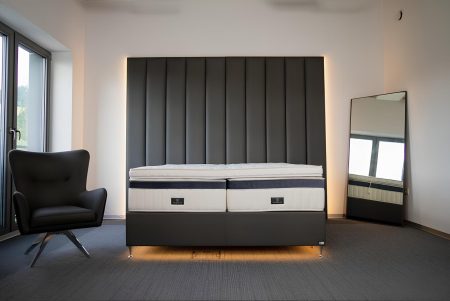
Image: sufficient breathability of the mattress is important due to sweating.
How to choose a mattress for an obese or overweight sleeper?
Mattresses for people suffering from this condition are made of modern materials that keep the spine and head in the recommended position. This prevents the spine from deforming and minimises or eliminates pain. You should also not forget about the quality mattress grid, which helps to distribute the pressure exerted on the mattress. In addition, in combination with an anatomically shaped pillow, unpleasant snoring can be eliminated.
Load-bearing capacity and a higher degree of rigidity
The most important parameters in the selection process are load capacity and degree of rigidity. For each mattress you will find information about its load capacity, which means how “heavy” it is suitable for. It is generally recommended to choose a mattress with a load capacity that exceeds your body weight by at least 5 kg. If you go for a mattress with a load capacity that exactly matches your weight, or a product that has an even lower load capacity, your body will not get enough support and, more importantly, the mattress will soon become worn out. And you probably don’t want to invest in buying a new one every now and then, do you?
The firmness or hardness of a mattress is divided into 4 levels:
T1 (very soft) – for persons up to 70 kg,
T2 (soft) – for people between 70 kg and 100 kg,
T3 (hard) – for persons up to 120 kg,
T4 (very hard) – for persons up to 150 kg.
According to this breakdown, you’ll know that people who are underweight can reach for softer mattresses, but people who are overweight and overweight should choose a hard mattress that provides enough support for the spine. Our range also includes special mattresses and mattresses with the T5 label, which have a load capacity of up to 150 kg.
Good advice: Take a little test. Sit on your bed, and if the mattress compresses by more than 1/3, you’ll know it’s too soft for you and therefore uncomfortable.
Production material
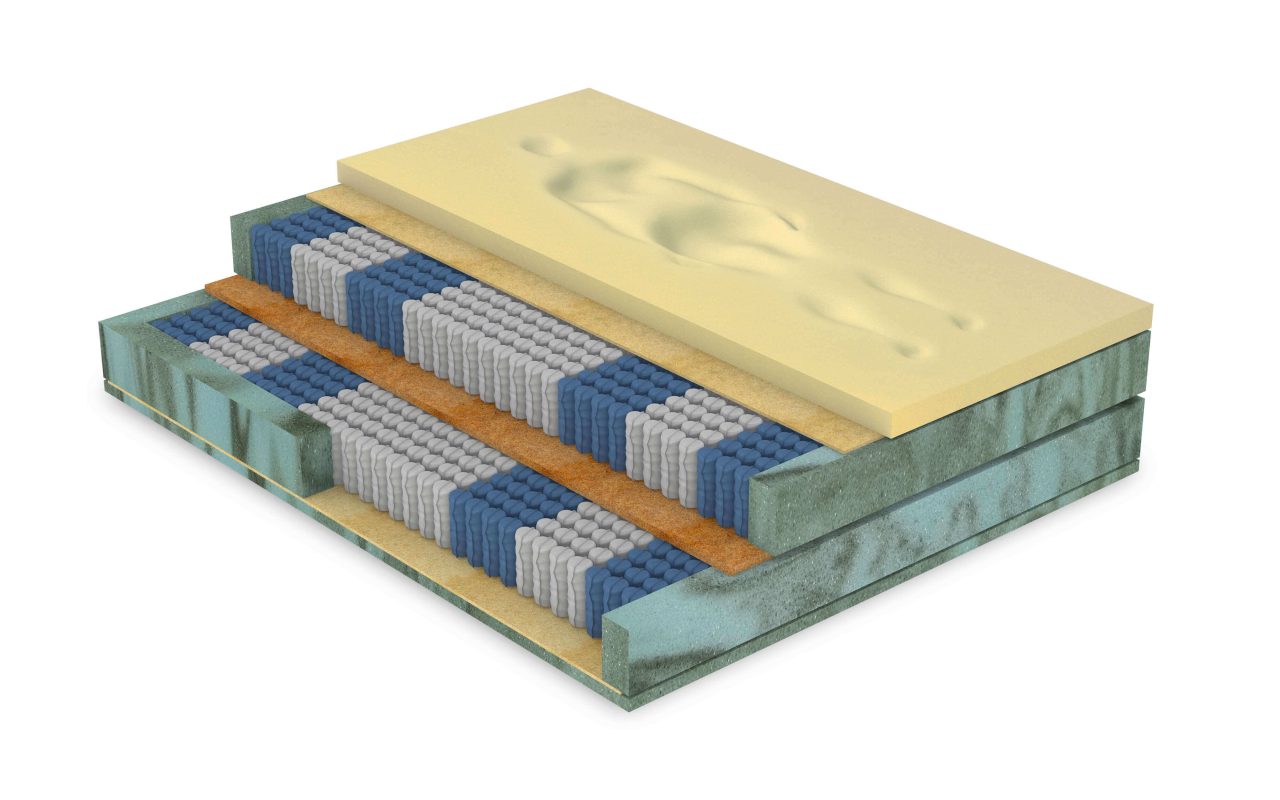
Hard and very hard mattresses are most often made in sandwich foam with a combination of foams and bonell springs or spring bags. Natural materials can also be included to ensure sufficient sweat wicking, as increased sweating can be one of the difficulties that comes with higher weight.
Image: Bag mattress with 7 firmness zones.
The advantage of pocket springs is their long service life and high load capacity. It can be used by people weighing up to 150 kg. To make sleeping on a pocket mattress as comfortable as possible, there are additional layers in the core to prevent the springs from compressing. If you prefer a softer sleep, the pocket core should be combined with foam layers, while for a firmer sleep, for example, a coconut board is preferable.
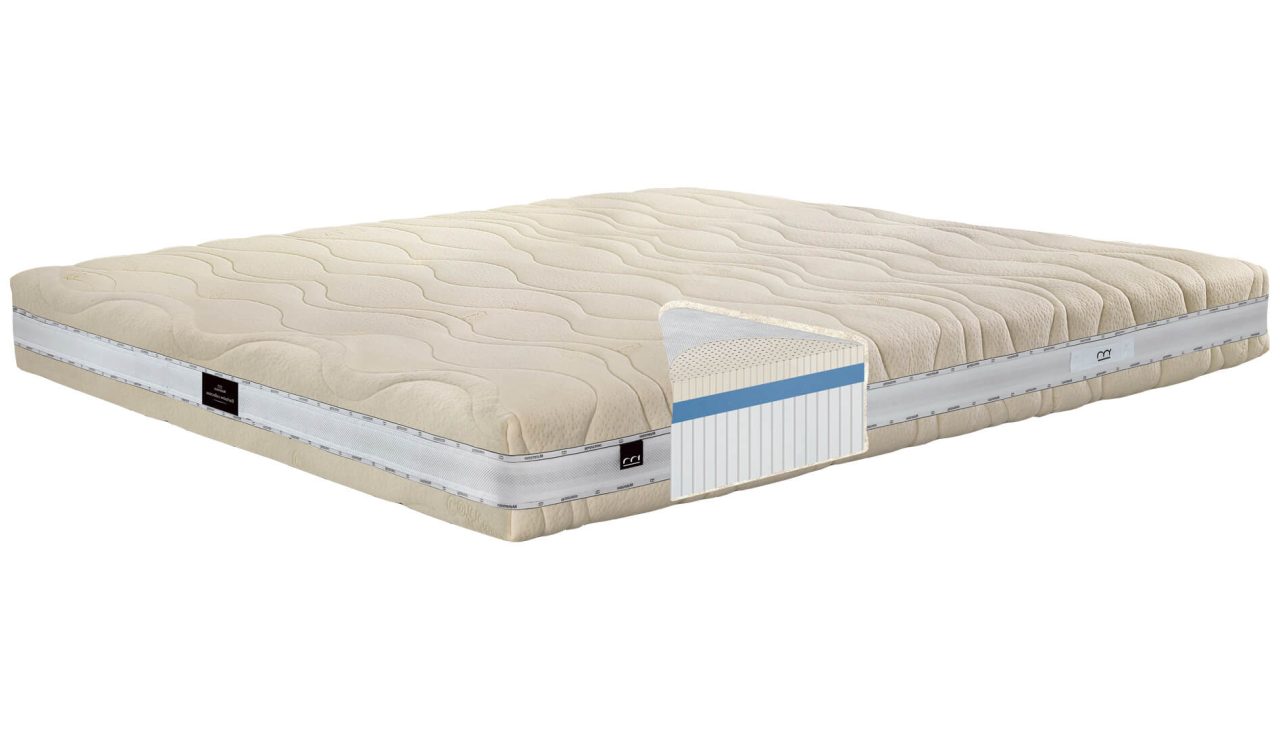
You can also reach for high-density foam mattresses. Foam mattresses are usually made up of several types of foam with different properties and heights. With these mattresses, the higher they are, the better support they will provide. Of course, their load-bearing capacity and breathability should also be monitored.
Image: foam mattress with latex and a load capacity of up to 190 kg.
Number of zones
The quality of rest is influenced by the zoning of the mattress, and there can be several zones. The highest number is seven. Zoning means that each part of the mattress has a different firmness depending on the part of the body. For example, the zone in the shoulder area is lightened, but the hip area is reinforced, while the soft part is usually for the calves. Zoned mattresses can be made of both foams and pocket springs.
General advice for choosing a new mattress
Load capacity and firmness are the most important parameters whenchoosing a mattress for overweight people. However, they are not the only ones to look at when making a purchase. Others include:
length and width – the length of the mattress should exceed your height by 20-25 cm. The width should match the width of the bed. Generally, standard single mattresses are 90 cm wide.
Height of the mattress – optimally it should be between 17-22 cm, but you can reach for a higher one. The higher the mattress, the easier it is to get up or lie down on.
Firmness and load capacity – choose according to your weight and sleeping position.
Material – for people with higher weight, bag springs or high density foams are ideal.
Sufficient load-bearing capacity and stiffness of the mattress will have the greatest impact on the quality of sleep of higher weight sleepers. They will help relieve pain and make you feel reborn when you wake up.
Abychom poskytli co nejlepší služby, používáme k ukládání a/nebo přístupu k informacím o zařízení, technologie jako jsou soubory cookies. Souhlas s těmito technologiemi nám umožní zpracovávat údaje, jako je chování při procházení nebo jedinečná ID na tomto webu. Nesouhlas nebo odvolání souhlasu může nepříznivě ovlivnit určité vlastnosti a funkce.
Funkční
Always active
Technické uložení nebo přístup je nezbytně nutný pro legitimní účel umožnění použití konkrétní služby, kterou si odběratel nebo uživatel výslovně vyžádal, nebo pouze za účelem provedení přenosu sdělení prostřednictvím sítě elektronických komunikací.
Předvolby
Technické uložení nebo přístup je nezbytný pro legitimní účel ukládání preferencí, které nejsou požadovány odběratelem nebo uživatelem.
Statistiky
Technické uložení nebo přístup, který se používá výhradně pro statistické účely.Technické uložení nebo přístup, který se používá výhradně pro anonymní statistické účely. Bez předvolání, dobrovolného plnění ze strany vašeho Poskytovatele internetových služeb nebo dalších záznamů od třetí strany nelze informace, uložené nebo získané pouze pro tento účel, obvykle použít k vaší identifikaci.
Marketing
Technické uložení nebo přístup je nutný k vytvoření uživatelských profilů za účelem zasílání reklamy nebo sledování uživatele na webových stránkách nebo několika webových stránkách pro podobné marketingové účely.