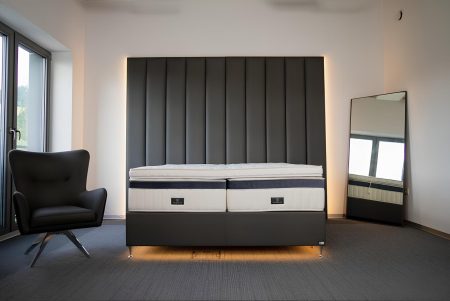
When choosing a quality mattress, not only the parameters related to your body and sleep habits play an important role, but also the manufacturing material. Do you know what a mattress consists of and what you should look out for when buying one? You can find out all about production materials, health safety and selection tips in the following paragraphs.
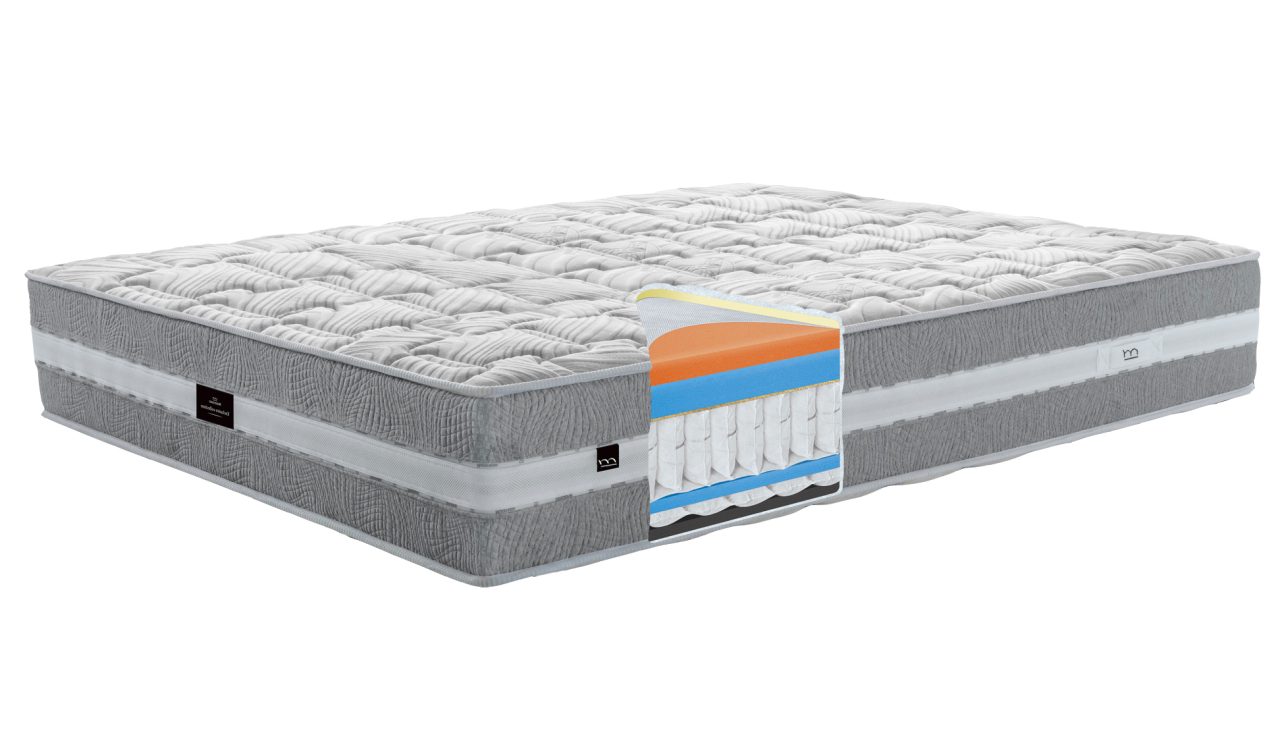
The core determines the properties of the mattress. It can consist of either springs or foams. Thanks to modern manufacturing techniques, spring mattresses are particularly popular because of the good springing and ventilation of the mattress. Springs can be either bonell or pocket springs. We write more about them below.
The core of the foam mattress consists of the appropriate foam. The properties of the mattress depend on the type of foam used in its production.
Comfort layers
These are elements that make the mattress “more comfortable” based on the desired properties. They are closest to the body and are usually several centimetres thick. They are located above the core layer. The comfort layer ensures even weight distribution and responds to sleep movements.
Coating fabric
The cover fabric forms the cover of the mattress. This protects the inside of the mattress from damage and dirt. Mattress protectors are usually removable and machine washable. They can also be coated with finishes that improve the mattress’s properties.
Image: Section of a mattress with a pocket core.
Mattress manufacturing materials
Mattress cores are made of different materials that can be combined. The properties of the mattresses depend on the material chosen. Mattress cores are most often made of the following materials:
PUR foam
You may also know PUR foam under the name foam. This material is one of the most commonly used for mattresses. Its advantages are optimal firmness and good adaptation to the curves of your body. However, it does soften after prolonged use, but it does not become completely worn out. When choosing a mattress, try to feel it. The heavier it is, the longer it will last. PUR foam mattresses are less breathable, so they are not suitable for humid environments.
HR foam
Also known as cold foam. It absorbs human heat well and ensures optimal air circulation. The foam is elastic and airy due to its open cell structure. Unlike PUR foam, it is more flexible and adapts better to the body’s shape. Thanks to its higher bulk density, it retains its properties without change even after long periods of use.
Latex
Latex mattresses are made from the sap of the tropical rubber tree. The advantage of latex is its ability to adapt to body pressure. This is especially appreciated by your spine, which is in a natural position during sleep and does not deform in any way. In addition, latex is resistant to dust mites, making it an ideal choice for allergy sufferers.
On the market you can meet two types of latex: natural and synthetic. However, in terms of use, there is not much difference between them. The significant difference is rather an ecological aspect.
Springs
Spring mattresses are made up of either bonell or pocket springs. The pocket spring method is more modern and the mattresses are more comfortable for sleeping. Pocket spring mattresses are especially popular because of their affordability and excellent air circulation. With sufficient air circulation, you can use them even in humid or poorly ventilated environments.
Natural materials
Materials such as coir or horsehair are used to make natural mattresses. The mattresses effectively wick away moisture and are also antibacterial, so even allergy sufferers can use them.
Sandwich mattresses
They consist of several layers of different materials, using their best properties.
Other materials found in the mattress
In addition to the materials listed above, the mattress may contain:
Wool – used for better temperature control.
Cotton – a breathable material that is found inside and outside the mattress.
Adhesives – used to join layers, materials and seams. The adhesive must be non-toxic. The ideal choice is eco-friendly products that are diluted with water and do not use harmful substances for their production.
Fire retardants – added to mattresses for safety and fire protection.
Image: adhesives must be non-toxic.
Healthy mattresses are those that do not contain substances harmful to health or the environment, such as:
pesticides,
chlorophenols,
formaldehyde,
chlorinated paraffins,
perfluorochemicals,
chlorobenzene,
allergenic dyes,
polycyclic aromatic hydrocarbons PAHs,
prohibited nitrogen dyes,
heavy metal substances.
Mattresses that do not contain these hazardous substances are Oeko-TexR Standard 100 certified.
The mattress should be 20-25 centimetres longer than you.
The ideal mattress thickness is between 17-22 centimetres. The higher the mattress, the easier it will be to get up from.
Choose the firmness according to your weight, but also according to your preferred sleep position and age.
Choose the load capacity based on your weight, but remember that it is better to think about the reserve.
Choose the material based on what you expect from the mattress, your preferences, needs and the grid.
If you come across a mattress that’s too cheap, beware. As a rule, it won’t last long and you can’t expect a comfortable rest.
In case you suffer from allergies, respiratory diseases or atopic eczema and do not know what mattress to choose, focus your attention not only on the mattress protector, but also on the bedding. The material should have an antibacterial treatment such as Silver protect or be labelled as anti-allergy.
Focus on the zoning of the mattress, or physiosystem. Thanks to the zones, the mattress can provide optimal support for each part of the body that requires a different firmness. In general, the more zones, the better quality sleep you can enjoy. The highest number of zones is seven.
Abychom poskytli co nejlepší služby, používáme k ukládání a/nebo přístupu k informacím o zařízení, technologie jako jsou soubory cookies. Souhlas s těmito technologiemi nám umožní zpracovávat údaje, jako je chování při procházení nebo jedinečná ID na tomto webu. Nesouhlas nebo odvolání souhlasu může nepříznivě ovlivnit určité vlastnosti a funkce.
Funkční
Always active
Technické uložení nebo přístup je nezbytně nutný pro legitimní účel umožnění použití konkrétní služby, kterou si odběratel nebo uživatel výslovně vyžádal, nebo pouze za účelem provedení přenosu sdělení prostřednictvím sítě elektronických komunikací.
Předvolby
Technické uložení nebo přístup je nezbytný pro legitimní účel ukládání preferencí, které nejsou požadovány odběratelem nebo uživatelem.
Statistiky
Technické uložení nebo přístup, který se používá výhradně pro statistické účely.Technické uložení nebo přístup, který se používá výhradně pro anonymní statistické účely. Bez předvolání, dobrovolného plnění ze strany vašeho Poskytovatele internetových služeb nebo dalších záznamů od třetí strany nelze informace, uložené nebo získané pouze pro tento účel, obvykle použít k vaší identifikaci.
Marketing
Technické uložení nebo přístup je nutný k vytvoření uživatelských profilů za účelem zasílání reklamy nebo sledování uživatele na webových stránkách nebo několika webových stránkách pro podobné marketingové účely.