Proper care and protection of the mattress will prolong its life. How to do it?
7 minutes of reading
17
Aug
Investing in a quality mattress is usually not a negligible amount. This is one of the reasons to take good care of your mattress. No one wants to sleep in a mattress that is teeming with a world of microorganisms and mould. What kind of care does a mattress need?
5 + 1 main principles of mattress care
Your body rests on the mattress almost every night. Night after night, the mattress must properly distribute the weight of the sleeper. During each sleep sweat is absorbed into the mattressbut it also absorbs microscopic particles of human skin. This combination creates an environment in the mattress that is suitable for a variety of microorganisms that cause allergies and other health problems. To prevent your mattress from soon becoming a home for mould and allergens, just follow these 6 mattress care principles.
1. Rotate the mattress in all directions
The rotation of the mattress is individual. It depends on the quality of your mattress. The sagging of a lower quality mattress is caused by not applying consistent pressure to the mattress surface. Each part of the mattress is loaded differently, and this leads to bedsores that reduce sleep comfort. To avoid this problem, the mattress should be rotated regularly. Not only can you turn it the other way, but you can also switch the position of your legs and head. Ideally, the mattress should be rotated once a month. With the best quality mattresses with zones, you don’t have to worry about turning. With dual firmness mattresses, it depends on whether the firmness of the other side suits you.
2. Ventilation of the mattress
To rid the mattress of excess moisture, you need to ventilate it regularly and sufficiently. This can be helped by sufficient ventilation in the bedroom. The grate also plays an important role which should allow air to circulate in the mattress. Leave the mattress uncovered for at least an hour after you get up before covering it. If you have a solid mattress and storage space under the bed, there is a risk that the moisture in the mattress will not evaporate. It will start to precipitate on the solid grate, where mould and bacteria will start to form.
3. Cleaning and maintenance
When vacuuming the bedroom and changing the bed linen, don’t forget to vacuum the mattress as well. You should vacuum the mattress every 14 days using a special nozzle designed for vacuuming fabrics. If a stain appears on the mattress, try to remove it as soon as possible. It is important to wash the cover and mattress protector regularly, even if there are no visible stains. This prevents mites and other organisms from breeding.
4. Use protectors
You can protect your mattress from stains from food, drinks or bodily fluids with a suitable mattress protector or with covers and bedspreads. These prevent dirt from getting deep into the mattress. Mattress protectors or covers can be washed in a washing machine at high temperatures, which kills bacteria but also removes dead parts or “bodies” of microorganisms that can be responsible for various allergies. Cover the bed with the bedspread an hour after you have got up. The mattress will have had time to dry.
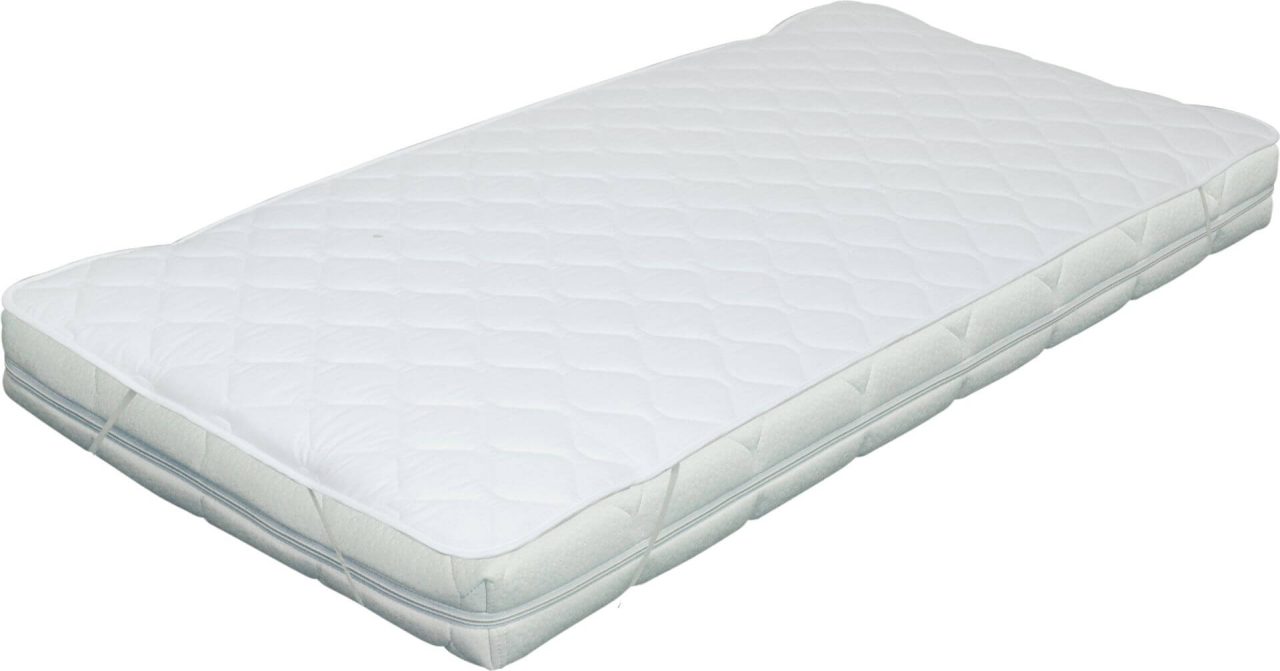
Image: Easy to put on thanks to the practical elastics.
5. The bed is not a trampoline or a warehouse
To make sure your mattress lasts a really long time, don’t put heavier things on it for long periods of time (especially things that are crowded into a small space). This could cause the mattress to dent or push through. Also, be careful of bending, which can break the mattress, irreversibly destroying it. Sagging of the mattress can occur due to children jumping on the bed, but also due to choosing an unsuitable mattress or after leaning the mattress against a wall.
6. Follow the manufacturer’s instructions
Remember to follow the manufacturer’s instructions for maintenance. It may be that some materials are sensitive to the use of chemicals, which can damage the material. The same applies to excessive heat when drying the mattress.
How to remove the 3 most common mattress soiling
The most common stains that appear on a mattress are blood or urine stains. In addition, mattresses often have problems with mould removal. Protective covers can help you protect your mattress , but so can protectors. These only need to be washed in the washing machine. But how do you remove dirt directly from the mattress?
Cleaning bloodstains
The key to cleaning blood stains on any mattress is to use cold, even ice-cold water. Why can’t the water be warm? Because the blood would curdle and penetrate even deeper into the fibres. So just soak a fresh stain with cold water and gently rub it over. If the stain won’t go away, sprinkle table salt on it and leave it on for 30 minutes. Baking soda will also help with removal, but remember that it bleaches, so you may find a lighter spot on a beige upholstery after cleaning.
A mixture to remove bloodstains:
Pour a quarter cup of 3% hydrogen peroxide into a bowl,
add 1 tablespoon of salt and 1 tablespoon of dishwashing liquid,
make a paste of the ingredients,
apply the paste to the stain and allow to dry,
then scrape off the remaining paste and gently apply a white cloth soaked in hydrogen peroxide to the spot.
Use the dry cleaning process to clean old blood stains. Sprinkle baking soda on the stain and gently rub it in. Leave the soda on for more than 10 hours. Then vacuum the mattress. The stain probably won’t disappear completely, but it will fade without damaging the mattress.
Cleaning urine stains
Removing urine is difficult, but it needs to be dealt with as it smells strongly. What procedure to choose?
Mix 3 tablespoons of baking soda and 240 ml of hydrogen peroxide,
add 2 drops of dishwashing liquid,
rub the mixture on the stain, but do not scrub, just let it dry.
If the stain does not disappear, make a lather with 3 tablespoons of bleach-free washing powder and 1 tablespoon of water. Apply the foam to the stain and leave it for 30 minutes. Scrape off any dried residue with a spoon. Clean the spot with a white cloth dampened with hydrogen peroxide.
Mold removal
If you find mould on your mattress, remove the cover immediately, treat the stains with an anti-mould product and wash the cover as recommended by the manufacturer. If there is mould on the mattress, use a sponge and anti-mould product to get rid of it. If the mould is too deep or on a large part of the mattress, throw it away and get a new one. You can’t get rid of dangerous mould spores.
How to protect the mattress from contamination
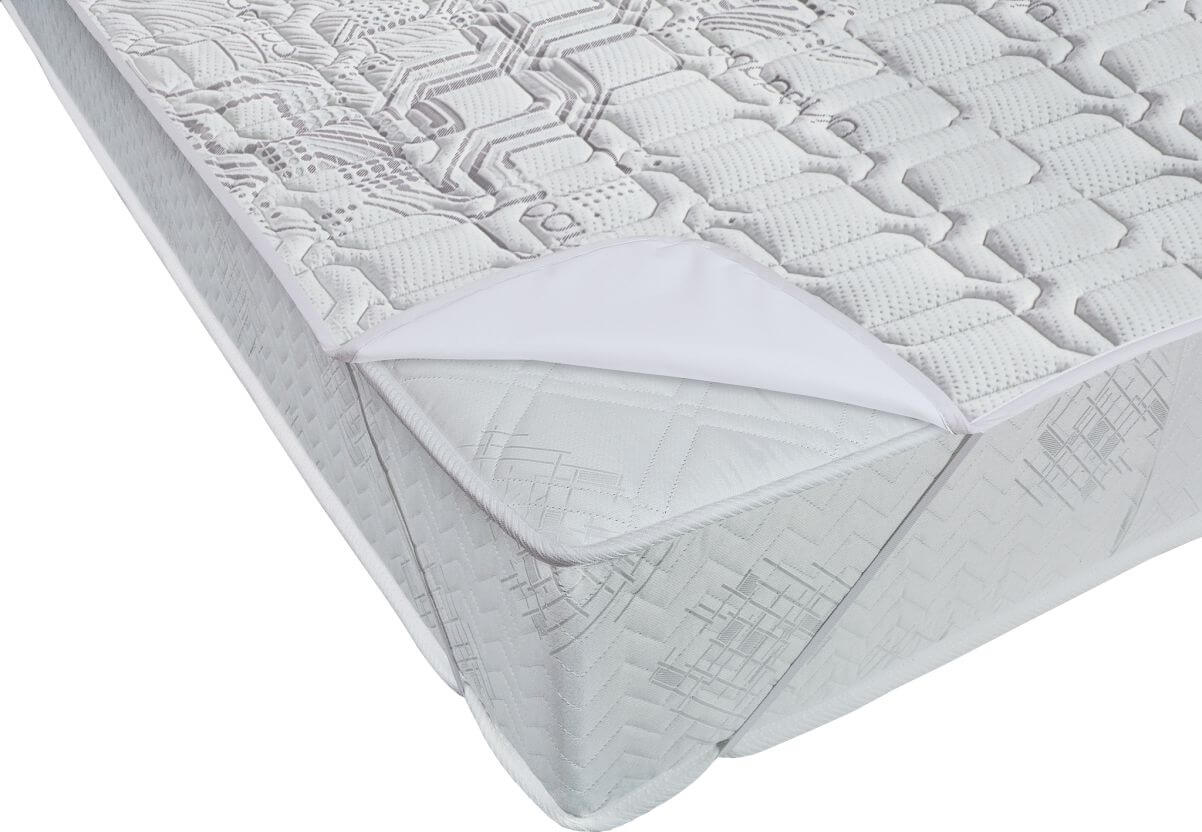
If you don’t want to spend hours cleaning your mattress, fit it with a mattress protector. The mattress protector is simply attached to the mattress with rubber bands. It has the following features:
can prevent mites and bacteria from entering the mattress,
can trap fats, salts and other substances contained in sweat,
protects the mattress from stains.
Thanks to its compact dimensions, it is easy to wash. To get rid of all allergens and dirt, the water temperature should be at least 60 °C.
When can you do without a mattress protector?
From a hygienic point of view, every mattress should have a protector. For people without discomfort, the Domestic mattress protector is ideal, as it is made of 100% cotton and stitched with a conditioning PES hollow fibre filling. However, there are also specific situations that require a mattress protector.
Image: Mattress protector with impermeable and textile layer.
The baby sleeps with the parents in bed – in this case, the Baby Protect is suitable, which consists of a top suction layer and a bottom waterproof layer. The mattress protector can trap urine, which it does not let through to the mattress.
Recumbent patient – Long-term patients who have difficulty holding urine should have a mattress fitted with a suitable protector. The Clinic mattress protector, which is made of waterproof fabric, is such a protector.
Guests in the house – the mattress protector increases the hygiene of the bed, which will also be appreciated by guests who stay over from time to time. The mattress protector can only be textile without a waterproof layer.
With proper care and protection, you can significantly extend the life of your mattress. In addition, you increase bed hygiene, which is important for a healthy sleep and rest.
Abychom poskytli co nejlepší služby, používáme k ukládání a/nebo přístupu k informacím o zařízení, technologie jako jsou soubory cookies. Souhlas s těmito technologiemi nám umožní zpracovávat údaje, jako je chování při procházení nebo jedinečná ID na tomto webu. Nesouhlas nebo odvolání souhlasu může nepříznivě ovlivnit určité vlastnosti a funkce.
Funkční
Always active
Technické uložení nebo přístup je nezbytně nutný pro legitimní účel umožnění použití konkrétní služby, kterou si odběratel nebo uživatel výslovně vyžádal, nebo pouze za účelem provedení přenosu sdělení prostřednictvím sítě elektronických komunikací.
Předvolby
Technické uložení nebo přístup je nezbytný pro legitimní účel ukládání preferencí, které nejsou požadovány odběratelem nebo uživatelem.
Statistiky
Technické uložení nebo přístup, který se používá výhradně pro statistické účely.Technické uložení nebo přístup, který se používá výhradně pro anonymní statistické účely. Bez předvolání, dobrovolného plnění ze strany vašeho Poskytovatele internetových služeb nebo dalších záznamů od třetí strany nelze informace, uložené nebo získané pouze pro tento účel, obvykle použít k vaší identifikaci.
Marketing
Technické uložení nebo přístup je nutný k vytvoření uživatelských profilů za účelem zasílání reklamy nebo sledování uživatele na webových stránkách nebo několika webových stránkách pro podobné marketingové účely.