Correct sleeping positions contribute to healthy sleep. Which ones are they?
9 minutes of reading
20
Dec
During sleep, your body regenerates and renews itself. Sleep position fundamentally affects how you sleep. You can get up in the morning either refreshed, rested and full of energy, or tired and with back or joint pain. An inappropriate sleeping position can aggravate existing health problems, such as lower back pain, lumbar pain and so on.
Why is the correct position for falling asleep and staying asleep so important?
The best sleeping position is one that promotes a healthy curvature of the spine from the hips to the head. Although some sleep positions are recommended by experts more than others, your health and personal preference is also important.
By sleeping in the right position, you can get rid of unpleasant pains and health problems. If you have pain in your hips, knees, shoulders, cervical spine or problems with poor blood circulation to your limbs, changing your sleeping position can help. However, it may take some time to get used to the new sleeping position.
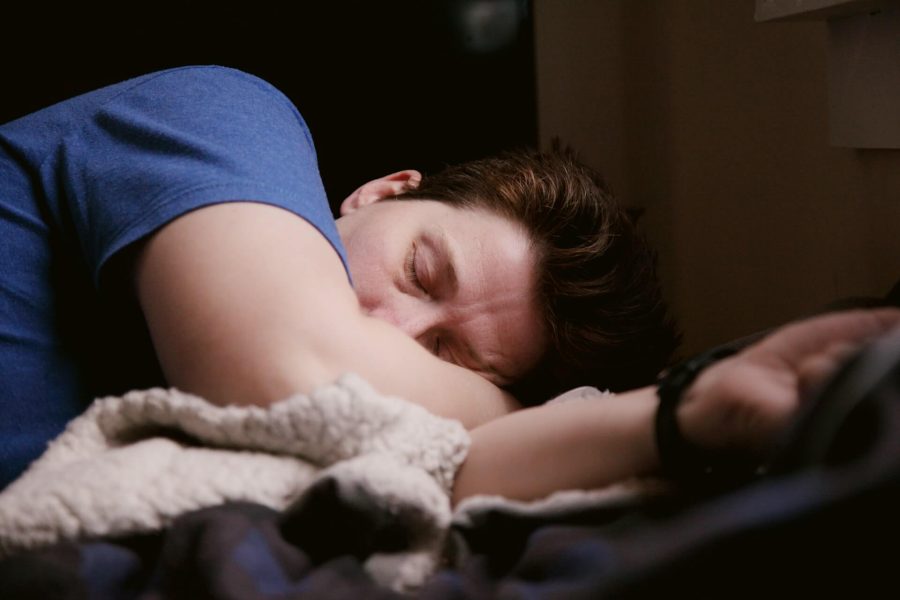
Picture: sleeping on your side and back is best for your spine.
Do you sleep on a quality mattress and a matching mattress?
It’s not just the sleeping position, but also the quality of the mattress and mattress topperthat affects how you sleep. Did you know that you should change your mattress about every 7 years for hygiene reasons? After that time, despite regular cleaning, so much dirt and bacteria build up that it’s best to replace it with a new one.
A mattress that is prone to bedsores, or a mattress with inadequate firmness or made of unsuitable materials , can also contribute to back pain and other health problems. A mattress that is not compatible with the type of mattress may also be to blame.
How do you choose the right mattress?
Its length should be 20 to 25 cm longer than your height.
The most comfortable mattresses are those with a height between 17 and 22 cm. The higher the mattress, the more comfortable the sleep, but also getting in and out of bed.
The firmness of the mattress should match your sleeping position, health complications and age.
Choose the material based on the requirements for restful sleep (breathable, warm, cooling, antibacterial, etc.).
Always choose the load capacity of the mattress according to your weight. The load capacity should be about 20% more than your weight.
The load capacity of the grid should be about 10 to 15 kg more than your weight.
The design of the grid must match the type of mattress. Foam mattresses are most often combined with slatted and reclining mattresses, spring mattresses with slatted and fixed mattresses.
If you suffer from health problems, especially musculoskeletal problems, but also, for example, insufficient blood circulation to the limbs, snoring or problematic lymph flow, reach for a reclining grill.
Sleeping on your back and side is healthier than sleeping on your stomach. This is because it is easier to keep the spine properly supported and in a healthy curve in these positions. It is not under unnecessary pressure, and so your muscles can relax and recover.
1. Sleeping on your back
One of the healthiest positions is sleeping on your back. What should you know about it?
Who is it suitable for?
When sleeping on your back, your spine is in one plane and your body weight is evenly distributed. Therefore, it does not cause pain in the cervical spine or back. If you prop yourself up with a pillow while sleeping on your back, you can relieve a stuffy nose from a cold or allergies.
Sleeping on your back is one of the best positions if you have back or cervical spine pain. A well-chosen pillow will help you with your cervical spine pain. The best choice is an anatomical pillow that supports the neck and prevents the head from tilting.
This is an ideal position for people who suffer from heartburn. The digestive system in the supine position drops from the mouth to the stomach, so stomach acids have no chance to rise up.
If you want to prevent wrinkles, sleep on your back. Your face isn’t pressed into a pillow or mattress, so your skin doesn’t strain unnecessarily.
If your back hurts in this position, it may be because there is a gap between your lower back and the surface of the mattress. This causes uncomfortable tension in the lumbar region. Prop yourself up with a thin pillow or place a pillow under your knees. This will relieve pressure and support the natural curvature of your spine.
Who is it not suitable for?
Conversely, the supine position is not the happiest choice for those who suffer from sleep apnoea (breathing stoppages during sleep). This is because when sleeping on your back, the tongue and soft tissues in your throat “sink” backwards, blocking your airway. People also snore frequently for this reason.
On the back should not sleep in late pregnancy future moms. As the baby grows in them, the pressure on the heart increases and blood flow is blocked.
Matching pillow and mattress
If you sleep on your back, get a taller, medium-soft pillow in an anatomical shape. Choose a soft to very soft mattress from the mattress range.
Good advice: If you sleep on your back, try to keep your arms evenly along your body. If you sleep with one hand on your forehead, for example, your spine will be misaligned and result in back pain.
Image: sleeping on your back is the healthiest.
2. Sleeping on your side
The sideways position is the second most popular and healthiest. It promotes a healthy curvature of the spine and is the position that best counteracts back pain.
Who is it best suited for?
Pregnant women like to sleep like this. Sleeping on their side relieves the pressure caused by the growing tummy. It is recommended for pregnant women to sleep on their left side. We write more about this sleeping position in pregnancy in a separate chapter below.
It is also chosen by people who struggle with back and cervical spine pain. In this case, it is recommended to put a pillow or blanket between the knees. People who snore or suffer from sleep apnea also sleep on their side. This position does not block the airways.
Who is it not suitable for?
People who suffer from hip and shoulder pain should not sleep in this position. It is these parts that are exposed to excessive pressure. Sleeping on your side can contribute to the formation of wrinkles due to the pressure of your face against the pillow.
Matching pillow and mattress
For side sleepers, a higher and firmer pillow with an anatomical shape is the best choice. The head should remain on axis with the body. Since side sleeping puts the most pressure on the shoulders, hips and knees, you should sleep on a medium to soft mattress. A zoned mattress is best.
3. Sleeping on your stomach
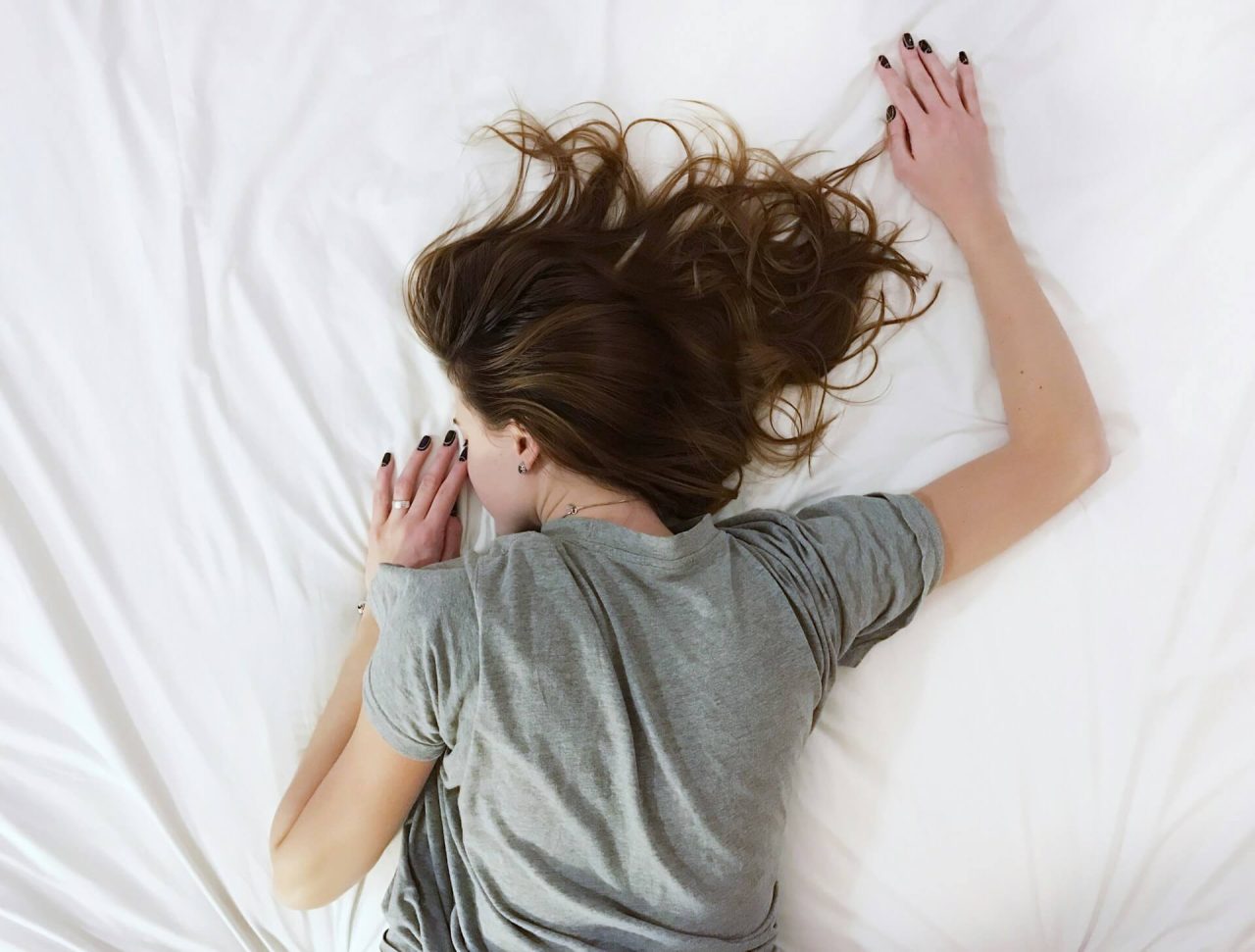
Sleeping on your stomach is considered the least healthy sleeping position because your neck is always turned to one side or the other. Yet it can have its advantages.
Who is the location suitable for?
Sleeping on the stomach seems to be most suitable for those who snore. Snoring is relieved by opening the airways. As your ribs work against gravity, you use more energy and so you may sleep less soundly.
For whom is the position not suitable?
Pregnant women, people with back and neck pain and those who want to avoid wrinkles should not sleep on their stomachs. When sleeping in this position, your back has the least support and is also subjected to excessive pressure, which can lead to pain when you wake up.
Matching pillow and mattress
To get the best sleep on your stomach, you need a firm mattress that doesn’t allow your stomach and hips to sink down unnecessarily and put strain on your spine. Choose a pillow that is as thin as possible or sleep without a pillow. This will prevent your neck from craning sideways or your head from tilting. Also place a thin pillow under your hips. This will straighten your spine and relieve pressure.
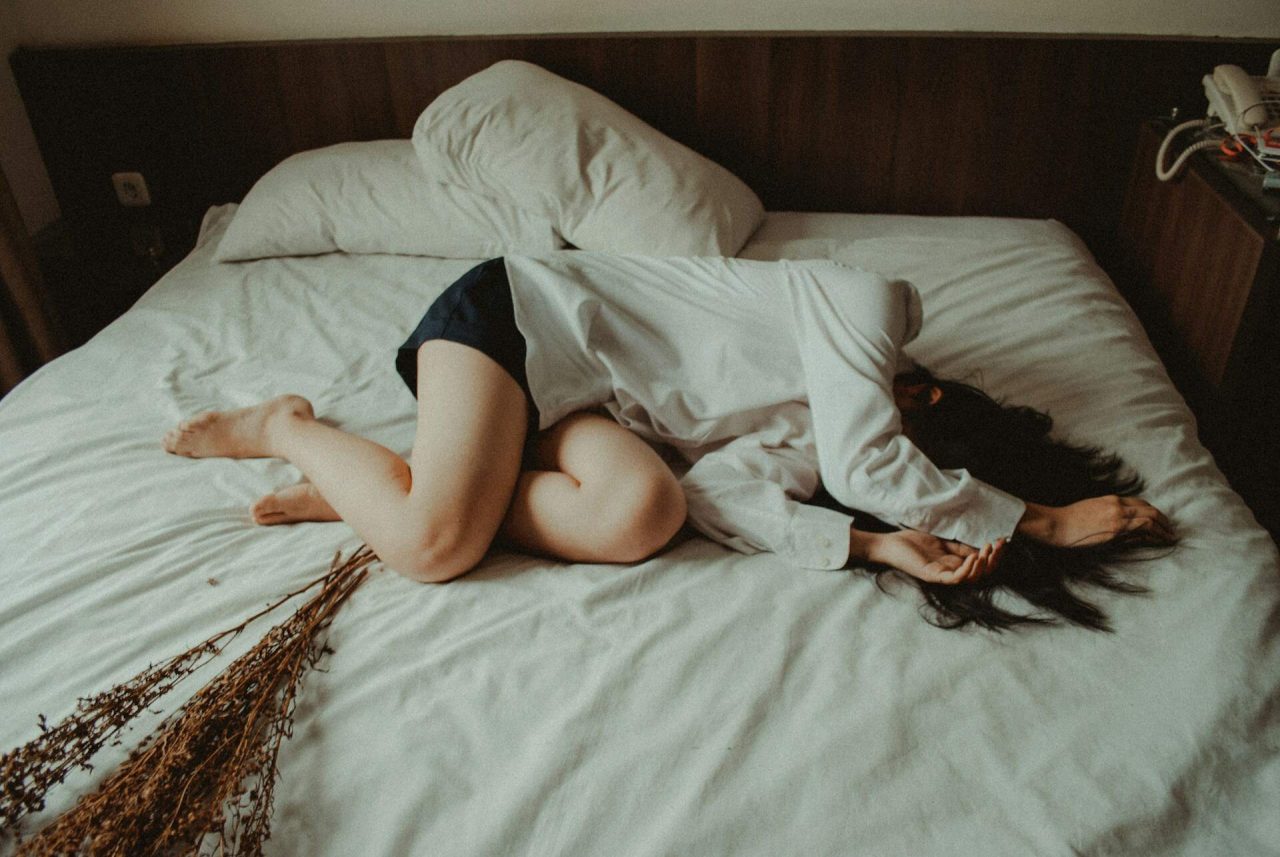
Picture: sleeping on your stomach not only strains your cervical spine.
The best sleeping position in pregnancy
If you are pregnant, sleep on your left side. The left side allows proper circulation of blood in the heart. In addition, it prevents pressure on the liver, promotes healthy blood circulation to the fetus, uterus and kidneys. In this position, nutrients reach the baby better through the placenta. The kidneys are lightened, and so more easily carry toxins away from the body.
When sleeping on your side during pregnancy, you should keep one or both knees bent to benefit your back. Your support system will be most relieved if you put a pillow between your knees and under your stomach. You can also use a pregnancy pillow to support your whole body.
In early pregnancy, it is also possible to sleep on the stomach. However, with a growing belly, this position becomes less comfortable. In the advanced stage of pregnancy, sleeping on the back is also not recommended. This is because the baby increases the pressure on the heart and prevents smooth blood flow. Sleeping on the back can cause a decrease in blood pressure and feelings of nausea.
Partner sleeping positions
Partner positions are a special chapter. There are many of them and each one may suit a different one. Choose the most suitable one according to the following factors:
Movement – one partner may not be comfortable if the other partner is “flapping” with him/her. Therefore, the optimal position is one in which they touch as little as possible. This can be, for example, cliffhangers, where each partner sleeps on one side of the bed, or sleeping on their stomach.
Snoring – again, if one partner snores, the most suitable position will be one where the other partner sleeps as far away as possible. The snorer should sleep on their stomach or side.
Space and sweating requirements – if you need plenty of space or sweat a lot at night, cliffhangers, sleeping on your stomach or face-up will suit you.
Contact sleeping – if you sleep more peacefully when you can feel your partner next to you, choose the spoon position, where one partner hugs the other from behind. If you are sweating a lot, you can sleep back to back and only touch each other behind. Others may prefer the intertwined face-to-face position, where your arms and legs are intertwined.
Both partners should sleep in the sleeping position that best suits them and does not cause them health problems.
Enjoy a restorative sleep
The healthiest sleep positions are on your back and on your side. In these positions, your spine is in its most natural position, so there is no overloading and consequent pain. Sleeping on your stomach is the least advisable, when the spine is extremely loaded. The cervical spine suffers the most, due to the head rolling to the side. Support each sleeping position with a suitable pillow and a properly chosen mattress.
Abychom poskytli co nejlepší služby, používáme k ukládání a/nebo přístupu k informacím o zařízení, technologie jako jsou soubory cookies. Souhlas s těmito technologiemi nám umožní zpracovávat údaje, jako je chování při procházení nebo jedinečná ID na tomto webu. Nesouhlas nebo odvolání souhlasu může nepříznivě ovlivnit určité vlastnosti a funkce.
Funkční
Always active
Technické uložení nebo přístup je nezbytně nutný pro legitimní účel umožnění použití konkrétní služby, kterou si odběratel nebo uživatel výslovně vyžádal, nebo pouze za účelem provedení přenosu sdělení prostřednictvím sítě elektronických komunikací.
Předvolby
Technické uložení nebo přístup je nezbytný pro legitimní účel ukládání preferencí, které nejsou požadovány odběratelem nebo uživatelem.
Statistiky
Technické uložení nebo přístup, který se používá výhradně pro statistické účely.Technické uložení nebo přístup, který se používá výhradně pro anonymní statistické účely. Bez předvolání, dobrovolného plnění ze strany vašeho Poskytovatele internetových služeb nebo dalších záznamů od třetí strany nelze informace, uložené nebo získané pouze pro tento účel, obvykle použít k vaší identifikaci.
Marketing
Technické uložení nebo přístup je nutný k vytvoření uživatelských profilů za účelem zasílání reklamy nebo sledování uživatele na webových stránkách nebo několika webových stránkách pro podobné marketingové účely.