A great guide to choosing duvets, blankets and pillows
7 minutes of reading
21
Dec
You’ll probably agree that sleep has a huge impact on how we feel throughout the day. How to get the best sleep possible? Focus on all the factors that affect the quality of your sleep. One of them is the choice of duvet and pillow, which has a bigger impact on our sleep than it might seem at first glance. What makes a good duvet or duvet cover and pillow?
How to choose a blanket
First of all, let’s take a closer look at on what basis to choose a duvet. When choosing a duvet or duvet cover, the size of the duvet and the material from which it is made are crucial. You should also choose according to the season it is intended for and the weight should not be neglected.
What size blanket to choose?
The standard size of a single duvet is usually 140 x 200 cm. If this length is too short for you, you can choose an extended duvet cover 140 x 220 cm.
Some people like to share a duvet with their counterpart. The standard size of a duvet for two is 220 x 210 cm or 200 x 220 cm. For children, duvets are available in 110 x 80 cm or 130 x 90 cm. Small duvets with dimensions of 40 x 50 cm are suitable for the smallest children in prams. Of course, some manufacturers also offer duvets in non-typical sizes, but in this case you will also need to buy new bedding that matches the size of the duvet.
The material is decisive
Just as there are several sizes of duvets, there are also several materials from which duvets and blankets can be made. It is up to you whether you prefer natural or synthetic material.
For example, feather blankets are popular because of their warmth, durability and excellent insulating properties. However, Hollow Fill is probably the most popular material at the moment. Hollow fibre blankets and duvets also offer long life, plus they are very lightweight, warm and are associated with very easy maintenance. You may also come across microfiber. Again, microfiber bedding is very lightweight and has great thermoregulating properties. Less common then are wool and silk fillings. The advantage of wool fillings is that they are warm in winter and cool in summer. Silk fillings are especially appreciated by people who sweat a lot at night, as they are extremely absorbent.
Even the material of the covers plays a role
When you say the material of a duvet, many people think of its filling, but the material of the covers is undoubtedly also worthy of attention. A number of companies offer covers that are characterised by exceptional properties. The cover fabric of duvets, blankets and pillows can be made of cotton, for example, but also microfiber with aloe verawhich has antibacterial properties and contributes to skin care.
Choosing a blanket according to the season
Not all blankets and duvets are suitable for all four seasons. There are both light blankets for summer and warm winter duvets. However, you can also choose versatile duvets suitable for year-round use. Some manufacturers label the blankets with numbers from 1 to 5, which indicate the degree of warmth. Below grade 1, you’ll find lightweight duvets ideal for summer, while grade 5 is particularly suitable for winter types for the winter months.
Choose blankets and duvets according to the season.
What does the weight say about the duvet or blanket?
In addition to the degrees of warmth, the weight of the blanket is also an important indicator. It is not always true that the thicker the blanket, the warmer it is. You can tell the warmth by the density of the fibres used. This is given in grams per square metre. If you are looking for a duvet for warm days, choose summer duvets with a weight below 300 g/m2. For the transitional period, blankets with a weight of around 350 g/m2 are suitable, and in winter you will be warmed by blankets and duvets with a weight of around 400 g/m2.
How to choose a pillow
Do you want to wake up in the morning perfectly rested and without headaches and neck pain? Then you should also consider choosing a quality pillow. Experts agree that the wrong pillow can lead to headaches, insomnia and unpleasant spinal blockages. You should choose a pillow based on its material and shape.
Pillow material
The filling of the cushions can again be both natural and synthetic. Natural materials are dominated by feathers, which have several advantages, but are also associated with disadvantages. Feather pillows are pleasantly soft and firm at the same time, but a major disadvantage is that they often breed dust mites.
Synthetic fillings include hollow fibre and memory foam. Hollow fibre is very light, airy, has great insulating properties, holds its shape well and is associated with easy maintenance. Great properties are also associated with memory foam. It adapts perfectly to the weight and shape of the head and neck and ensures the correct sleeping position. In addition, thanks to its rigidity and airtightness, it creates an unsuitable environment for dust mites, making the memory foam pillow suitable for allergy sufferers. It also boasts a long service life.
The shape of the pillow
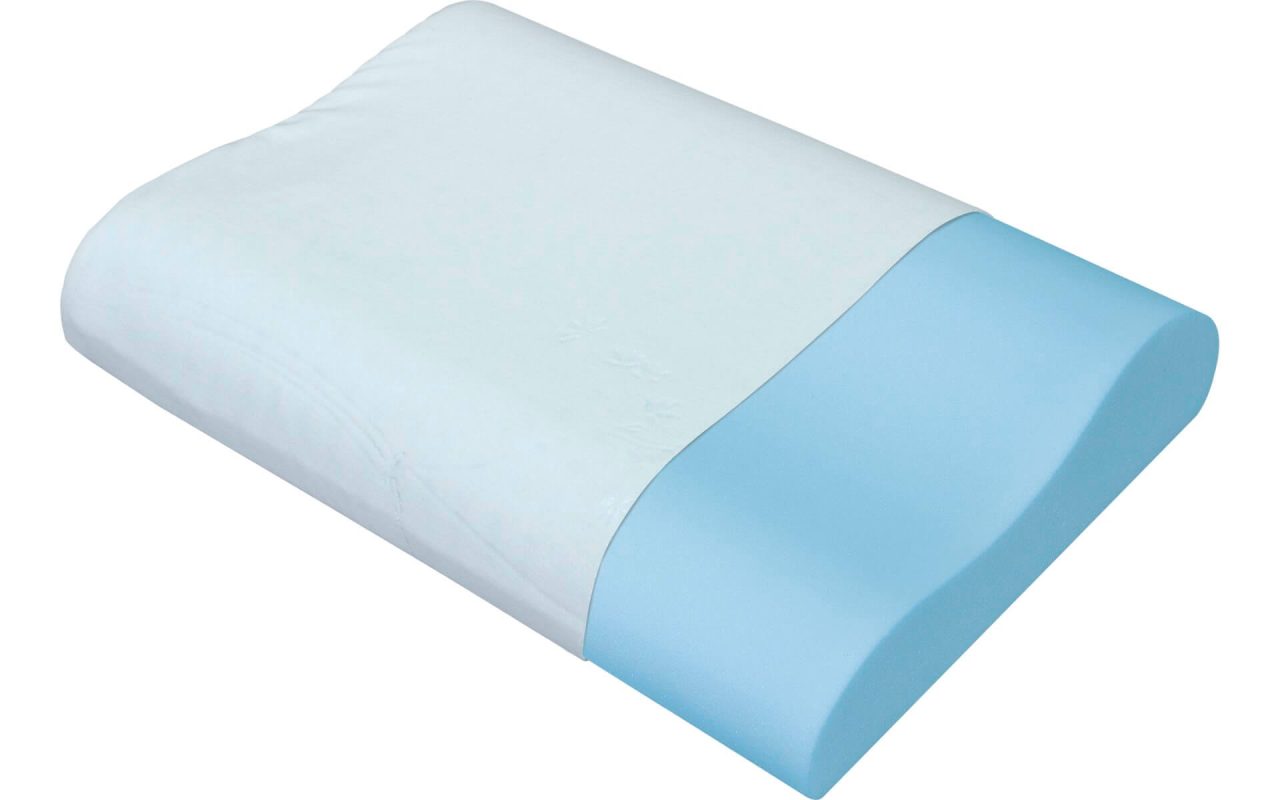
You should always choose the shape of your pillow based on the position you most often sleep in and the length of your neck. If you sleep on your back, pillows with a higher and firmer filling are preferable, whereas if you prefer to sleep on your stomach, you should look for lower pillows with softer filling. Anatomically shaped, or orthopaedic, pillows are very popular, usually in the shape of a double wave, and are suitable for both back sleepers and those who prefer to sleep on their side.
Why bet on an anatomical pillow?
If you want to make sure your cervical spine is in the correct position when you sleep, we recommend anatomical medical pillows. Anatomical pillows are usually made of memory foam, which is sensitive to temperature and pressure. So, the moment you lay your head on the pillow, the pillow is shaped to the shape and pressure of your head and neck so that the neck and shoulder muscles are perfectly relaxed.
Thermopur orthopaedic pillow.
Choosing duvets and pillows for allergy sufferers
A separate chapter is the selection of pillows and duvets for allergy sufferers, which is particularly important. A common reason why allergy sufferers find it difficult to sleep at night and have blocked airways is the presence of allergens in the bedroom, whether they are dust mites, pollen, pet allergens or mould.
In order to eliminate the amount of allergens in the bedroom, not only regular cleaning and ventilation is necessary, but also the right choice of bed, mattress, bedding and bed linen. For allergy sufferers, duvets and pillows made of synthetic material are a good choice. You can also find special hypoallergenic pillows and anti-allergenic duvets.
Duvets and pillows for children
Careful selection should of course also be associated with baby blankets and cot pillows, which have their own specifics. As far as the dimensions of the cot duvet are concerned, you will normally come across a size of 110 x 80 cm or 130 x 90 cm. The weight of the duvet cover should ideally be around 450 g/m2. And the material? Choose one that won ‘t irritate your baby’s sensitive skin.
How to choose a baby pillow? First of all, it should be said that until about 18 months, babies do not need a pillow. They can use it from about 1.5 years, but it is not a necessity. If you do decide on a pillow for your baby, it is essential that it is low, as it should not cause excessive bending of the cervical spine. Pillow sizes for babies normally range from 40 x 60 cm to 70 x 90 cm.
With bedding proven to affect sleep quality, don’t hesitate to invest in premium materials that will reward you with unsurpassed performance.
Abychom poskytli co nejlepší služby, používáme k ukládání a/nebo přístupu k informacím o zařízení, technologie jako jsou soubory cookies. Souhlas s těmito technologiemi nám umožní zpracovávat údaje, jako je chování při procházení nebo jedinečná ID na tomto webu. Nesouhlas nebo odvolání souhlasu může nepříznivě ovlivnit určité vlastnosti a funkce.
Funkční
Always active
Technické uložení nebo přístup je nezbytně nutný pro legitimní účel umožnění použití konkrétní služby, kterou si odběratel nebo uživatel výslovně vyžádal, nebo pouze za účelem provedení přenosu sdělení prostřednictvím sítě elektronických komunikací.
Předvolby
Technické uložení nebo přístup je nezbytný pro legitimní účel ukládání preferencí, které nejsou požadovány odběratelem nebo uživatelem.
Statistiky
Technické uložení nebo přístup, který se používá výhradně pro statistické účely.Technické uložení nebo přístup, který se používá výhradně pro anonymní statistické účely. Bez předvolání, dobrovolného plnění ze strany vašeho Poskytovatele internetových služeb nebo dalších záznamů od třetí strany nelze informace, uložené nebo získané pouze pro tento účel, obvykle použít k vaší identifikaci.
Marketing
Technické uložení nebo přístup je nutný k vytvoření uživatelských profilů za účelem zasílání reklamy nebo sledování uživatele na webových stránkách nebo několika webových stránkách pro podobné marketingové účely.