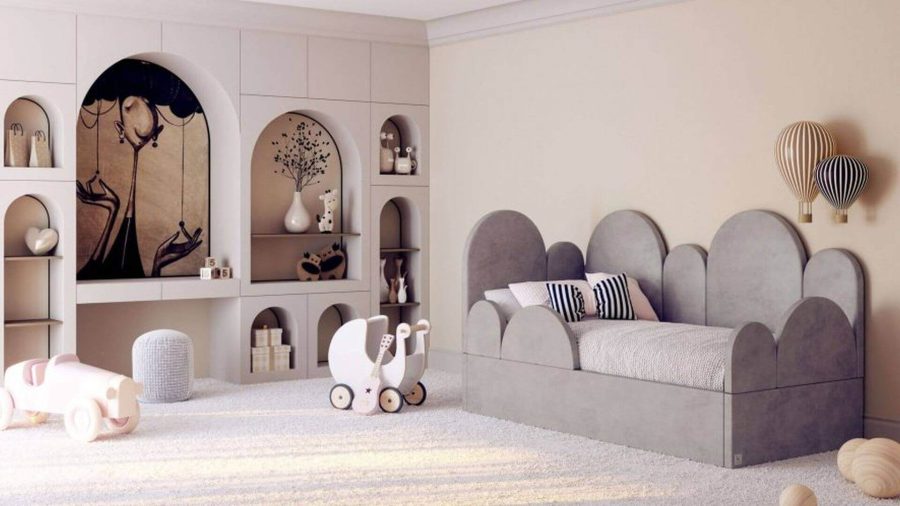
Choose a bed for your child’s room not only according to age, but also according to the space in the room. In a properly selected bed, the child will grow healthily, feel safe and get a good quality sleep.
The size of a child’s bed depends not only on age, but also on space
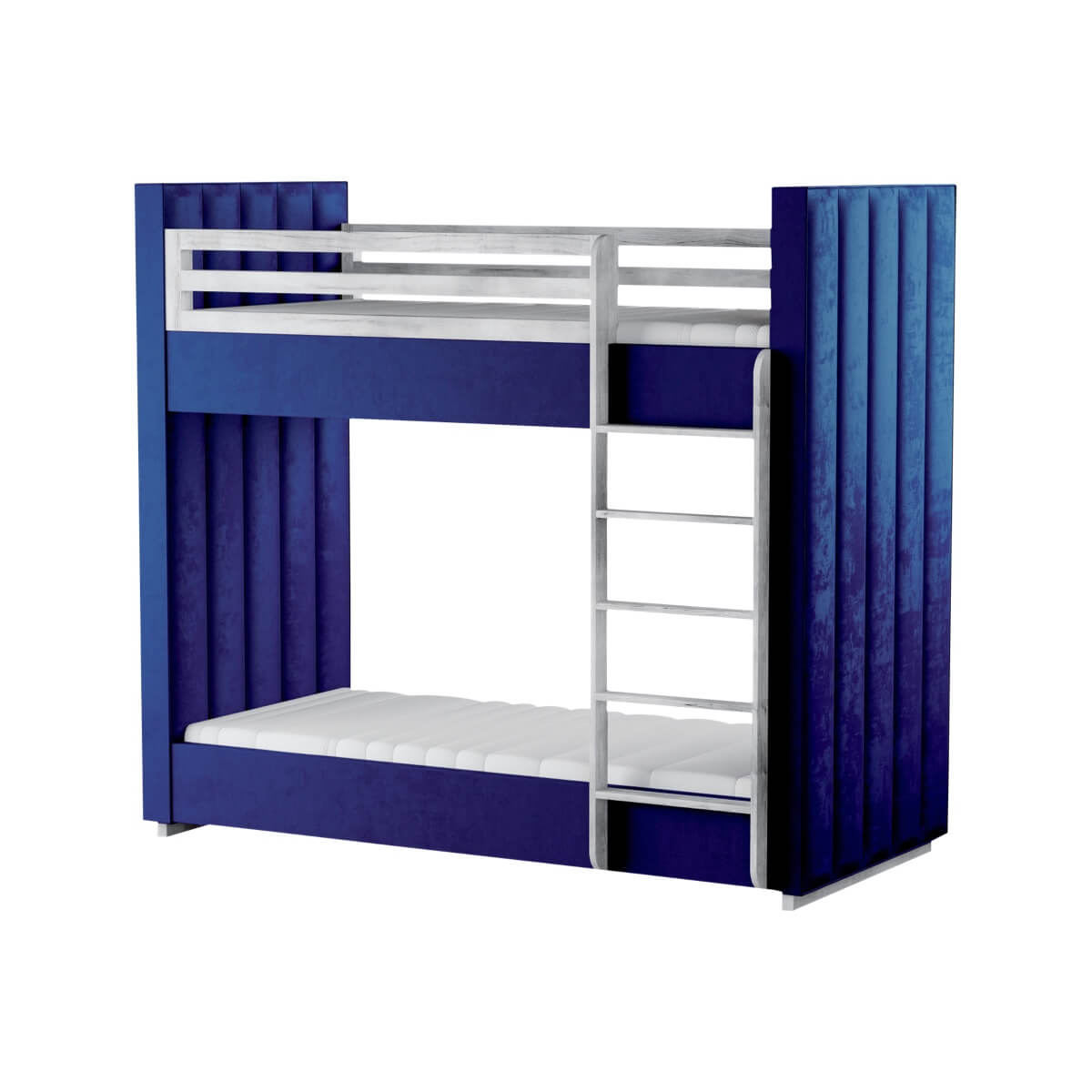
Choose a children’s bed for girls and boys not only according to the height of your child, but also according to the space possibilities of the room. For small rooms, a bunk bed that can comfortably sleep two children is usually the smartest choice. Two beds take up as much space as a single bed.
Raised beds are also made for smaller rooms. In the upper part there is a bed with a mattress and underneath there is space for a desk or storage boxes and wardrobes. Children who are not yet in school can have a play area here.
So before you decide on a particular bed, measure the room well. And remember that a child’s bed should be about 20 cm longer than your child’s height. Remember the other furniture in the room, too, and make sure there’s plenty of room to move around.
When choosing a bed size, think not only about your child’s current height, but also about how fast they are growing. You may not need to buy a junior bed, but you might as well choose a children’s bed that corresponds to a classic single bed for an adult with dimensions of 90 × 200 cm. So-called growing beds are also available, where a child’s bed can serve into adulthood by adding the right accessories.
What else to consider when choosing a children’s bed?
Your child’s ideas – let your child choose the colour or design of the bed. This will build his self-esteem.
Practicality – bet on the universal design of the furniture, which you can improve for children, for example, with stickers or decorations.
Room design – choose a bed to match the other furniture in the room.
The most common mistakes when choosing a bed:
Underestimating the quality of the mattress – the mattress has a major influence on the development of the spine. But it also affects the quality of sleep, which in turn determines children’s ability to learn and concentrate.
Prioritising appearance over functionality.
How to choose the right size bed for children?
When choosing a bed size, the most important thing to consider is:
Motor skills and confidence – think about how well/stable your child is around furniture and how adept they are at climbing. This is easy to spot in an outdoor playground, for example. Decide whether you prefer a low cot or a bunk or raised bed.
Current and estimated future height of the offspring – as we wrote above, note how fast the baby is growing. If you expect him to be a longhair soon, invest in a bed that he will grow into.
Beds for 4 to 6 year olds
For pre-school children, a toddler bed with a length of 140 cm is ideal; children’s beds with dimensions of 160 × 80 cm are also available. These are usually low beds, which are easy for children to get up and into. This allows them to go potty on their own or play when they wake up. The height of a low bed is around 25 cm. The overall height is influenced by the thickness of the mattress. Low beds for children are the ideal choice for transitioning from a cot to a larger bed.
The toddler bed should have restraints so that the baby does not fall off the bed during night wiggles. The barriers can extend half the length of the bed or be in the middle of the bed. In this case, there is clear space in the head and foot area. When choosing a mattress, measure well how high the barriers will be when the mattress is inserted.
Did you know that although you can buy a single bed with standard dimensions of 90 × 200 cm for small children, it is better to buy a smaller bed? The bed frame should be proportional to the height of the child. An unnecessarily spacious bed can interfere with the feeling of security.
Image: bed for smaller children should have restraints.
Beds for children aged 7 to 10 years
A bed with a length of 180 cm and a width of 80 cm is ideal for a schoolchild’s room. It is a transitional bed that prepares children for a classic children’s and actually adult bed with dimensions of 90 × 200 cm. The bed may already have a standard height of around 45 cm. The overall height of the sleeping surface is influenced by the thickness of the mattress. Remember that your child should be able to get out of bed safely and also lie down safely. Between 7 and 10 years old, children are old enough to sleep on a bunk bed.
The bed should offer children enough space for reading, dreaming and playing. At this age, children can still use the bed as a trampoline.
Beds for children between 11 and 15 years
At this age, children can sleep on a classic single bed that measures 90 × 200 cm. Wider children’s beds with dimensions of120 × 200 cm are also becoming increasingly popular. Such a bed will also suit the requirements of teenagers. The height of the bed is the same as an adult bed, i.e. 45 cm plus the mattress.
A child’s bed must not only be comfortable, but also safe
The manufacturer of baby cots for the little ones must comply with standard ČSN EN 716, which applies to cots. EN 747 applies to bunk beds and other types of beds for children’s rooms. . All parts and components (ladder, handrails, etc.) of the bed must be able to withstand both regular and increased loads.
At the same time, it is important that the child’s bed has no sharp edges so that there is no risk of injury. All edges must be sanded and rounded. Beds must be stable and have no holes or crevices that could cause bruising or breakage of fingers, hands and feet.
The finish of the bed must be suitable for children under three years of age. A safe bed has a surface finish made with materials that are not harmful to health and are suitable for allergy sufferers, including children, for example. Ideally, the fabric should be certified for children’s toys. Water-based varnishes should be used for painting, as they are more environmentally friendly and do not release an unpleasant odour.
Types of children’s beds and the most used materials for production
There are several types of children’s beds available on the market, so you can choose the one that best suits your needs and requirements.
Classic single bed – you can choose the same dimensions as for an adult bed, i.e. 90 × 200 cm, but also a children’s single bed with dimensions of 140 – 160 cm × 80 cm. A larger single bed with dimensions of 120 × 200 cm is also popular with parents. You will appreciate this when you are putting your baby to sleep or going to bed with him when he cannot sleep. Everyone will have plenty of space for sleep.
Children’s bunk bed – thanks to its compact design, it saves space in a small room and still offers two full-size beds.
Children’s bed with storage space – choose the design of the storage space in relation to the location of the bed. If it’s going to be in a corner of the room against a wall, you want a storage space that can be accessed by flipping the mattress away from the legs. If the bed will be accessible from both sides, you can choose a drawer storage option. The storage compartment can be used by children to stash toys, but it’s also a great place to store seasonal clothing. This saves space in the wardrobe.
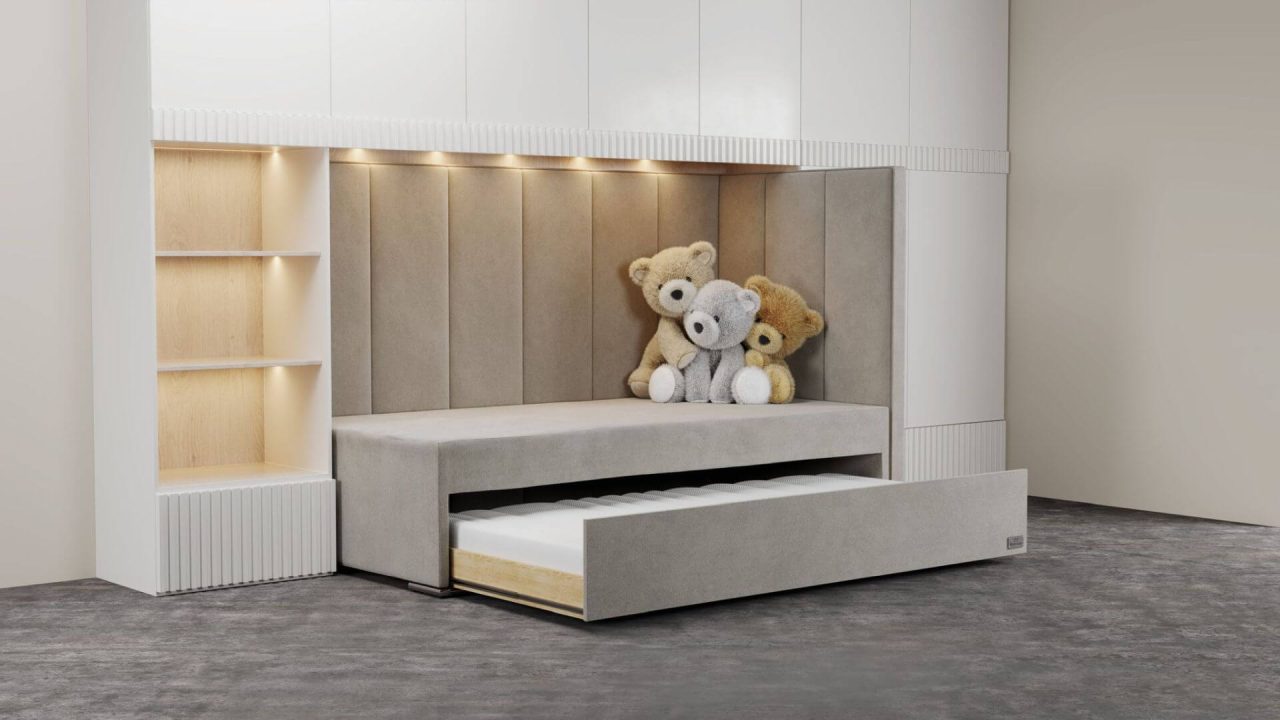
Children’s bed with extra bed – it is a folding bed, where a second mattress is placed under the bed instead of a storage space.
Multifunctional children’s beds – they can be, for example, in the form of a fold-out or swivel bed. If the bed is “folded”, the bottom part of the bed can be used as a desk, for example. When tipped or turned, it turns into a bed.
The choice of material usually depends on your financial possibilities.
Solid wood beds – they are among the more expensive, but they last for years. Moreover, they are easy to repair and renovate. Oak, pine, birch or ash are most often used for production. Oak is considered a more expensive material because it is harder. Soft pine is one of the cheaper materials. Solid beds are timeless and, thanks to their natural origin, anti-allergenic. Wood is pleasant to the touch. The disadvantage is the more demanding maintenance, which consists of occasional sanding, refinishing or the use of the necessary nutrition.
Metal beds – boasting stability and durability. It is an anti-allergenic material, so it is suitable even for children who suffer from respiratory problems. Metal can be painted with any tone of paint. However, if the bed is of poor quality, it may start to creak over time. The metal material is cold, which can be uncomfortable when resting.
Laminate beds – one of the most affordable. The advantage is easy maintenance and the availability of various colours and patterns, including wood imitation. However, laminate beds are not long-lasting and cannot be repaired as easily as solid or metal beds. If the bed is of poor quality, it can release harmful substances.
Sleep quality is closely related to the quality of the mattress
Did you know that children develop and grow even in their sleep? A child’s support apparatus develops and forms until about 18 years of age. That’s why they need to sleep on a mattress that supports proper spinal growth. How to choose the most suitable one?
Mattresses for children from 3 years of age – the most suitable production material is latex, coir, horsehair or other natural materials. A medium firmness mattress is ideal. Sufficient breathability is important. The mattress should have only one firmness.
Mattress for teenagers – due to hormonal changes, the mattress needs to be as breathable as possible. At the same time, it must support the still developing spine. Simply reach for a latex mattress, one with a spring core or one made of comfort foams.
Children’s mattresses are also available with treatments that repel bacteria and allergens. To keep your mattress in shape for as long as possible, air, vacuum and rotate it regularly. At the same time, provide it with a mattress cover and protector. Impermeable protectors are also available, which is a big help, especially for smaller children.
Frequently asked questions about choosing a bed for children
1. From how old can children sleep on a bunk bed?
It is generally stated that bunk beds are suitable for children aged 6 years and older. At this age, they have already sufficiently developed the necessary motor skills. However, it always depends on the individual child.
2. How long a bed to choose?
The bed should be approximately 20 cm longer than the child’s height. When choosing the length of the bed, think about how fast the child is growing. It may be worth getting a straight adult bed rather than a half-sized bed.
3. Which production material to choose?
The most popular are definitely solid wood, but also metal. Both are characterised by their long service life and anti-allergic properties. However, metal is cold to the touch, which can be unpleasant
4. How high should the bed be for smaller children?
Lower beds with a height of around 25 cm are ideal for preschoolers. From such a bed, the child will get up and return to it safely.
Abychom poskytli co nejlepší služby, používáme k ukládání a/nebo přístupu k informacím o zařízení, technologie jako jsou soubory cookies. Souhlas s těmito technologiemi nám umožní zpracovávat údaje, jako je chování při procházení nebo jedinečná ID na tomto webu. Nesouhlas nebo odvolání souhlasu může nepříznivě ovlivnit určité vlastnosti a funkce.
Funkční
Always active
Technické uložení nebo přístup je nezbytně nutný pro legitimní účel umožnění použití konkrétní služby, kterou si odběratel nebo uživatel výslovně vyžádal, nebo pouze za účelem provedení přenosu sdělení prostřednictvím sítě elektronických komunikací.
Předvolby
Technické uložení nebo přístup je nezbytný pro legitimní účel ukládání preferencí, které nejsou požadovány odběratelem nebo uživatelem.
Statistiky
Technické uložení nebo přístup, který se používá výhradně pro statistické účely.Technické uložení nebo přístup, který se používá výhradně pro anonymní statistické účely. Bez předvolání, dobrovolného plnění ze strany vašeho Poskytovatele internetových služeb nebo dalších záznamů od třetí strany nelze informace, uložené nebo získané pouze pro tento účel, obvykle použít k vaší identifikaci.
Marketing
Technické uložení nebo přístup je nutný k vytvoření uživatelských profilů za účelem zasílání reklamy nebo sledování uživatele na webových stránkách nebo několika webových stránkách pro podobné marketingové účely.