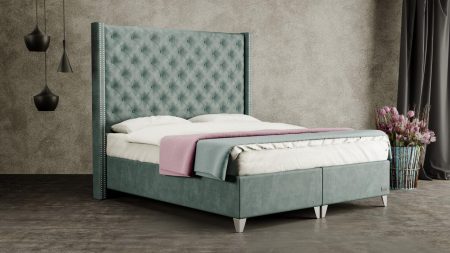
The headboard has been an integral part of the bed since the Middle Ages. While in ancient times headboards were made of wood and were only a decorative element, nowadays they also enhance the comfort of rest. Not only do they give the bed a luxurious look, but they also allow you to sit comfortably while reading or chatting with your partner.
What is the purpose of a high headboard?
The main mission of the bed was, is and will be to provide the sleeper with a comfortable sleep. Whereas in the past the bed was only for sleeping or intimate pleasures, today people read, do crossword puzzles, watch TV and work in bed (although experts warn against electronics in the bedroom).
It is because of the various activities people engage in in bed that the headboard is now important not only from a comfort point of view, but also from a technical point of view. Apart from being comfortable to lean against, it can have integrated lighting, electrical outlets, chargers for electronics and more.
However, the primary purpose of the upholstered headboard remains quality rest and sleep. In addition to the mattress and mattress, the headboard also ensures comfort. How?
It protects the sleeper from the cold penetrating the wall.
It gives a feeling of warmth, softness and security.
Provides a comfortable recline for a semi-sitting position (when reading a book, watching a movie or chatting with a partner). It is “sculpted” to follow the curve of the spine and does not cause pain even when sitting for long periods.
Headboards in the changes of time
Just as there is no armchair without a comfortable backrest, there is no comfortable bed without a headboard. After all, headboards have adorned beds since time immemorial.
Ancient times – in coastal states, sleepers were often bothered by insects. The bed was supposed to protect them from insects. A canopy of fine fabrics was all that was needed.
Middle Ages – in the Middle Ages, foreheads protected sleepers from the cold. Some beds had raised headboard edges to protect them from the cold.
Renaissance – from the 16th century onwards, the property of the owner is reflected in the design of the beds. The headboards are wooden and richly decorated with carving and painting. The comfort of the headboard is ensured by fluffy feather pillows.
Baroque – the gable is the supporting element of the canopy and is located between two columns. For the first time, fabric decoration is used. In fact, these are the first attempts to upholster the headboard. For beds without a canopy, the headboards are decorated with embossed carving, painting, gilding or inlay.
Rococo – the bed no longer has a canopy. In the foreground is the interest in the sumptuously decorated headboard, which is fitted with fabric. But there is no softening. The fabric is stretched over a hard base.
Classicism – the bed has a canopy, but it does not have columns at its feet. The headboards are upholstered in fabrics with floral patterns, but also in fabrics without patterns.
Empire – the height of the headboard above the bedding surface was often less than half the height of the mattress. The monumentality of the bed is highlighted by the canopies that reach up to the ceiling of the room.
Biedermeier – the fronts are inserted between the sides. Veneering and gloss are used for decoration.
Romanticism – the beds are decorated with upholstered headboards, which are fitted with lift elements. It is thanks to the pulls that headboards are becoming more comfortable.
Czech Cubism – the headboards at this time did not exceed the height of the loading area. They were located in the head and foot section and were approximately the same height.
Art deco – the headboards of the beds are made up of frame structures that are connected by removable fittings. They are attached to the side rails. They are decorated with solid slats and articulated by frames and fillers.
Functionalism – the fronts are smooth, rounded and high gloss. In terms of height, they slightly exceed the loading area.
Modern – 20th century beds boast soft upholstery with upholstery elements. Care is taken in the appearance of the headboard. Some headboards are as wide as the room wall. That’s why they are called upholstered walls.
The headboard decoration makes the bed a unique piece
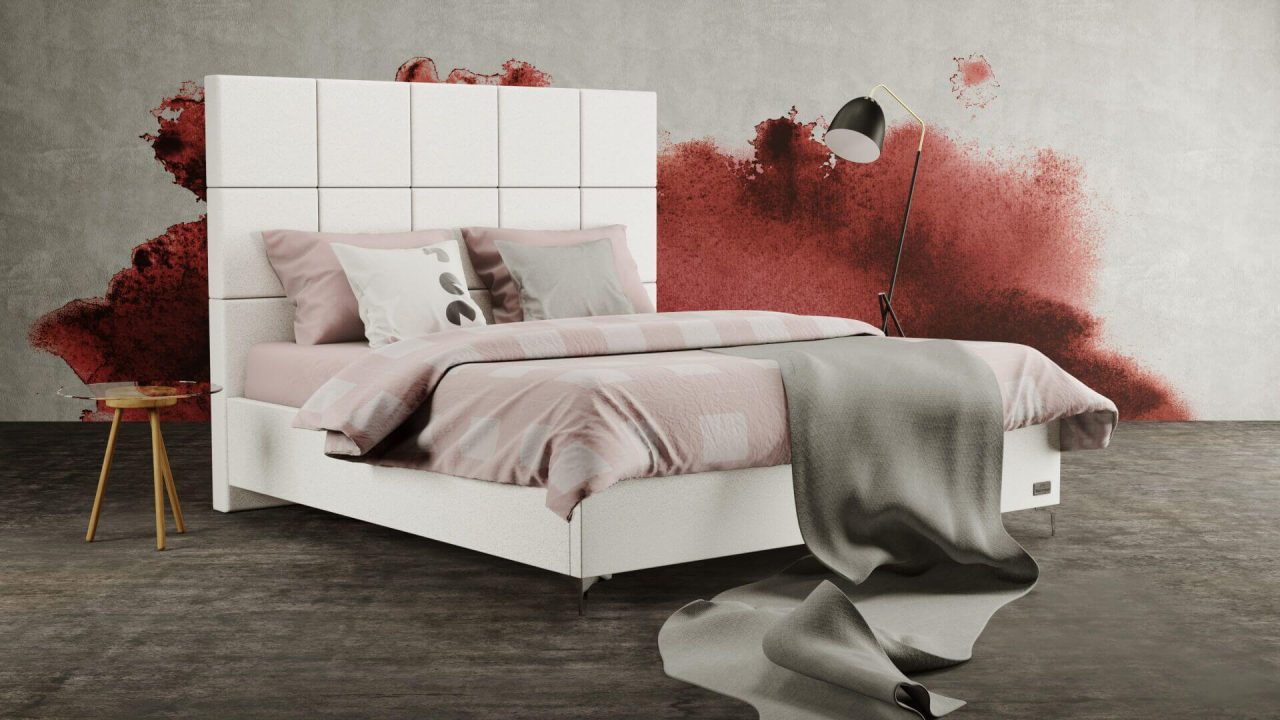
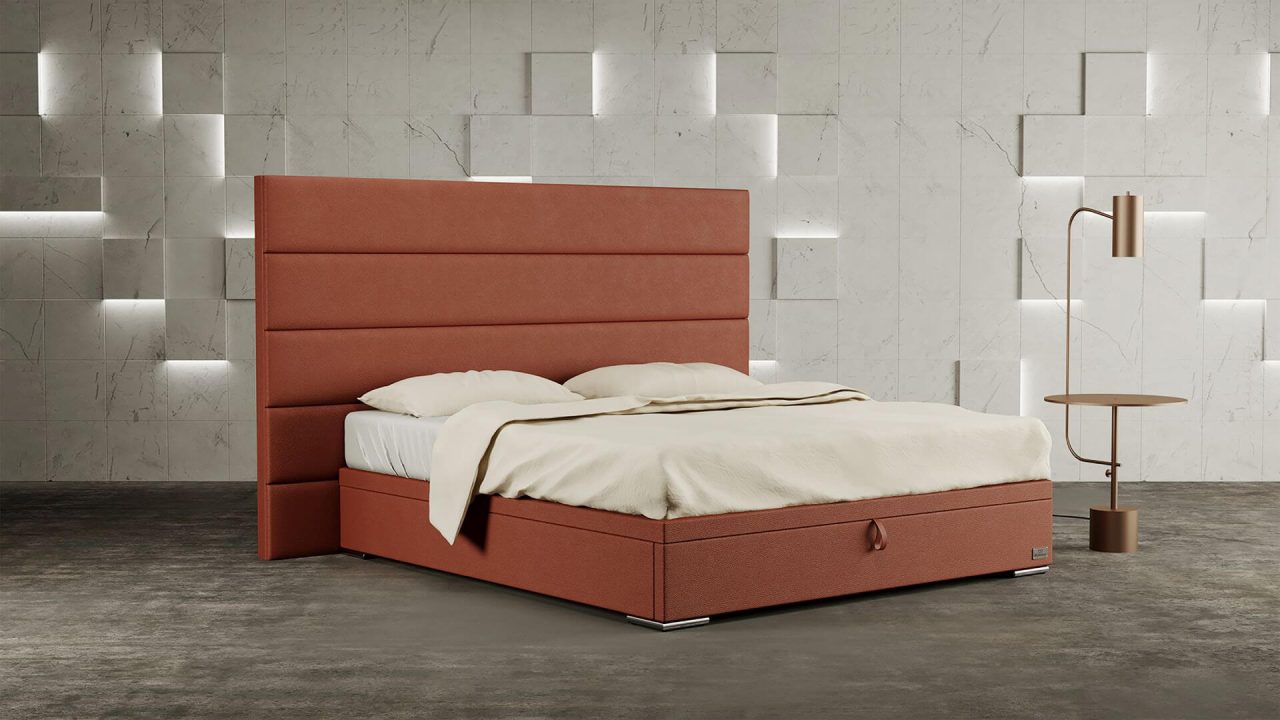
The high headboard dominates not only the upholstered bed, but also the entire bedroom. It lends it an air of comfort and luxury. Double beds are available with high headboards, which differ in decoration and workmanship.
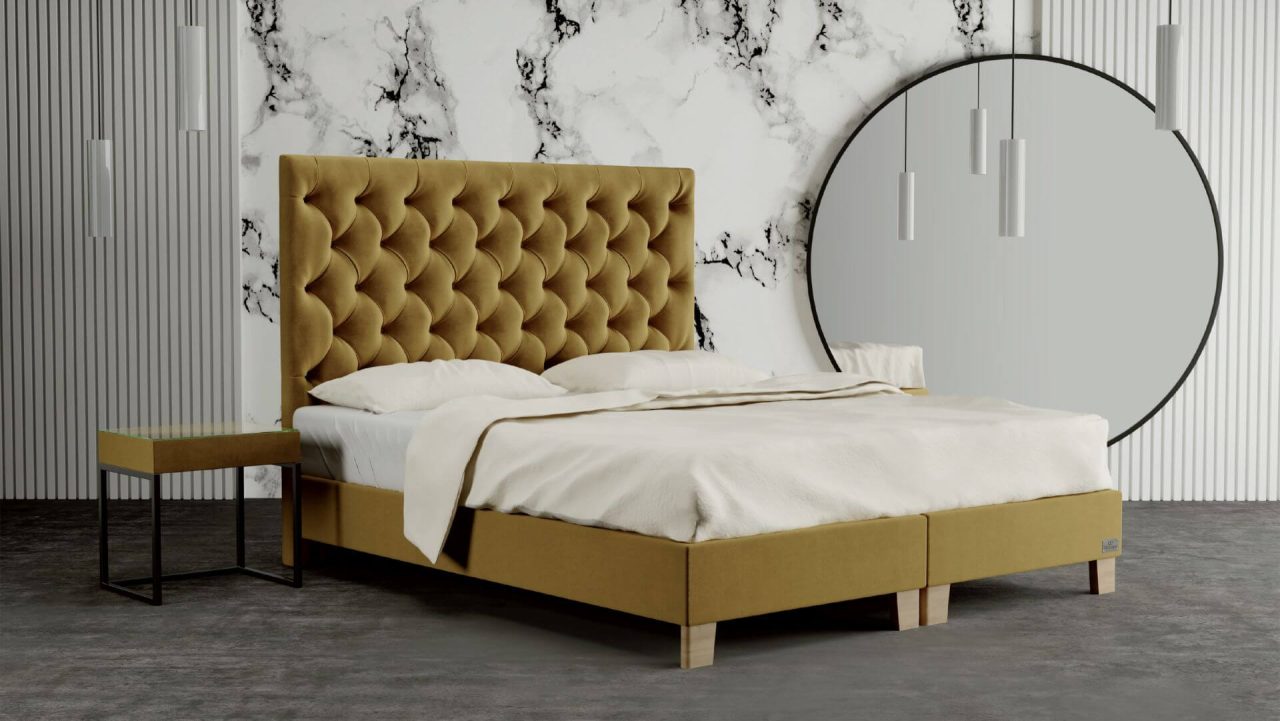
Head with ties
The high forehead lifts divide into smaller segments. It is a distinctive way of decorating that draws all the attention to the bed. It may or may not be decorated with upholstery buttons.
Picture: forehead decorated with bindings.
Upholstery combined with wood
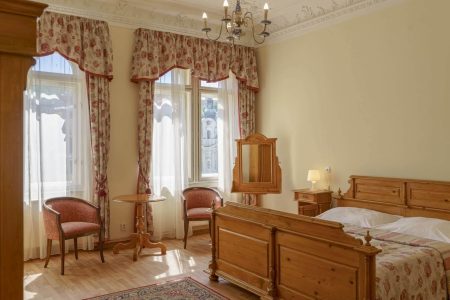
Soft upholstery fabrics are combined with other materials in order to give the bed a more plastic and varied material. Most often, wood acts as a contrast to the soft parts.
Picture: headboard made of combined materials.
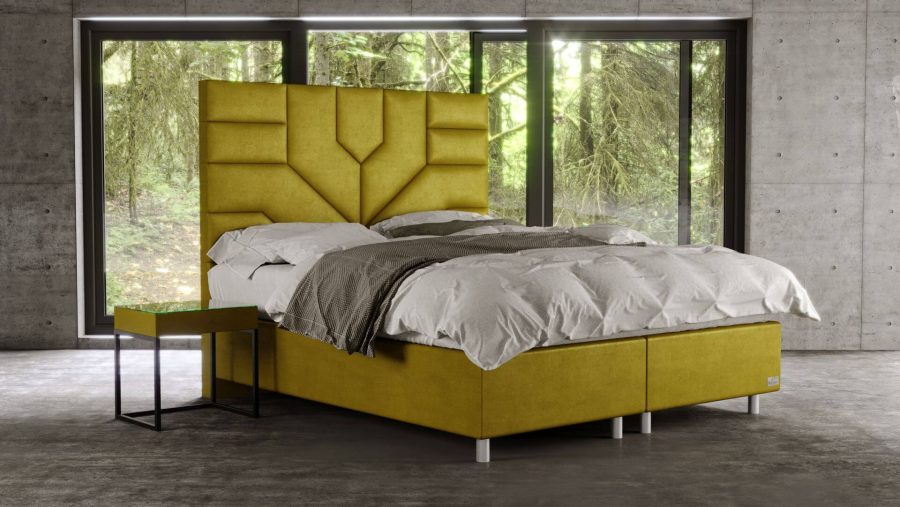
Front composed of parts
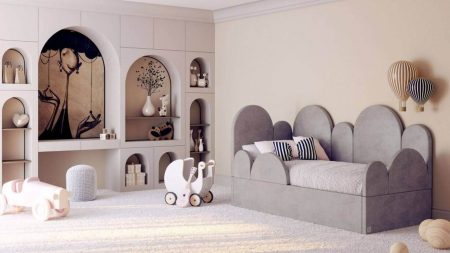
Some upholstered beds have headboards made up of individual pieces. These parts can have simple or complex geometric shapes that fit together. The individual parts can be stacked on top of the base. The headboard has a structured and sculptural appearance.
Picture: headboard composed of parts.
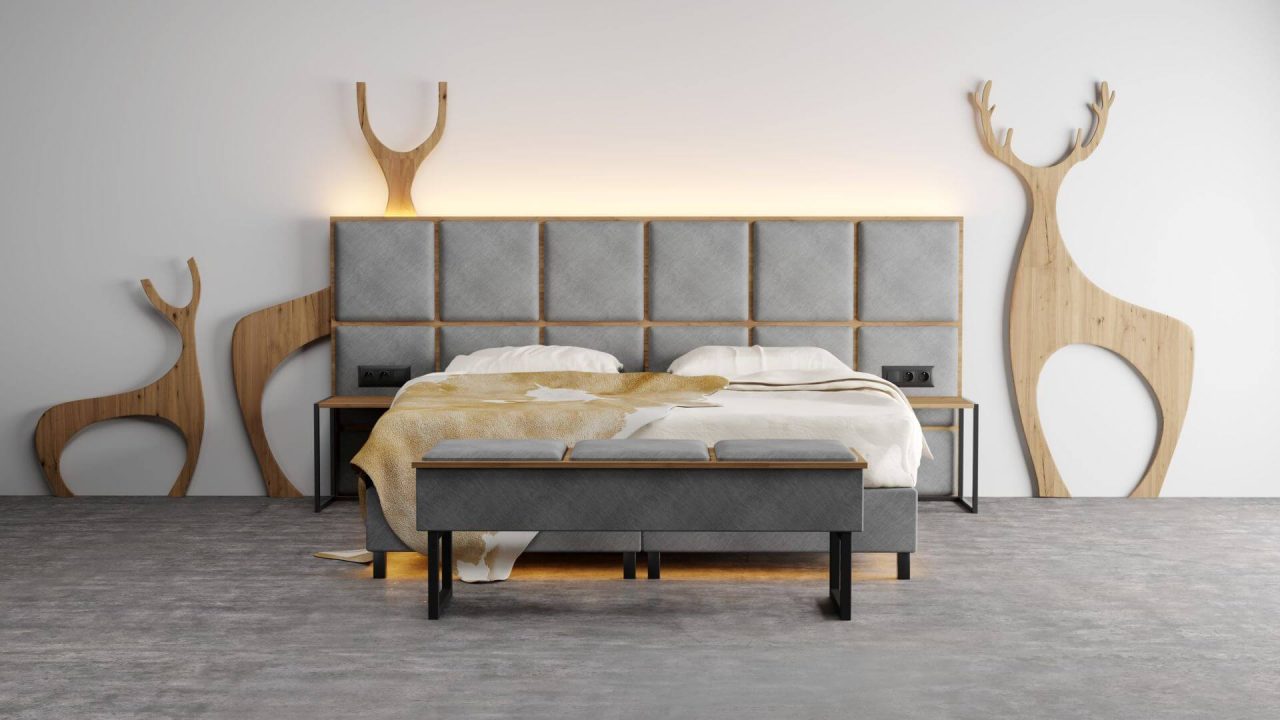
A headboard that’s wider than the bed
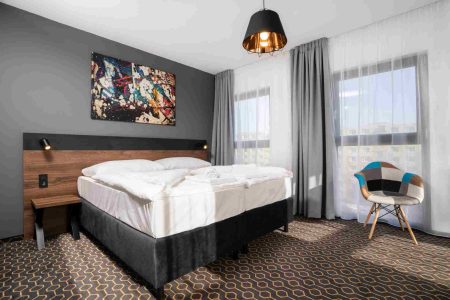
If the headboard is wider than the bed itself, it literally invites the integration of other bedroom furniture. You can incorporate bedside tables. This will make the whole “sleep” sector look whole, clean and tidy.
Picture: bed with a wider headboard.
You won’t want to get out of your upholstered bed. Why?
High headboards are available in two versions. As boxspringand as a classic bed with a slatted base.
The most comfortable rest is offered by the boxspring design. The uniqueness lies in the construction of the bed, which consists of 3 basic parts.
1. Base with springs
It is a solid frame that is filled with a spring system. These springs replace the grid and help to distribute the pressure exerted by the sleeper on the mattress. The springs have additional comfort materials that prevent them from being pushed through.
2. Sleeping mattress
It’s the mattress you sleep on. You choose it according to your own requirements. At Materasso , we make it to your specifications. You can reach for a spring mattress, but also for comfort foam products. You can also choose from mattress protectors. The mattress is placed on a base with springs.
3. Thin top mattress or topper
The topper is used to adjust the firmness of the sleeping mattress. It also acts as a protective layer that protects the sleeping mattress from bedsores, dust and dirt. It is a thin mattress with a thickness of up to 6 cm. It has a removable and washable cover, so it increases the hygiene of the bed.
Comfortable loading height
Beds with high headboards usually also boast a high sleeping surface. What does this mean? It means that the bed is easy to get in and out of. You don’t put unnecessary strain on your knees or hips. A high bed is appreciated not only by seniors, but also by expectant mothers and anyone who cares about comfort.
Classic beds have a sleeping surface height of about 40 cm above the ground. However, for beds with high headboards, we are talking about a height of 50 to 60 cm above the ground. As well as being a comfortable height for lying down and getting up, it also protects you from dust swirling near the ground and from draughts.
Treat yourself to the ultimate in relaxation and a design you won’t want to take your eyes off. The upholstered bed with high headboard offers you both.
Abychom poskytli co nejlepší služby, používáme k ukládání a/nebo přístupu k informacím o zařízení, technologie jako jsou soubory cookies. Souhlas s těmito technologiemi nám umožní zpracovávat údaje, jako je chování při procházení nebo jedinečná ID na tomto webu. Nesouhlas nebo odvolání souhlasu může nepříznivě ovlivnit určité vlastnosti a funkce.
Funkční
Always active
Technické uložení nebo přístup je nezbytně nutný pro legitimní účel umožnění použití konkrétní služby, kterou si odběratel nebo uživatel výslovně vyžádal, nebo pouze za účelem provedení přenosu sdělení prostřednictvím sítě elektronických komunikací.
Předvolby
Technické uložení nebo přístup je nezbytný pro legitimní účel ukládání preferencí, které nejsou požadovány odběratelem nebo uživatelem.
Statistiky
Technické uložení nebo přístup, který se používá výhradně pro statistické účely.Technické uložení nebo přístup, který se používá výhradně pro anonymní statistické účely. Bez předvolání, dobrovolného plnění ze strany vašeho Poskytovatele internetových služeb nebo dalších záznamů od třetí strany nelze informace, uložené nebo získané pouze pro tento účel, obvykle použít k vaší identifikaci.
Marketing
Technické uložení nebo přístup je nutný k vytvoření uživatelských profilů za účelem zasílání reklamy nebo sledování uživatele na webových stránkách nebo několika webových stránkách pro podobné marketingové účely.