Sleeping in bed with the dog: important hygiene rules and advice on the choice of materials
9 minutes of reading
30
Sep
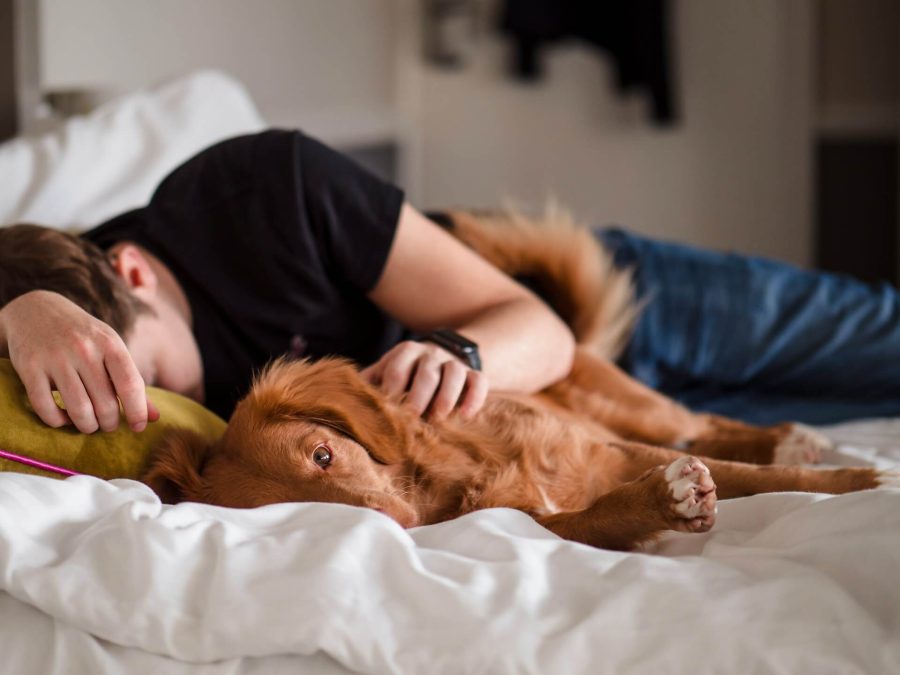
For many owners, sharing a bed with a dog is a matter of comfort, closeness and love for their four-legged pet. Co-sleeping brings many benefits: restful sleep, stress reduction, security. But there are also risks to think about. Taking care of the bed is important, but so is taking care of the dog. What should you know before you let your dog into bed?
Dog in bed: the pros and cons
A dog is for many owners a rightful and unquestionable member of the family. Therefore, it is no surprise that, in addition to holidays and the couch, he also shares a bed with him. After all, it has its advantages.
A dog in bed reduces depression and anxious feelings,
you have a light sleep and every sound and movement wakes you up,
you or your furry friend has a health problem (for example, a fresh wound, the dog has diarrhea or is vomiting, etc.),
The dog is not trained to follow commands related to sleeping (e.g. stay or lie down).
Pee, brush and wash paws: how to prepare the dog for bed?
Co-sleeping with your dog is not just about listening to his calm breathing or rubbing his tummy. Hygiene plays a big part. If you have a dog in your bed, you should follow these hygiene measures:
Walking – before going to bed and immediately after waking up, walk your dog so that he can do his needs outside.
Cleaning paws – whether your pet is running around in his “own” garden or being walked around the block, always wash his paws when you get home. Put him in the bath or wash his paws in a low basin of water. This will wash away all the dirt and bacteria that would otherwise get into the bed.
Grooming – most dogs are lazy throughout the year. However, before the arrival of summer and winter, the shedding is more extreme. The hair likes to stick to the sheets and bedding and then stick to other fabrics (pajamas, bedspread, blankets, small pillows). To eliminate this malady, brush your dog before he hops into the covers.
Anti-flea and tick products – although the phrase: “It’s dog fleas, they don’t go on humans” has entered the consciousness of many people, it is not true. A flea likes to bite a human. Ticks also thrive in thick dog hair. If they don’t attach themselves to the dog, they will fall into bed and happily feast on your body. Therefore, give your dog flea and tick repellents.
Bathe him regularly – this doesn’t mean giving him a bath every night. It is generally recommended to bathe your dog as soon as he starts to smell. At most, you should bathe him once every 14 days. However, the golden mean is bathing every 2 to 3 months. Frequent bathing will dry out his skin, which is not good for him.
How do you care for the bedding you sleep in with your dog?
If you sleep with a dog, your bedding really gets a beating. It’s full of hair, dog claws get stuck in it and it needs to be washed more often. That’s why you need to invest in bedding and sheets that can withstand more frequent washing and high temperatures, as well as tough dog claws.
Linen and sheet materials
It is generally recommended to sleep in bed linen made of natural materials. Ideal is:
Linen – is antibacterial and breathable. It prevents you and your pet from overheating in bed. It also protects you from bacteria, mites and mould. It is a strong material that can withstand even dog paws.
Bamboo – is popular for its ability to regulate temperature and wick away moisture. It is an antibacterial and hypoallergenic fabric, which is also popular for its ecological origin.
Cotton – the fabric cools in summer and keeps you comfortably warm in winter. It can withstand washing even at high temperatures, so you can easily remove dirt from it, but also allergens and bacteria. Linens and sheets made of high-density cotton prevent dog hair from getting caught.
The best choice is percale. It is a densely woven, smooth and sufficiently durable cotton fabric that is not susceptible to hair or claws. Even with frequent washing, percale remains soft to the touch.
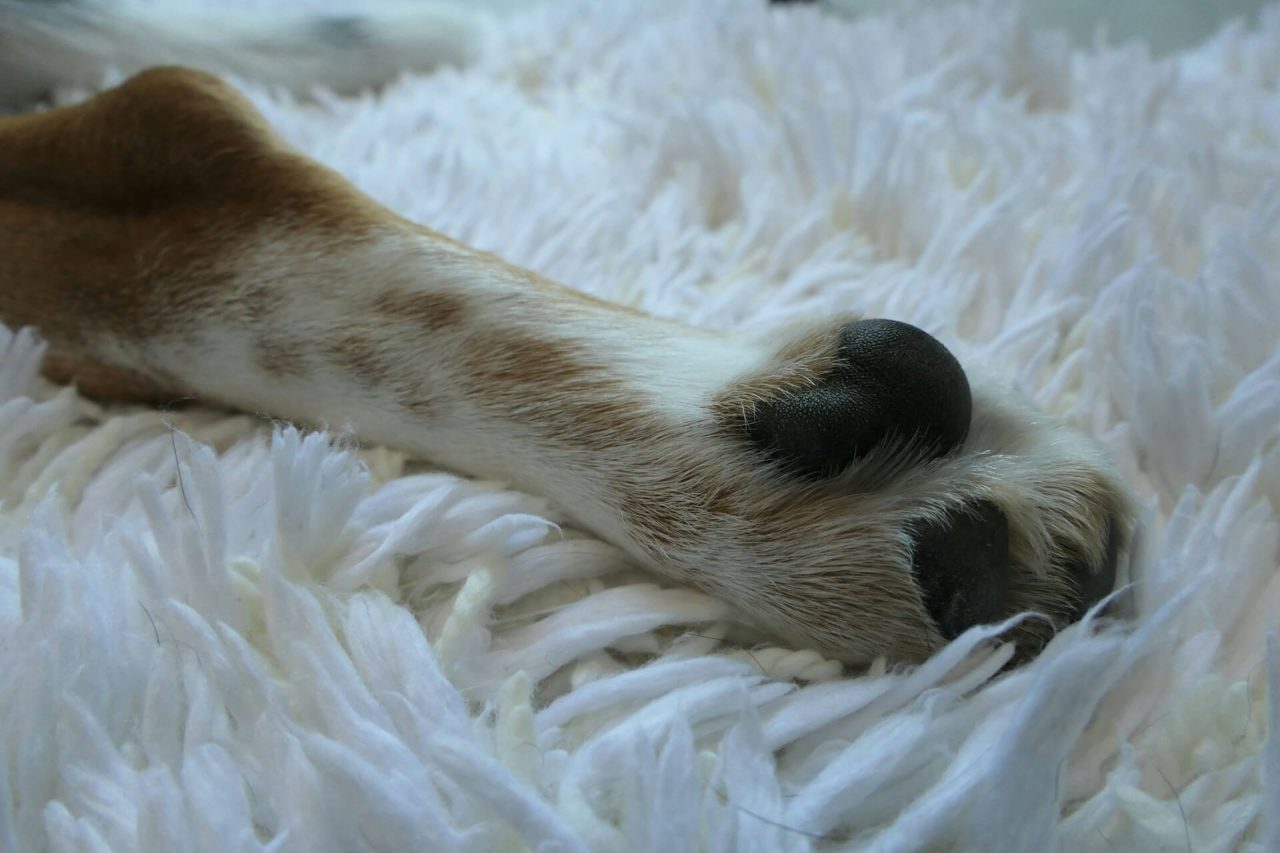
Image: the fabric must resist sharp dog claws.
What materials should you avoid?
Velvet – attracts dog hair, which is difficult to remove from it.
Silk – it is too fine and therefore very susceptible to damage. It tears easily and you cannot wash it on high temperatures.
Flannel – thanks to the open structure of the fabric, it traps hair. Although it can dissipate body heat, dogs can overheat in it.
In terms of patterns, it’s best to reach for mid-toned neutrals. The best choices are grey, beige or blue. The bedding and sheets can have subtle patterns, such as checks, stripes or monochromatic designs. The hair and dirt from the paws will “disappear” much better on such bedding than on rich bright tones and pure white.
Laundry and bedding care
You should wash your bed linen and all bedding every week at the maximum temperature recommended by the manufacturer. Bacteria are destroyed by washing at 60 °C or more.
To avoid hair coming into contact with other linen, wash the sheets separately. Before washing it, remove the hair. For example, use a sticky roller or a wet rubber glove. Afterwards, shake the bed linen out. Before putting the linen in the washing machine, you can put it in the tumble dryer on the cold programme. The lint will be trapped in the filter.
For washing , use gentle washing gels and powders ideally without strong perfumes. Do not use fabric softener. Avivase reduces the ability of the fibres to wick away moisture. In addition, the strong scent can be unpleasant for the dog. A half cup of baking soda added to the laundry before washing can help with the smell.
Drying outside is ideal, but a dryer is also a good tool to catch any remaining hair. Remember to clean the dirt filter regularly.
Proper care of the mattress you sleep on with your furry friend
You may already know this, but if you are still deciding whether to let your dog into your bed, remember to have a mattress big enough to fit you and your partner. Everyone needs to be comfortable in bed. If you are planning to sleep in a bed with a larger dog (e.g. a retriever, border collie, Australian shepherd, etc.), you may find that a conventional mattress for two(180 × 200 cm) or one(90 × 200 cm) is not enough.
You can get an antibacterial mattress with a hypoallergenic treatment, which prevents the formation of mould, fungi and the growth of bacteria.
Protective elements of the mattress
Every mattress should have a cover. For your purposes, the cover needs to be removable and washable. Easily wash a single mattress cover in a home washing machine. However, if you sleep on a double mattress measuring 180 × 200 cm, it may be a problem to wash the cover at home. It may not fit in your washing machine.
Covers are also available that contain various anti-allergenic substances. They prevent allergens from settling in the fabric and mattress. Popular are treatments with propolis, greenfirst bioactive substance, silver, etc.
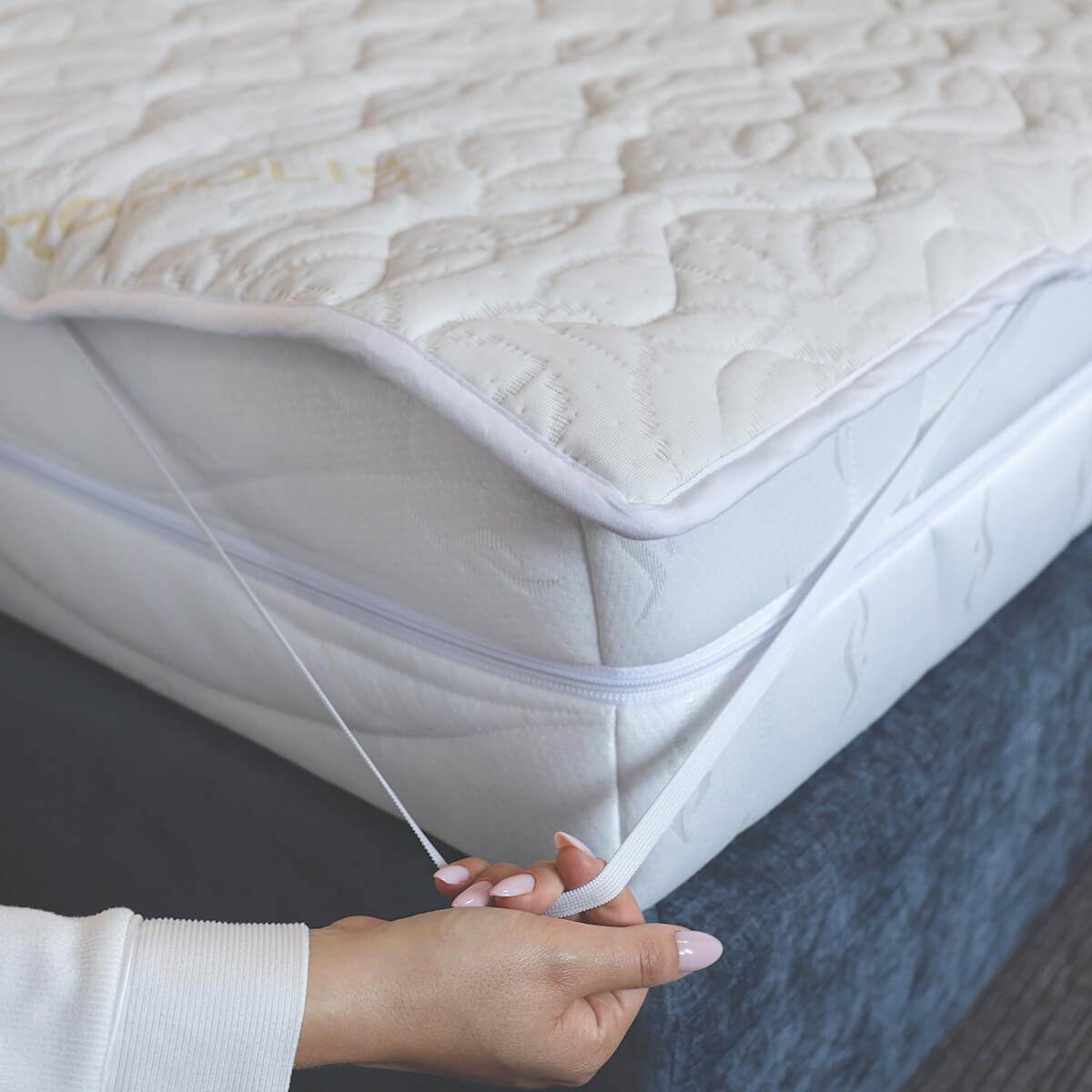
In addition to the cover, provide the mattress with a waterproof protector. It is usually attached to the mattress with rubber bands. The impermeable layer resists liquids but is also breathable so you don’t sweat when you sleep. The mattress protector is washable, so if you have an accident, just throw it in the washing machine.
You can also put a topper on the mattress, which is a 7 to 10 cm thick mattress with a cover. As well as improving sleeping comfort, it protects the mattress from dust, hair and other dirt. In addition, it prolongs its life.
Image: The mattress protector easily attaches to the mattress.
Caring for the mattress
If you sleep in bed with your dog and want to have a hygienic bed, it’s not enough to change the bed linen regularly. The mattress itself also deserves a lot of attention. For cleaning, choose products that will be effective against organic stains while being gentle on the health of both dog and human:
baking soda,
vinegar,
3% hydrogen peroxide,
enzymatic cleaners.
Avoid products containing chlorine and strongly perfumed sprays.
Vacuum the mattress well whenever you change the sheets. Use a vacuum cleaner with a HEPA filter and an upholstery vacuum attachment. Vacuum the top and bottom, sides and all folds well. Refresh the mattress with baking soda. Sprinkle a generous amount on the mattress and work it into the mattress using a brush. Leave it on for at least half an hour, but all day, and then vacuum the mattress.
If an accident happens and your dog wets the mattress, intervene as quickly as possible. The sooner you start cleaning, the more likely a successful outcome.
Cleaning the urine – suck out as much fluid as possible with a cloth or an old cloth. Mix 1 part vinegar and 2 parts water. Pour the mixture into a spray bottle, apply to the stain and leave for 10 – 15 minutes. Wipe the spot with a clean cloth.
When to call a specialist for help? If urine, vomit or diarrhea has penetrated deep into the mattress and stains cannot be cleaned, call a mattress cleaning expert . Likewise, if the mattress smells bad and home cleaning doesn’t help, contact a professional.
If you want a dog in the bedroom but not in the bed
Many people want a dog in the bedroom, but not right in the bed. What compromises are there?
Bed near the bed,
mini dog bed made of wood or fabric,
a spot on the chair,
a playpen that gives the dog his space and prevents him from jumping into bed (ideal for families with allergies).
5 answers to the most common questions about sleeping in bed with your dog
What questions run through your mind most often when you consider letting your dog sleep in your bed?
1. What are the benefits of sleeping with a dog?
The most significant is psychological well-being. The presence of a dog reduces anxiety, stress and feelings of loneliness. It helps with falling asleep and makes you feel safe in bed.
2. In what cases should I not let my dog go to bed?
If you are a light sleeper, allergic, you or your dog have health problems, your dog has no protection against fleas and ticks, or does not know the commands associated with sleeping.
3. What kind of bedding to sleep in with the dog?
Reach for natural materials that are the most pleasant for man and dog. The most suitable is percale, which is resistant to hair and frequent washing. Avoid silk, flannel and satin.
4. What hygiene precautions should I take before letting my dog into bed?
You walk him, brush him and wash his paws. Bathe him regularly (most often once every 14 days) and ensure he is free of fleas and ticks.
5. How do I care for my mattress when I sleep with my dog?
Vacuum and refresh the mattress with baking soda every time you change the bed linen. Use mattress protectors including a cover, waterproof protector and topper. Remove stains as soon as they occur. If heavily soiled, consult a professional.
Abychom poskytli co nejlepší služby, používáme k ukládání a/nebo přístupu k informacím o zařízení, technologie jako jsou soubory cookies. Souhlas s těmito technologiemi nám umožní zpracovávat údaje, jako je chování při procházení nebo jedinečná ID na tomto webu. Nesouhlas nebo odvolání souhlasu může nepříznivě ovlivnit určité vlastnosti a funkce.
Funkční
Always active
Technické uložení nebo přístup je nezbytně nutný pro legitimní účel umožnění použití konkrétní služby, kterou si odběratel nebo uživatel výslovně vyžádal, nebo pouze za účelem provedení přenosu sdělení prostřednictvím sítě elektronických komunikací.
Předvolby
Technické uložení nebo přístup je nezbytný pro legitimní účel ukládání preferencí, které nejsou požadovány odběratelem nebo uživatelem.
Statistiky
Technické uložení nebo přístup, který se používá výhradně pro statistické účely.Technické uložení nebo přístup, který se používá výhradně pro anonymní statistické účely. Bez předvolání, dobrovolného plnění ze strany vašeho Poskytovatele internetových služeb nebo dalších záznamů od třetí strany nelze informace, uložené nebo získané pouze pro tento účel, obvykle použít k vaší identifikaci.
Marketing
Technické uložení nebo přístup je nutný k vytvoření uživatelských profilů za účelem zasílání reklamy nebo sledování uživatele na webových stránkách nebo několika webových stránkách pro podobné marketingové účely.