How to protect your bed mattress Part 2: Protective covers
6 minutes of reading
04
Jan
You don’t get a new mattress as often as you get new socks. To keep it looking like new and performing well, you need to take good care of it. In the last installment, we covered mattress protector selection in general and focused on the topper in particular. In the second part, you will learn about mattress covers and pads.
Why get a mattress protector with your mattress
Protecting the mattress is important for hygiene and proper function. Of course, every product comes with some kind of cover, but not every product can protect it effectively. In this respect, you definitely can’t rely on a sheet alone, as it won’t do you much good.
All those who sweat excessively at night should reach for a mattress protector. Mattress protectors can prevent sweat and moisture from penetrating the mattress. Although the sweat that penetrates the mattress evaporates, it also leaves behind salts and biological substances that dissolve in it. Over time, the salts can clog the porous structure of the mattress, increasing its moisture content and creating an ideal environment for dust mites and bacteria.
Protective covers do not affect the functionality and quality of the mattress. All the mattress properties are preserved, as the protectors are designed so that you are not even aware that there is an additional layer on the mattress.
The protectors are low, pliable, but functional. If you want a really healthy and good night’s sleep, get a good bed, a quality mattress with a protector and a suitable mattress topper.
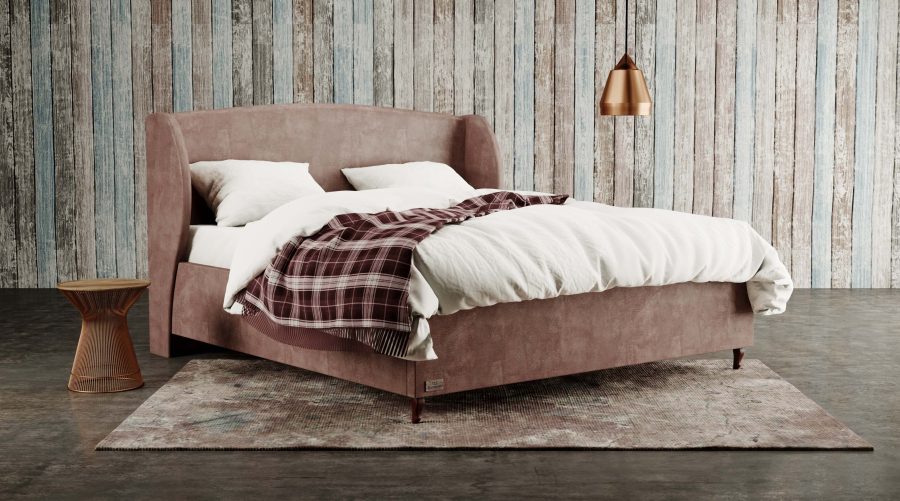
Image: the right mattress has a significant impact on quality sleep.
Types of protectors:
mattress covers – they are put on the mattress and usually have a zipper,
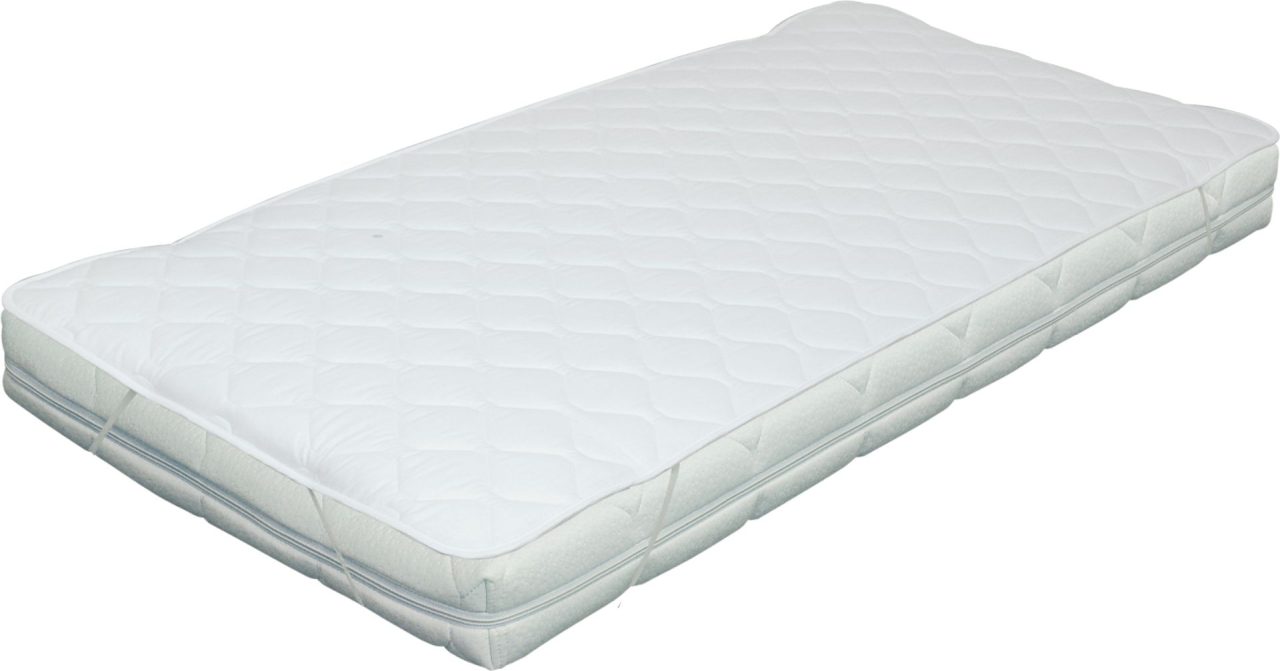
protective mattress pads – they are placed on the mattress and attached with rubber bands.
For whom are protective bed covers intended
The protector is recommended:
incontinence sufferers (you need to choose an impermeable mattress pad),
small children (here too, reach for a mattress protector to prevent bedwetting),
allergy sufferers,
lying patients,
people who sweat excessively,
to people who sleep in their beds with their pets,
to anyone who wants to extend the life of their mattress.
What to look for when choosing
Before you decide to buy a mattress protector, find out the following information.
How to maintain the cover
The method of maintenance is an important parameter in the selection process. A cover that cannot be removed from the mattress does not allow sufficient care and hygiene. When choosing a mattress cover, look at whether it can be unfastened on at least two, ideally three, edges of the mattress, which will make it easier to take it off and put it on.
Thanks to the option of unzipping , you can wash each part of the cover separately. This way you can wash even a large cover that would not fit in the washing machine as a whole. Make sure it can also be washed at least at 60 °C, a temperature that can effectively kill bacteria and dust mites.
What makes up the filling of the cover
Some of the covers have additional thermoelastic foam sewn in and quilted on the surface. The stitching makes the cover more comfortable and adapts well to the user’s body. Remember that soft foam covers must not be machine-wrung.
In addition to thermoelastic foam, the covers can be fitted with conditioning fibres or 3D fabric inserts. These inserts contribute to better air circulation and keep the mattress dry inside. The mattress is not subject to oxidation and does not harbour bacteria and dust mites.
What a mattress cover can prevent
Certain types of covers have special properties that promoterestful sleep or can alleviate or prevent allergic problems.
Textiles can be enriched with aromatic oils that gradually release their fragrance. The most popular are lavender and eucalyptus, which repel insects and prevent bacteria. Aloe vera has a beneficial effect on the skin.
For allergy sufferers, there are special protectors containing antibacterial ingredients. Effective are, for example, silver ions, but also impregnation with probiotics, which feed on the scales of the skin, thereby preventing the hatching of mites. Covers with wood cellulose can effectively wick away moisture from the sweat that forms during sleep. Wood cellulose works similarly to wood, which can absorb large amounts of water.
Image: lavender essential oil repels insects and prevents bacteria.
What size cover
Choose the size of the mattress protector according to the size of the mattress. Available are versions for twin mattresses and of course classic single mattresses (90 x 200, 90 x 220 centimetres).
Production materials
For the production of mattress protectors, a functional, non-toxic material with a membrane is most often used. This makes the mattress protectors breathable and has absorbent properties. They are unobtrusive at first glance and very pleasant to the touch.
A mattress protector or cover is nothing more than an extra layer of durability that can protect the mattress from stains, liquids, dust mites, bacteria or germs and microorganisms. It depends on which type you opt for.
In terms of material, the protectors are divided into:
Classic – cotton is used for production and the filling can be made of hollow fibre, you can also meet natural materials, including bamboo.
Impermeable mattress protectors – they consist of several layers, one of which is suction and the other waterproof.
Image: for incontinence patients or young children, choose a pad with an impermeable layer.
Benefits that the protector will bring you
The protector is a practical tool for several reasons.
Protects the mattress – prevents contamination and microbial growth in the mattress.
It is easy to handle – the mattress protector is attached to the mattress either by rubber bands or, in the case of a mattress cover with a zipper, it slides easily onto the mattress. The mattress protector does not slip or bunch up on the mattress.
Easy to maintain – most pads and covers are machine washable, always follow the manufacturer’s recommended maintenance guidelines.
Prolongs the life of an old mattress – the pad can effectively smooth out minor bumps in an old mattress that you don’t want to throw away yet.
It has a positive effect on health – thanks to the absorption of sweat, it reduces the risk of mites entering your body.
Increases sleep comfort – an extra layer enhances quality rest.
Multi-purpose use – it can be used not only everyday on your own mattress, but also when sleeping on a couch or sofa, for comfortable overnight visitors or when relaxing at the cottage.
Care of the mattress protector
The care you take in maintaining your bed and mattress also deserves a cover. How to care for the mattress protector properly?
Vacuum the cover regularly, either during regular cleaning or when you change the bed linen.
Wash it at least 2-3 times a year.
Remove lint occasionally. Remove stains as soon as they appear.
For vacuuming the cover, choose a small brush, which is usually included in the vacuum cleaner. Do not press on the nozzle when vacuuming, rather vacuum in a more gentle way. When washing, always follow the manufacturer’s instructions. Think about maintenance when choosing the right product, as the whole cover is very difficult to wash in a conventional washing machine. It is much better if the cover can be separated into two or three parts and washed separately.
What to avoid: Never air an unwashed cover in the sun. In addition to not airing out, the heat from the sun will cause dust mites to breed in the cover. It is only advisable to ventilate the cover or protector in winter in frosty weather, as the low temperature will kill off the mites.
Abychom poskytli co nejlepší služby, používáme k ukládání a/nebo přístupu k informacím o zařízení, technologie jako jsou soubory cookies. Souhlas s těmito technologiemi nám umožní zpracovávat údaje, jako je chování při procházení nebo jedinečná ID na tomto webu. Nesouhlas nebo odvolání souhlasu může nepříznivě ovlivnit určité vlastnosti a funkce.
Funkční
Always active
Technické uložení nebo přístup je nezbytně nutný pro legitimní účel umožnění použití konkrétní služby, kterou si odběratel nebo uživatel výslovně vyžádal, nebo pouze za účelem provedení přenosu sdělení prostřednictvím sítě elektronických komunikací.
Předvolby
Technické uložení nebo přístup je nezbytný pro legitimní účel ukládání preferencí, které nejsou požadovány odběratelem nebo uživatelem.
Statistiky
Technické uložení nebo přístup, který se používá výhradně pro statistické účely.Technické uložení nebo přístup, který se používá výhradně pro anonymní statistické účely. Bez předvolání, dobrovolného plnění ze strany vašeho Poskytovatele internetových služeb nebo dalších záznamů od třetí strany nelze informace, uložené nebo získané pouze pro tento účel, obvykle použít k vaší identifikaci.
Marketing
Technické uložení nebo přístup je nutný k vytvoření uživatelských profilů za účelem zasílání reklamy nebo sledování uživatele na webových stránkách nebo několika webových stránkách pro podobné marketingové účely.