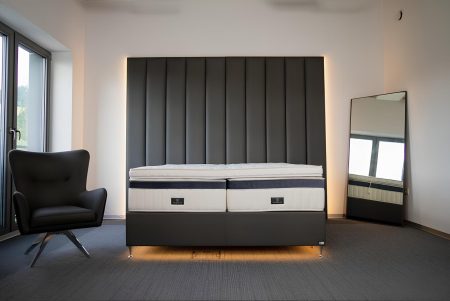
For the sake of a child’s quality sleep, parents are able to sacrifice a lot. And no wonder, actually, a sleepless and tired child will torment even the strongest of us. How to avoid these weepy and angry days, which are caused precisely by unsatisfactory sleep?
Why sleep is important for proper child development
Poor quality sleep in children, of course, does not only mean a short-term cranky child and the discomfort of parents. Long-term sleep difficulties can negatively affect the overall development of the child.
Research at University College London has looked at several aspects of a child’s sleep and has produced some interesting findings. Frequent waking leads to circadian rhythm disturbances in the child, which can lead to insomnia in adulthood. If children are awake for too long, the risk of obesity increases. Irregular sleep leads to slower cognitive development and lower levels of growth hormone in the body.
However, the fact that your child regularly wakes up sleep deprived, or that you have trouble getting him to sleep at all, may not be due to your knowledge and experience at all. Parents often focus on their child’s habits and sleep hygiene and forget to check something that is quite obvious here – what the child is actually sleeping on.
Don’t underestimate the choice of mattress
After all, choosing a mattress for someone else is quite difficult. If you are shopping for your own needs, you can judge what position you sleep in, what firmness of mattress suits you and other parameters. When choosing a mattress suitable for children, the situation is worse, because your child won’t just tell you this information.
So what should I choose a mattress for my baby’s crib? And what parameters to follow when choosing a mattress for a baby’s cot?
How to choose a mattress for a crib
The crib mattress should be brand new. It is not worth inheriting it in the family, as even slight deformations can be unpleasant for the toddler to perceive and feel. The spine may not have the necessary support, which can lead to the fixation of an incorrect posture that will be very difficult to unlearn. Mites and other small animals that like to take up residence in old mattresses are also a risk.
When choosing the type of mattress for children, don’t go to extremes and opt for a medium-firm mattress that supports the spine evenly. An extremely hard or soft mattress can only harm the child, either by putting too much pressure on the body or by not providing enough support. Overly soft mattresses can even increase the likelihood of scoliosis.
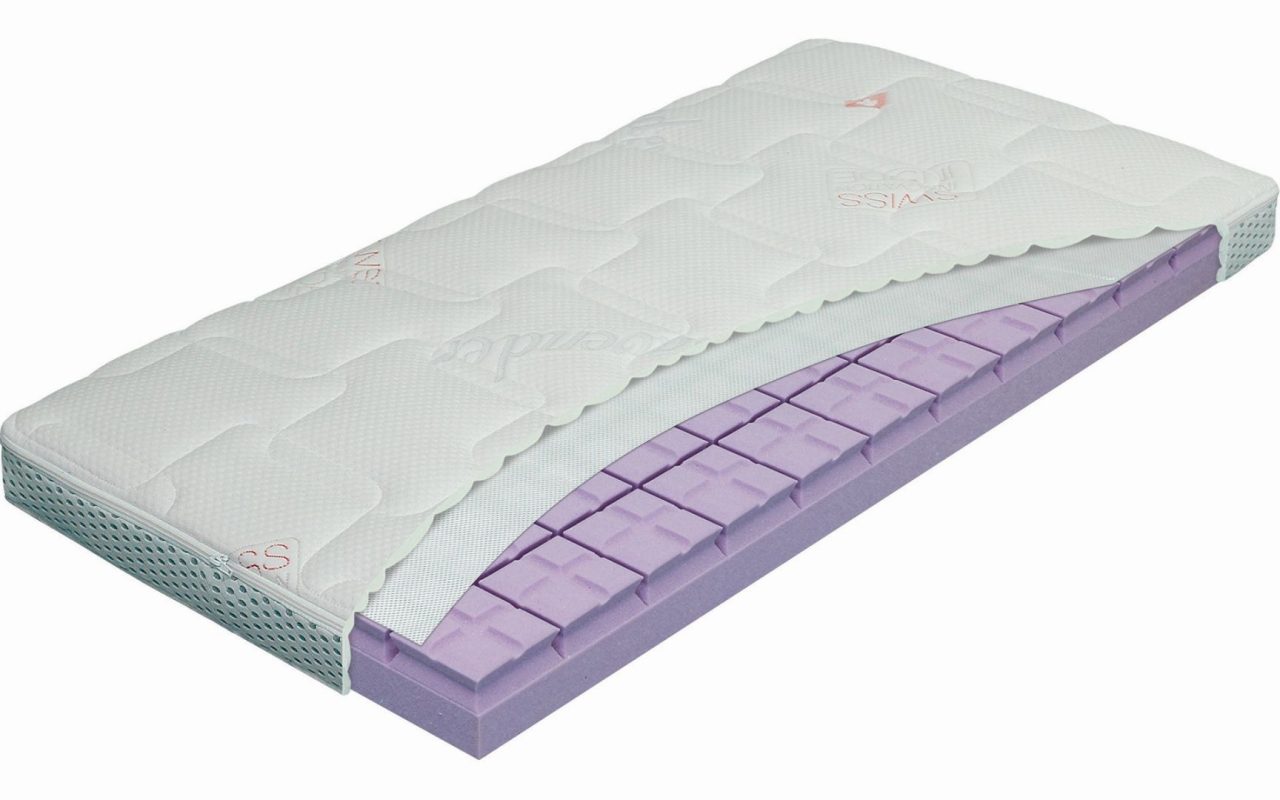
The mattress must also be flexible, i.e. adaptable to the body while returning easily to its original state, airy and moisture-wicking. Proper air circulation protects the child from sweating during sleep and increases his comfort. A great feature is a mattress with a ventilated cover system that ensures sleep without overheating and cooling.
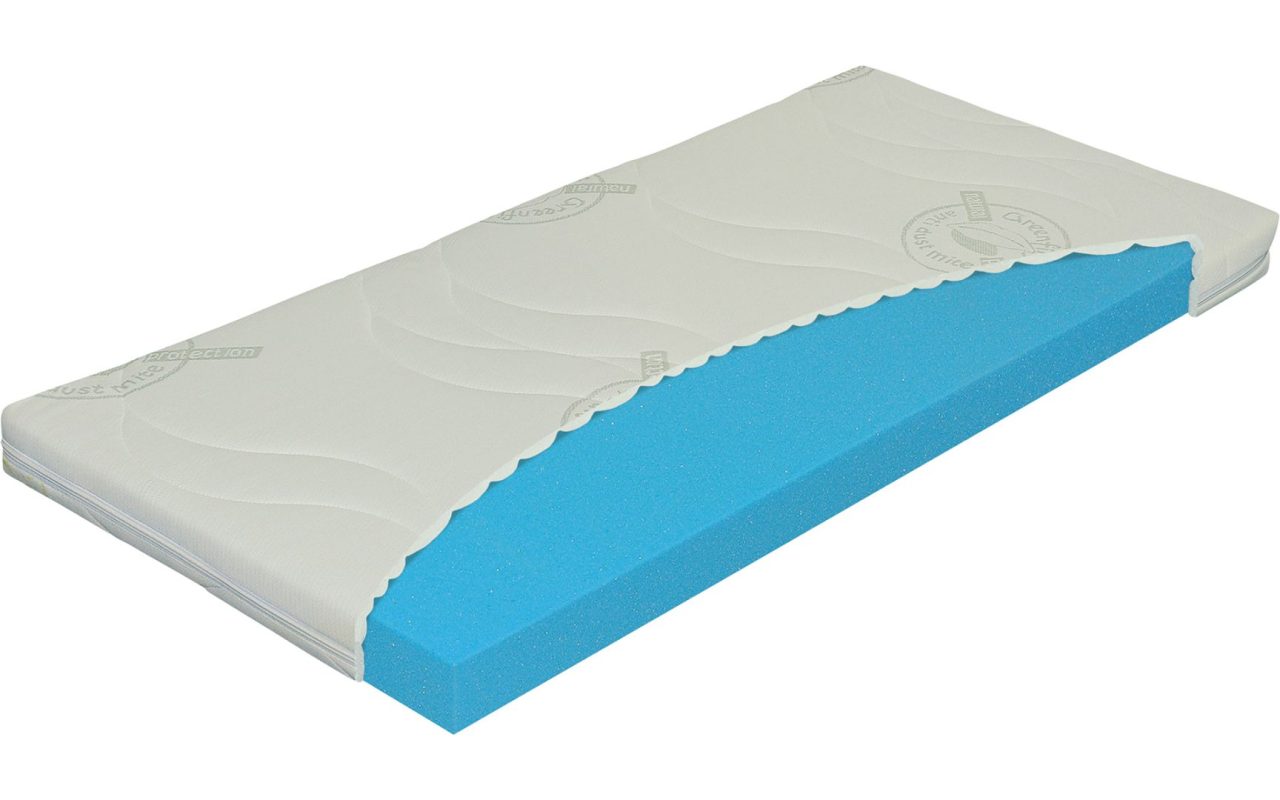
Image: Mattress with sewn-in PRESSLESS ventilation fabric.
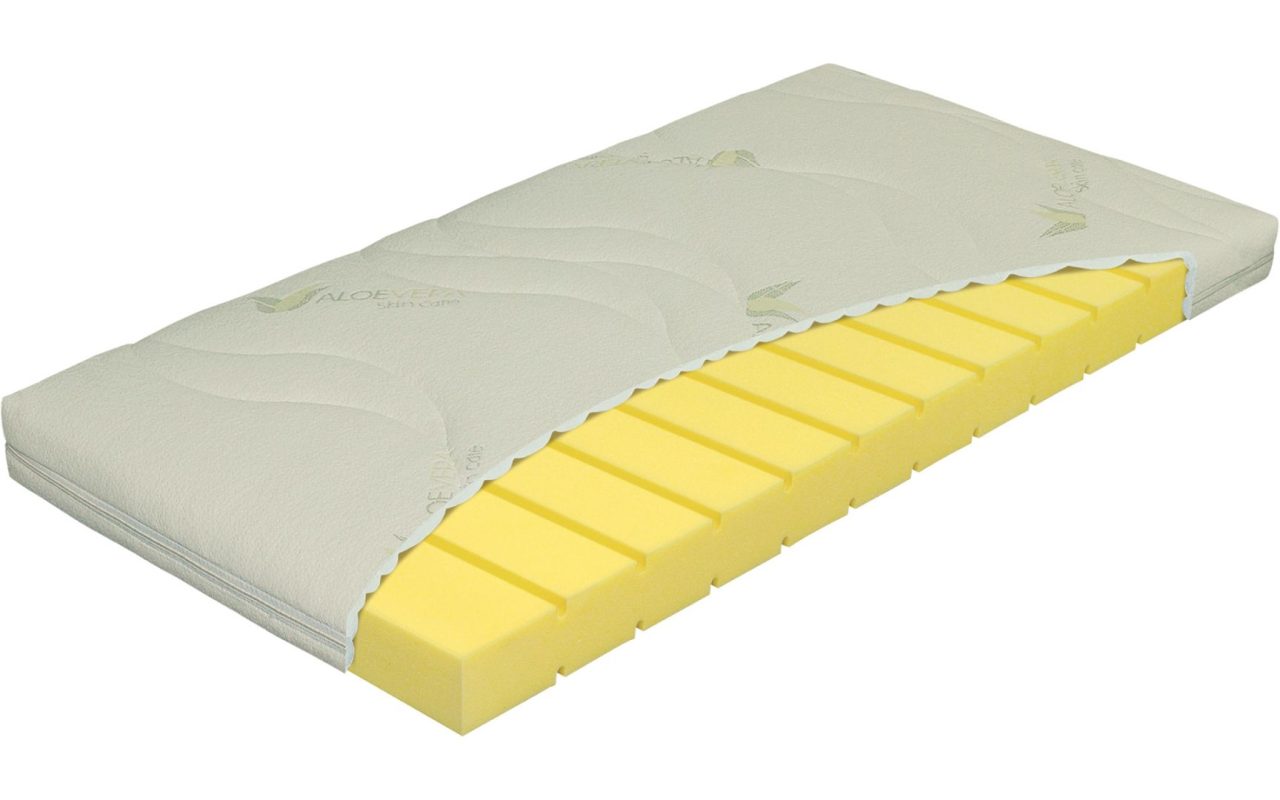
The range of children’s mattress materials is very rich, your options are so extensive. Whatever you choose, however, always ensure that the mattress does not include an impermeable layer that would prevent breathability, and preferably does not contain any glue at all, if only a special eco-friendly water-based glue is used. Conventional solvent-based adhesives can be harmful to health.
Image: Choose a mattress preferably made of monoblock foam, which avoids glue altogether.
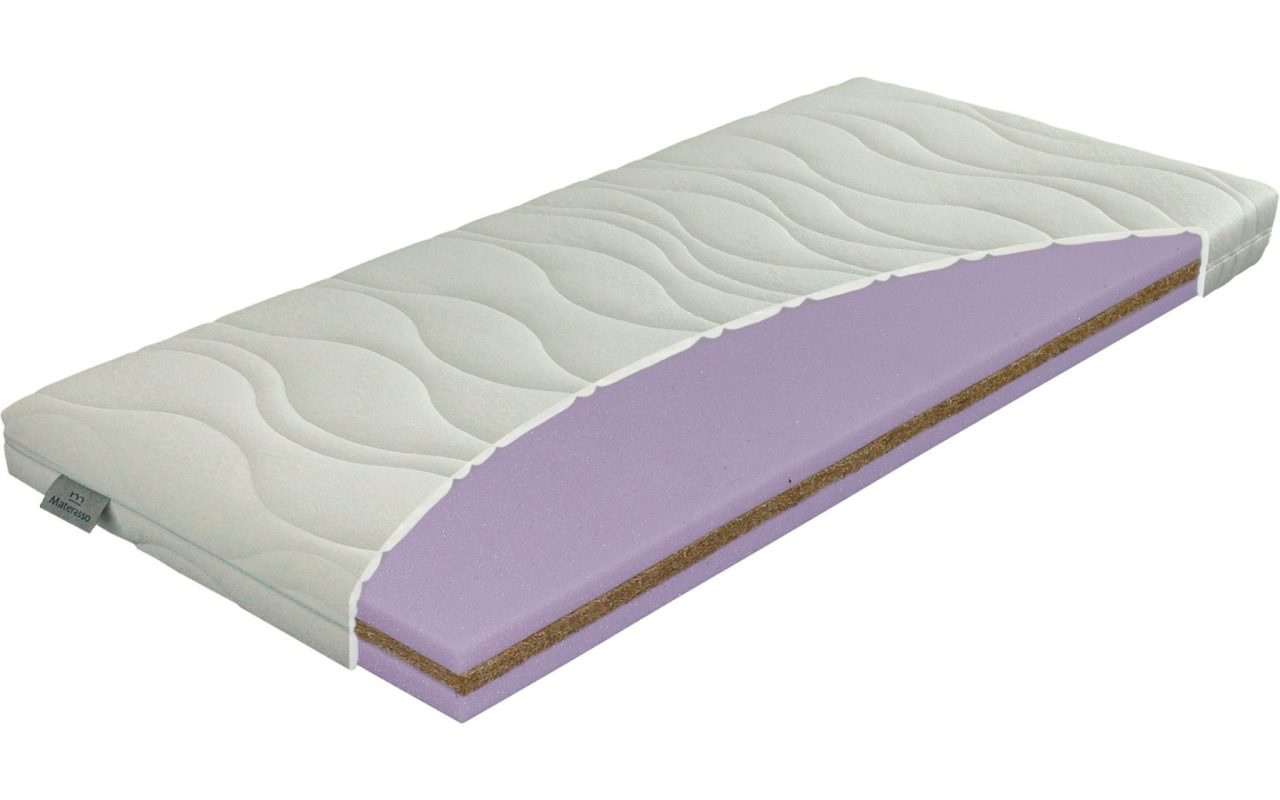
In general, coconut mattresses and cold foam mattresses are very popular at the moment. The coconut layer in the mattress provides suitable support for the spine and is also very suitable for allergy sufferers or asthmatics.
Image: coconut crib mattress is one of the most popular mattresses on the market today.
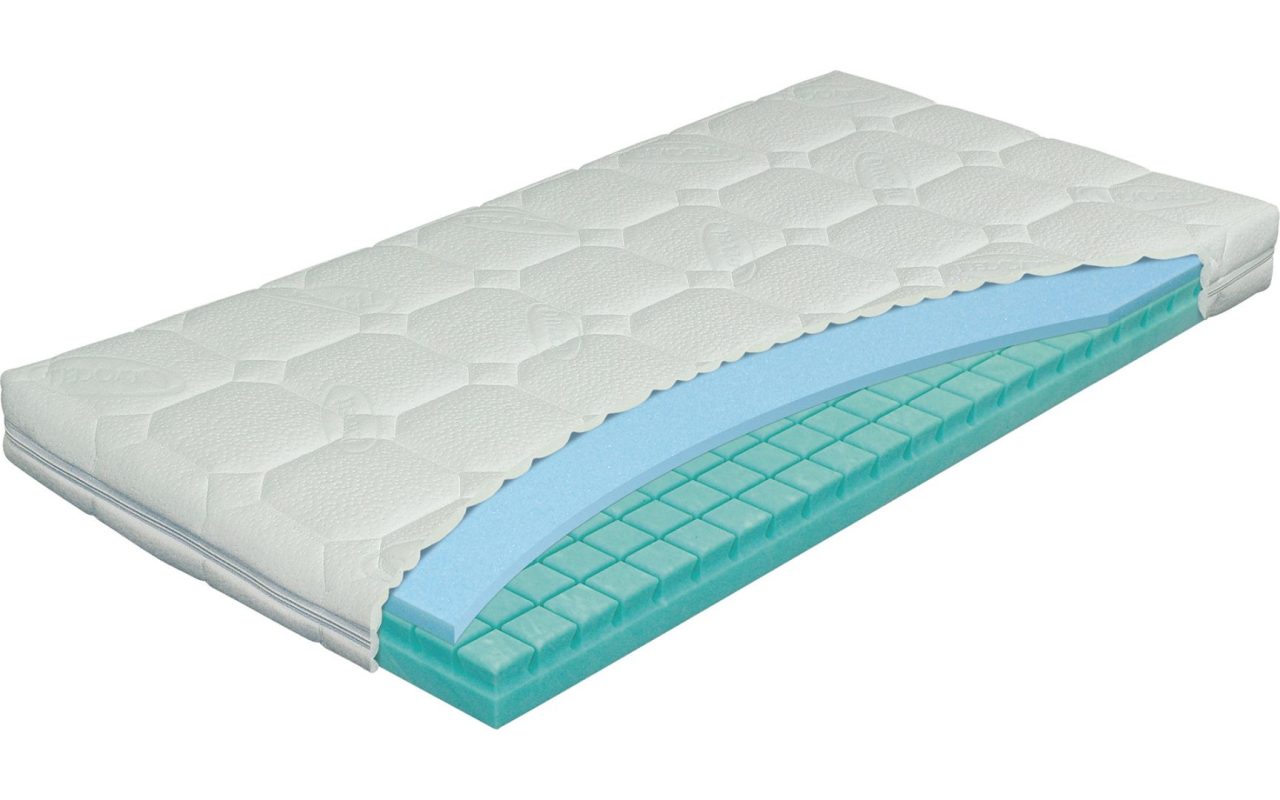
Cold foam mattresses for children are long-lasting, flexible and very airy. They also provide excellent orthopaedic properties, which is more than desirable for a developing child.
Image: The cold foam monoblock mattress both adapts properly to the child’s body and contains no harmful adhesive.
However, you can also find various special mattresses on the market, such as the Biogreen natural foam mattress, which contains natural ingredients such as castor oil or aloe vera extracts, or you can have a customised children’s mattress made.
Image: if you’re into luxury goods, you can also choose a special natural foam mattress.
How to choose a mattress for a child’s bed
A big advantage for older children is that you can already ask them for their opinion, so definitely involve them in the choice. When transitioning your child from a cot to a bed, it’s best to look back to the standard size bed. This way, you won’t have to deal with so-called transitional mattresses and you can invest in one that will last your child around 7 years.
With a standard bed size, your choices will be wider, but remember that you are still choosing a mattress for a child whose bones are ossifying as they grow into adulthood. Avoid, for example, a zonal mattress, which is mainly suitable for adults, and keep the mattress at a medium firmness.
Don’t rush the transition from the cot
When to actually make the transition? The most common time is around two years, but according to experts, it is very important not to move the child until he or she is able to get out of the crib on his or her own.
You can approach the transition to the big bed itself in two ways: you can move the child to the new bed in one go, or you can choose a gradual method. In the second case, you will start using the new bed for reading stories, short naps, and gradually working up to a full night’s sleep.
4 tips for a healthy baby sleep
And what else to look out for besides choosing the right mattress? These 4 tips should definitely be kept in mind, as they can also greatly affect the quality of your child’s sleep:
Maintain an optimum temperature of about 18 °C in the nursery. Also watch out for noise and light when the baby is falling asleep. Remember that babies are more sensitive, so they may react negatively even to sounds that seem normal to you.
Do not overdress the baby in the cot. Choose, for example, a onesie with onesies, a night suit, a sleeping bag, possibly a swaddle. Use only a light blanket or a sleeping bag as a blanket.
Do not place pillows in the cot until the child is one year old.
Never put plastic under the sheet, it can cause the baby to overheat.
Abychom poskytli co nejlepší služby, používáme k ukládání a/nebo přístupu k informacím o zařízení, technologie jako jsou soubory cookies. Souhlas s těmito technologiemi nám umožní zpracovávat údaje, jako je chování při procházení nebo jedinečná ID na tomto webu. Nesouhlas nebo odvolání souhlasu může nepříznivě ovlivnit určité vlastnosti a funkce.
Funkční
Always active
Technické uložení nebo přístup je nezbytně nutný pro legitimní účel umožnění použití konkrétní služby, kterou si odběratel nebo uživatel výslovně vyžádal, nebo pouze za účelem provedení přenosu sdělení prostřednictvím sítě elektronických komunikací.
Předvolby
Technické uložení nebo přístup je nezbytný pro legitimní účel ukládání preferencí, které nejsou požadovány odběratelem nebo uživatelem.
Statistiky
Technické uložení nebo přístup, který se používá výhradně pro statistické účely.Technické uložení nebo přístup, který se používá výhradně pro anonymní statistické účely. Bez předvolání, dobrovolného plnění ze strany vašeho Poskytovatele internetových služeb nebo dalších záznamů od třetí strany nelze informace, uložené nebo získané pouze pro tento účel, obvykle použít k vaší identifikaci.
Marketing
Technické uložení nebo přístup je nutný k vytvoření uživatelských profilů za účelem zasílání reklamy nebo sledování uživatele na webových stránkách nebo několika webových stránkách pro podobné marketingové účely.