How to deal with back pain during sleep and after waking up?
9 minutes of reading
31
Mar
Back pain afflicts people regardless of age. Currently, it ranks among the most widespread diseases of civilization. Not only does it sound during the day, but it can also bother you at night and even immediately after you wake up. A bad mattress, an unsuitable sleeping position, but also a blockage in the lumbar spine or lower back pain can be to blame. How to enjoy healthy sleep without pain?
Back pain is most often caused by a bad mattress and an improperly used pillow
Back pain, neck or lumbar spine pain or headaches can be the result of an unsuitable mattress. Experts generally recommend replacing the mattressafter 7 years of use. After this time, the mattress deserves to be replaced not only from a hygiene point of view, but also from a construction point of view. The mattress may be sagging in various parts, so that it does not provide enough support for your support apparatus. What is the result? Back pain on waking, fatigue, stiff back muscles and pain in the lumbar region.
An unsuitable mattress can cause a range of problems – from acute lumbar spine pain to long-term low backpain and stiff back muscles. A very common complication is also a blocked lumbar spine or pain in the hips and lower back, which people often confuse with other health problems.
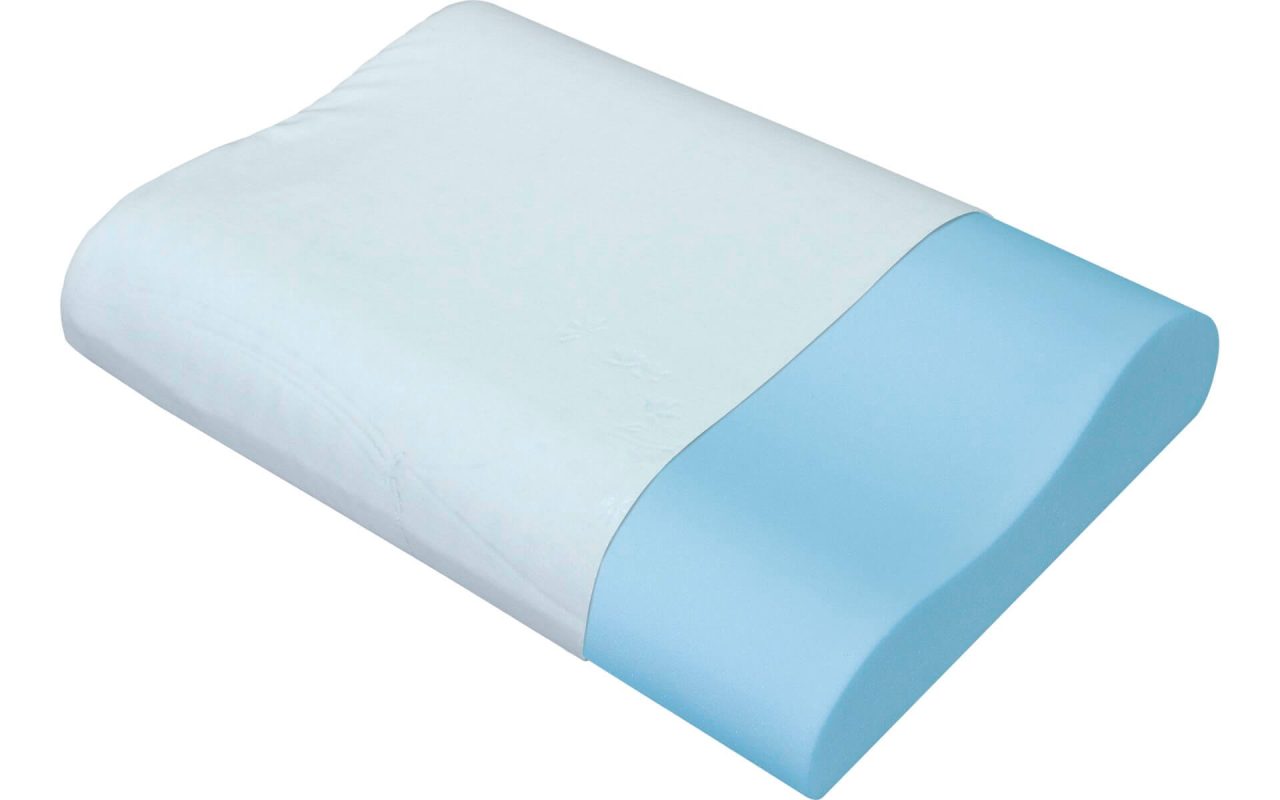
Difficulties associated with the support apparatus may also be compounded by a poorly chosen pillow. Muscle overload occurs during sleep, resulting in spinal blockages or escalator blockages. This makes it difficult to move your head in the morning, for example. The size of the pillow should be chosen according to your sleeping position. The right model should keep the cervical spine in an optimal position. The head should not be too forward, but neither should it be in too much of a tilt. When sleeping on your stomach, it is better to reach for a softer and lower pillow. For side and back sleeping, a higher, medium-soft to firm pillow is best. If you change sleeping positions frequently during the night, go for an anatomical pillow that adjusts instantly to the position and helps relieve back painat night.
Sleep positions and the most common spinal pain
Sleep quality is significantly affected by sleep positions. However, it is not easy to say which is the best and which is better to avoid.
The most common sleep positions
Each person prefers a different sleeping position, and although they fall asleep in one in the evening, they wake up in another in the morning. What sleep positions are we familiar with and how do they affect back pain when we sleep?
Sleeping on your back – is the best, according to experts. This is because the spine, including the lumbar spine, remains in an optimal position, which prevents unpleasant back pain, cervical spine pain and pain between the shoulder blades. The muscles in this position are relaxed. When sleeping on the back, it is advisable to place a pillow under the knees to bring the spine into a neutral position. For even more support, it is recommended to place a small rolled towel under the lower back. This helps to better align the spine and internal organs. It is best to place a higher, medium soft anatomical pillow under the head. This position will also relieve long term back pain or low back pain.
Side sleeping – this is one of the neutral positions and is the second most recommended position. Even in this case, the lumbar spine remains in the optimal position. Your shoulder and the rest of your body should connect with the mattress. Place a pillow between your knees, and if you feel a gap between your waist and the mattress, place a smaller pillow inside. The pillows will keep your hips, pelvis and spine in good alignment. When sleeping on your side, it is recommended to prop your head up with a higher and firmer anatomical pillow. Sleeping on your side can help with hip pain, low back pain and stiff lumbar spine.
Sleeping on the stomach – not recommended by experts because the spine is curved in an unnatural position, which can lead to neck and head pain, but also abdominal pain, as it puts increased pressure on the joints and muscles near the neck. However, sleeping on the stomach is good for lumbar spine pain as it relieves the pressure on the intervertebral discs. When sleeping on the stomach, it is advisable to place a pillow under the pelvis and lower abdomen to relieve pressure on the back. Depending on how you feel in this position, consider supporting your head with a soft, low pillow.
Sleeping in the fetal position – as well as sleeping on your stomach – is not recommended, as your back and neck get worked up. On the other hand, however, pressure is relieved on the discs, which, in case of protrusion, press on the places between the vertebrae of the spine. Remember to alternate sides when sleeping in a ball. This position helps with sciatic pain, lower back pain and acute back pain at night.
If you sleep in an awkward position, you may suffer from back pain at night when you are resting, stiff back, burning in the back or even a twinge in the hip. If you wake up with lower back pain, you’re probably sleeping in an unnatural position or your mattress is unsuitable for your body type
Image: The anatomical pillow supports the cervical spine.
The most common back pain while sleeping
The most common pains that follow you through the night or wake you up are cervical spine pain, headache and lumbar spine pain.
Cervical spine and head pain – if you experience pain in these areas when sleeping on your back, reach for an anatomical pillow. Another option is a classic pillow, which you supplement with a small pillow. Make sure that the pillow is not too stiff or soft. When sleeping on your side, it is advisable to keep your neck higher than your head. Do not sleep on your stomach when you have cervical spine pain. This pain is often related to an unsuitable mattress or a blocked cervical spine.
Lumbar spine pain – lumbar spine pain can be relieved at night by lying on your back and putting a pillow under your knees. This will put your spine in a neutral position. Another option is sleeping on your stomach, which helps to equalize the pressure in the intervertebral discs of the spine. If the pain in this area is severe, it is possible to relieve it with a lumbar belt, which can be reliably replaced by a rolled-up sweatshirt or a blanket tied around the hips. A lumbar belt also helps with a blocked lumbar spine, back pain in the morning or burning in the back.
In the case of acute back pain or sciatic pain, it is recommended to limit abrupt changes in sleep position. If you feel pain in the right side of your back, pain on the left side of your back or pain in the lumbar region, unilateral overload may be the reason. An orthopaedic mattress with different hardness zones may be the solution.
When choosing a mattress, there are a few basic rules to follow. Choose a mattress according to:
of his height,
weights,
preferred sleep positions,
health problems (e.g. low back pain, spinal blockage, blocked back).
In general, it is not recommended to sleep on soft or sagging mattresses that do not provide enough support for the lumbar spine. It is better to reach for a harder mattress for back pain. Of course, the firmness of the mattress depends on the sleeper’s weight. For people with a higher weight, a mattress that is too soft is not a good choice. Harder mattresses will suit stomach sleepers but will not be suitable for side sleepers. In this case, too much pressure is put on the hip and shoulder.
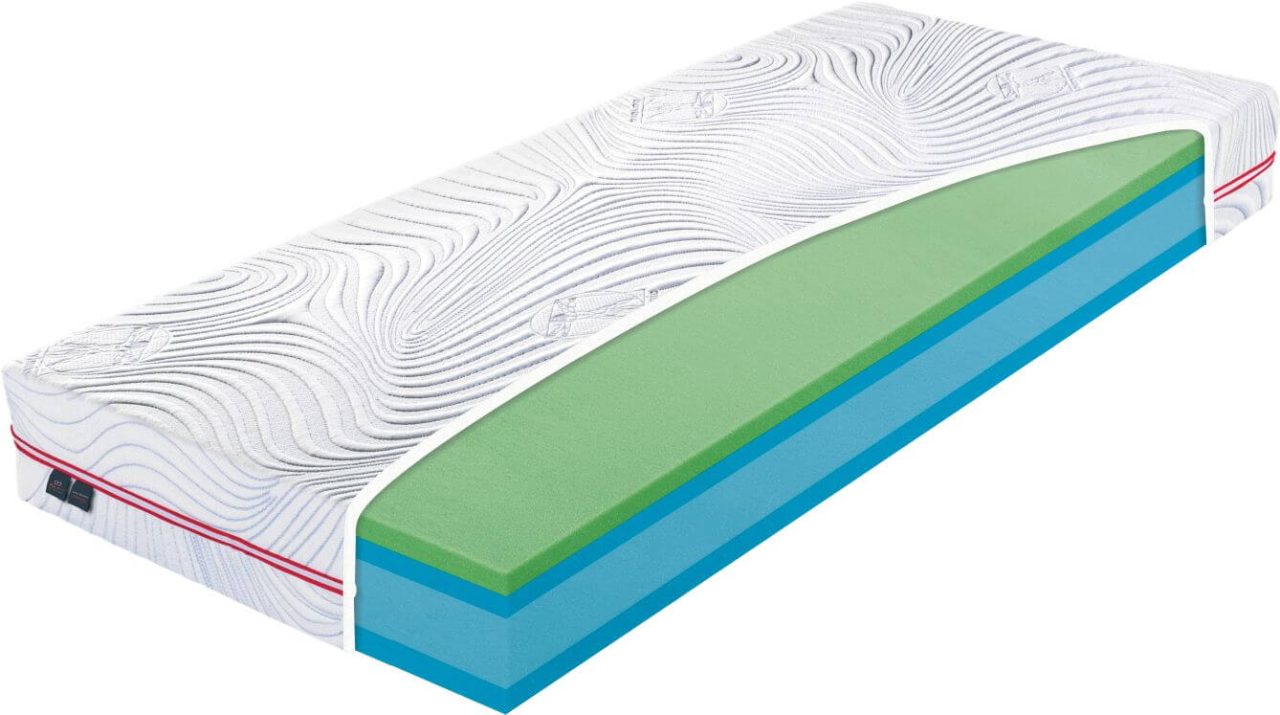
High-quality orthopaedic mattresses can help you combat back pain. Don’t confuse orthopaedic and medical mattresses. A medical mattress must not only meet the material and health requirements for the relevant certification, but must also be included by the Ministry of Health on the list of medical devices subject to a reduced VAT rate.
Image: A mattress that relieves lumbar spine pain.
Which mattresses with orthopaedic properties can be found in the Materasso range?
LUGANO TOP – a mattress designed for those who are looking for uncompromising orthopaedic support and at the same time appreciate high comfort. Thanks to its sophisticated profiling of high-quality HR foams and comfort Oxygen foam, it provides excellent spinal support and elasticity over the entire surface. It is the ideal choice for people with back pain or those who need even pressure distribution during sleep. It has excellent breathability and thermoregulation, contributing to a healthy sleep environment.
KING – a mattress providing royal comfort, ideal for those who appreciate maximum comfort without compromise. The combination of viscoelastic memory foam and pocket springs ensures perfect spinal support while eliminating pressure points. With a load capacity of up to 150 kg, it is also suitable for people with a higher weight or for those who suffer from back pain and need firmer support during sleep.
BERGAMO T3 – mattress with double-sided use and emphasis on thermoregulation. The softer side consists of revolutionary Greengel foam, which helps reduce night sweats and maintains a dry and hygienic environment. The other, harder side is ideal for spinal recovery and stretching back muscles during sleep. The high density foam and 150kg weight capacity make it suitable for overweight people or those who require stable and durable support.
BERGAMO T2 – a highly comfortable mattress with different side firmness, ideal for those suffering from back pain, overheating or looking for long-term support. The softer side with Greengel foam will ensure airiness and reduce sweating, while the harder side with ergonomic notching will support proper spinal posture. It’s also a great choice for those with sensitive back muscles or those who need quality recovery during the night.
More suitable mattresses for back and lower back pain can be found here.
In addition to the mattress, the right choice of mattress is also important to help distribute the pressure of the sleeper on the bed. The grid should be chosen according to the type of mattress. A firm slatted grate is suitable for spring mattresses, slatted grates work best in tandem with foam mattresses. If you choose manually or electrically adjustable mattresses, you can adjust your head or leg area to the positions that best suit your spine.
Abychom poskytli co nejlepší služby, používáme k ukládání a/nebo přístupu k informacím o zařízení, technologie jako jsou soubory cookies. Souhlas s těmito technologiemi nám umožní zpracovávat údaje, jako je chování při procházení nebo jedinečná ID na tomto webu. Nesouhlas nebo odvolání souhlasu může nepříznivě ovlivnit určité vlastnosti a funkce.
Funkční
Always active
Technické uložení nebo přístup je nezbytně nutný pro legitimní účel umožnění použití konkrétní služby, kterou si odběratel nebo uživatel výslovně vyžádal, nebo pouze za účelem provedení přenosu sdělení prostřednictvím sítě elektronických komunikací.
Předvolby
Technické uložení nebo přístup je nezbytný pro legitimní účel ukládání preferencí, které nejsou požadovány odběratelem nebo uživatelem.
Statistiky
Technické uložení nebo přístup, který se používá výhradně pro statistické účely.Technické uložení nebo přístup, který se používá výhradně pro anonymní statistické účely. Bez předvolání, dobrovolného plnění ze strany vašeho Poskytovatele internetových služeb nebo dalších záznamů od třetí strany nelze informace, uložené nebo získané pouze pro tento účel, obvykle použít k vaší identifikaci.
Marketing
Technické uložení nebo přístup je nutný k vytvoření uživatelských profilů za účelem zasílání reklamy nebo sledování uživatele na webových stránkách nebo několika webových stránkách pro podobné marketingové účely.