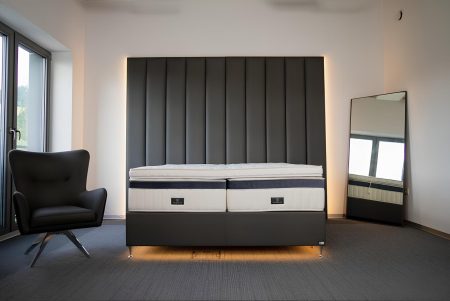
The size of the mattress affects the quality of rest. How to choose the right size?
7 minutes of reading
20
Jan
Choosing a new mattress is not worth rushing. As well as being a fairly significant financial investment, the mattress will also affect the quality of your sleep, rest and your health. Before you decide on a mattress material, consider how big you want or can sleep on.
What aspects should I consider when choosing the right mattress size?
Some may say that there is nothing wrong with choosing the size of the mattress. In short, you choose a product as big as the one you have been sleeping on. Don’t be mistaken! When choosing the size of a new mattress, not only the size of the bed plays an important role:
The mattress is the place where you should sleep comfortably. That’s why it should offer enough space for everyone who shares it. You should be able to stretch out on it comfortably, turn around and simply dream without restriction.
1. Bed size
Always choose the dimensions of a new mattressdepending on the size of the bed, specifically the frame. The dimensions of the frame are always measured from the inside, so it is the inside dimension of the bed. So before buying a mattress, measure the bed frame well and choose the right product accordingly. As the mattress is soft and flexible, it should not be a problem to fit a mattress a few millimetres larger into the frame.
Remember that the mattress has a certain height. For a comfortable sleep for adults, mattresses with a height of at least 15 cm are recommended. However, a height between 20 and 30 cm is ideal. The higher the mattress, the more comfortable the sleep. The height of the mattress then adjusts the height of the sleeping surface. It is most comfortable if the sleeping surface is between 50 and 60 cm off the ground. This makes the bed easy to get into and comfortable to get out of.
2. Mattress length and height of the sleeper
When choosing the length of the mattress, think about your height or the height of the longest sleeper. As a general rule, the mattress should be about 20 to 25 cm longer than your height. This is the so-called heel space, which is roughly equivalent to the length of your outstretched foot. This allows you to stretch out on the mattress without your feet protruding. The standard length of a single or double bed, or a larger single or smaller double bed, is 200 cm. Extended length is 210 or 220 cm. The extended mattress is the right choice for people who measure more than 185 cm .
Good advice: Don’t forget the weight capacity of the mattress, which should be about 10 kg more than your weight.
3. Choose the width of the mattress according to the number of sleepers
A sufficiently wide mattress should give you room to roll out without restriction. When choosing the width, think about how many people will be sleeping in the bed with you. Each sleeper should be able to put their hands on the mattress behind their head without their elbows touching the person sleeping next to them.
Depending on the width you choose:
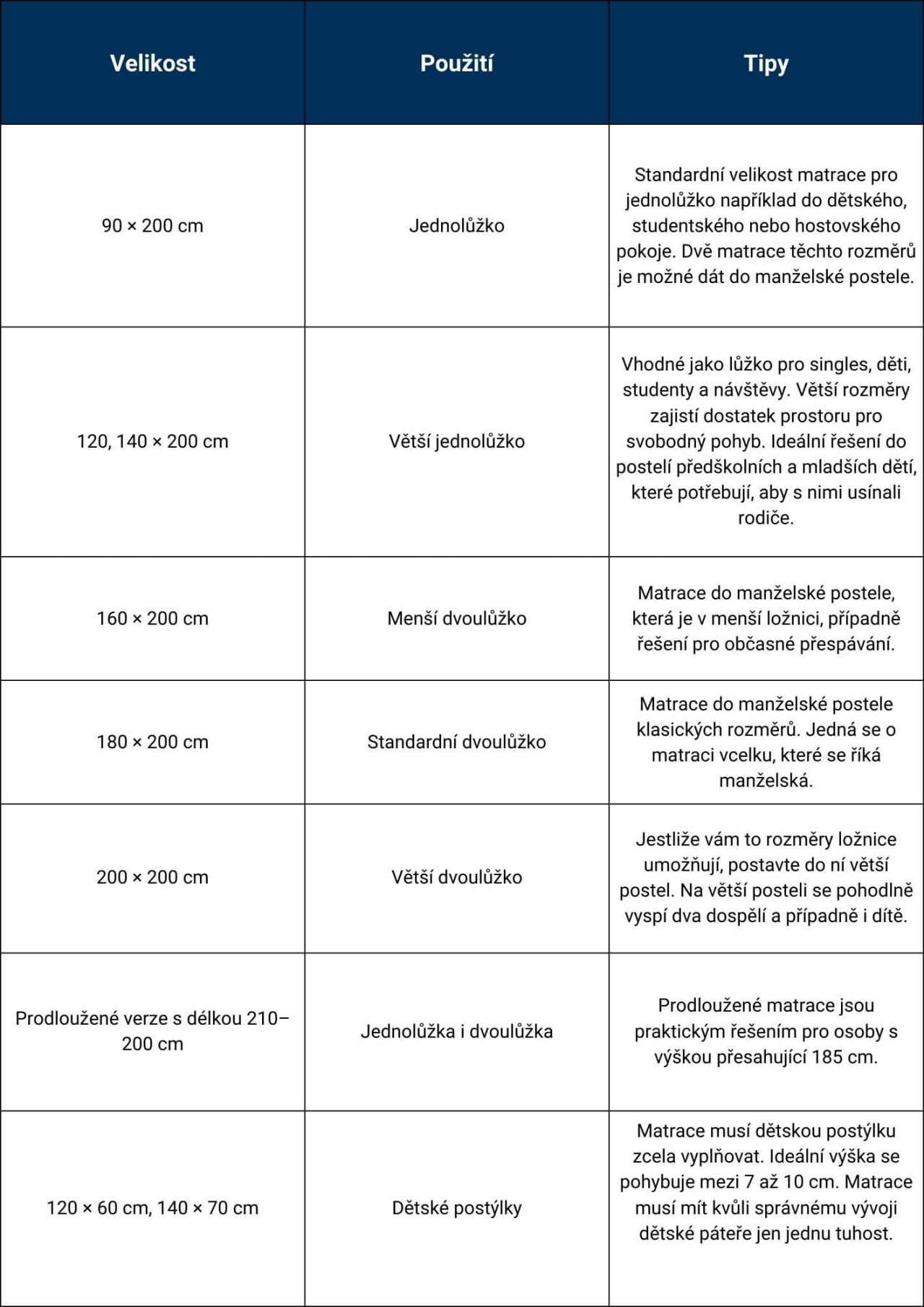
Standard single bed – 90 cm, width suitable for one sleeper.
One and a half bed – 120 to 140 cm, the most popular size for a single sleeper who wants plenty of space. Ideal for a child’s bed where the parent falls asleep with the child.
Standard double bed – 180 cm, classic for two sleepers.
Smaller double bed – 160 cm, the width will be enough for smaller people, or it is suitable for occasional sleeping at the cottage.
The larger double bed – 200 cm, is suitable for two sleepers who need more space, or for parents who share the bed with children.
Image: choose the length of the mattress according to the tallest sleeper.
4. Spatial options for the bedroom
Have you heard the term ergonomics of space? It’s the rules that allow you to move around a room without obstruction, and the placement of furniture makes sense. For the bedroom, choose a bed with dimensions that make it easy to walk around. There should be about 50 cm of space between the wall or wardrobe and the bed.
5. Favourite sleeping position
Few people take sleep position into account when choosing a mattress size. Yet it also contributes to comfort. If you frequently change sleeping positions and toss and turn in your sleep, you will need a wider mattress than a sleeper who sleeps almost motionless. Those who sleep mainly on their backs and stomachs also deserve a wider mattress.
Standard and non-standard mattress dimensions and their use
There are standardised mattresses on the market, but also “specials” that can be wider or longer. It depends on the size of your bed, but also on your body structure.
Standard single bed – a classic mattress for one sleeper has an optimal size of 90 × 200 cm. The mattress for an extended single bed is 210-220 × 90 cm in length and width.
Smaller single bed – if you have to go for a smaller bed because of space, smaller single mattresses are available in 80 × 200 cm. The extended length of the mattress is 210 to 220 cm.
Larger single beds – if you have a large room, get a larger single bed for one sleeper. Typical sizes are 100 × 200 cm and 120 × 200 cm, or an extended version of 120 × 210-220 cm.
Standard double beds – a classic double bed is most often fitted with two single mattresses of 90 × 200 cm, or an extended 90 × 210-220 cm. You can also opt for a 180 × 200 cm double mattress or a 210-220 cm double mattress.
Smaller double beds – for occasional sleepovers or for smaller bedrooms, smaller mattresses for two are available in 140 × 200 cm or 160 × 200 cm. Here, too, there is the option of an extended version of 140 × 210-220 cm and 160 × 210-220 cm.
Larger double beds – for larger bedrooms, or if you know that you will sleep more than two in your bed, large mattresses are available in sizes 200 × 200 cm or 200 × 210-220 cm.
At Materasso , we manufacture customized mattresses, so we can easily produce a round mattress or mattresses for atypically designed beds.
Dimensions of mattresses for children
When choosing a mattress size for children, always go by the size of the cot. The mattress must cover the entire bottom of the cot. There must be no space between the mattress and the springs where the baby can wedge his/her hand or foot. The most common mattresses for cots are 120 × 60 cm or 140 × 70 cm, while older children can use 180 × 80 cm mattresses. The height of the mattress should be between 7 and 10 cm.
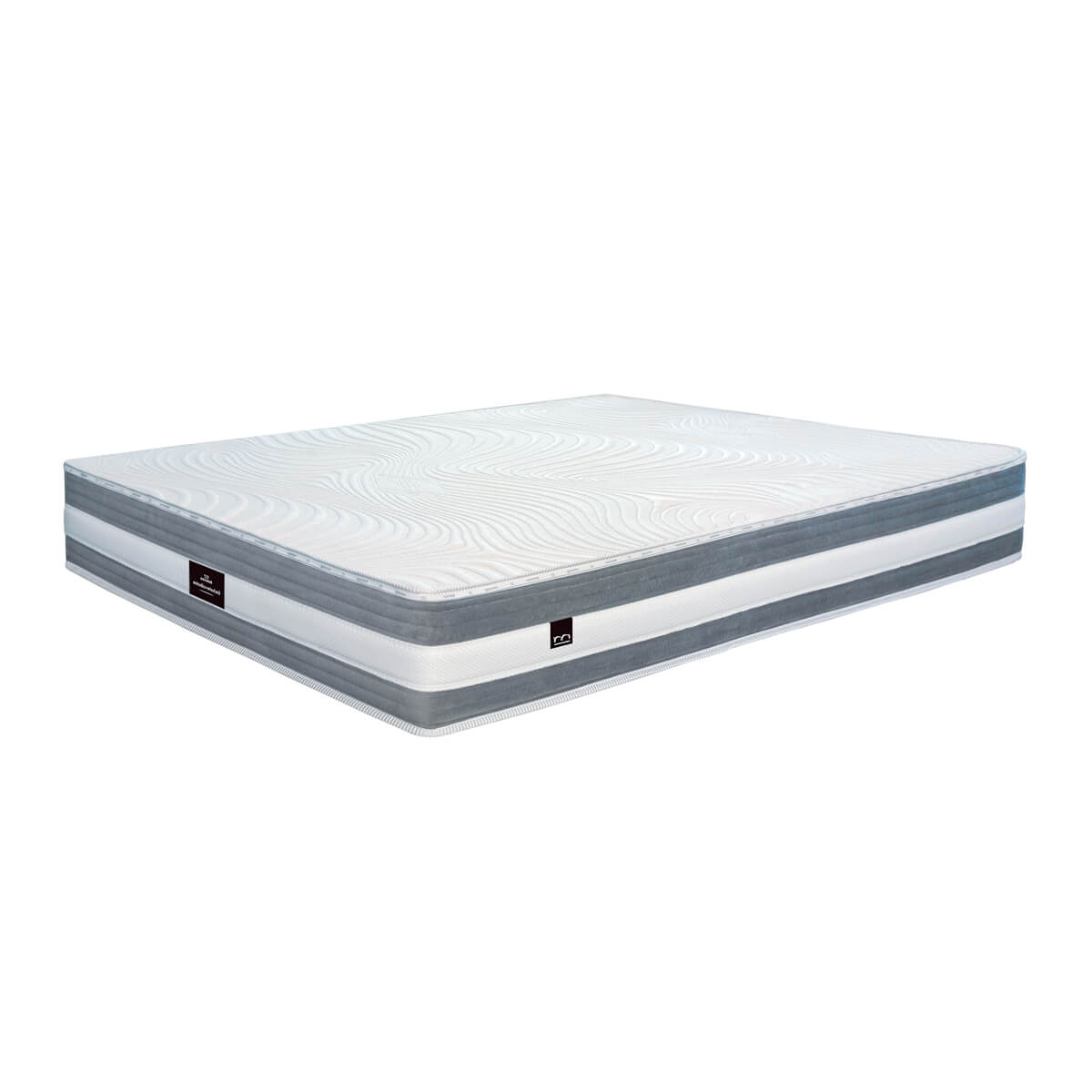
Image: at Materasso, we produce customised mattresses.
3 lesser-known but important tips for choosing a new mattress
What else to remember when choosing a new mattress?
Comfort – you can only choose the best mattress in person. So go directly to the shop and try out the mattress. Lie in your favourite sleeping position for at least 10 minutes. The mattress must not restrict you in any way.
Sufficient size – if you sleep two or more people on the bed, everyone should be able to lie on the mattress with their hands behind their head without touching the person next to them.
Future outlook – are you going to live with a partner? Are you going to start a family? Are you going to move? Has your baby grown up and is about to go to bed? All future plans should be reflected in your choice of mattress.
When the mattress doesn’t fit
What can happen if you choose the wrong size mattress?
Poor quality sleep can take a toll on your physical and mental health,
you’ll sleep in a position you’re not comfortable with,
the mattress will not be flush with the dimensions of the bed frame.
Standard mattress dimensions in a cube
What are the dimensions of standard mattresses and what are their characteristics
Remember that the correct mattress size must match not only the dimensions of the bed frame, but also the number of people sleeping on it and the height of the tallest sleeper. If you are unsure about the size of your mattress, consult a specialist in the showroom to discuss your requirements.
Abychom poskytli co nejlepší služby, používáme k ukládání a/nebo přístupu k informacím o zařízení, technologie jako jsou soubory cookies. Souhlas s těmito technologiemi nám umožní zpracovávat údaje, jako je chování při procházení nebo jedinečná ID na tomto webu. Nesouhlas nebo odvolání souhlasu může nepříznivě ovlivnit určité vlastnosti a funkce.
Funkční
Always active
Technické uložení nebo přístup je nezbytně nutný pro legitimní účel umožnění použití konkrétní služby, kterou si odběratel nebo uživatel výslovně vyžádal, nebo pouze za účelem provedení přenosu sdělení prostřednictvím sítě elektronických komunikací.
Předvolby
Technické uložení nebo přístup je nezbytný pro legitimní účel ukládání preferencí, které nejsou požadovány odběratelem nebo uživatelem.
Statistiky
Technické uložení nebo přístup, který se používá výhradně pro statistické účely.Technické uložení nebo přístup, který se používá výhradně pro anonymní statistické účely. Bez předvolání, dobrovolného plnění ze strany vašeho Poskytovatele internetových služeb nebo dalších záznamů od třetí strany nelze informace, uložené nebo získané pouze pro tento účel, obvykle použít k vaší identifikaci.
Marketing
Technické uložení nebo přístup je nutný k vytvoření uživatelských profilů za účelem zasílání reklamy nebo sledování uživatele na webových stránkách nebo několika webových stránkách pro podobné marketingové účely.