When to give the baby a pillow and how to choose a blanket and pillow for children?
8 minutes of reading
20
Jan
Our body needs enough sleep to function properly. For children, this fact is doubly true. If their sleep is not of good quality, they will be tired, which will be reflected above all in their mood. If you want to avoid weepy days, do your best to ensure your children get a healthy night’s sleep. Choosing the right blankets and pillows is essential. How to do it?
What requirements should bedding for children meet?
If you are choosing a pillow and blanket for a baby or even older children, you should know what requirements they should meet. What to look for?
Pillows and blankets should be easy to maintain. This is because the most common childhood accidents, including food soiling and bedwetting, can be avoided. Therefore, both the blanket and the pillow should be washable.
Durability and stability of the material. The material filling should not lose its properties through washing. It should therefore not crumble or shrink. Therefore, it is better to pay more and reach for quality and branded products.
When to give the baby a pillow and which one to opt for?
In particular, newlywed parents will solve the question of when and whether to give the baby a pillow. Sleeping a baby on a pillow is not recommended by pediatricians. Newborns are at risk of getting tangled in the pillow or pulling it over their head and suffocating. So instead of a pillow, put a clean cotton nappy in the cot, for example.
The pillow does not belong under the baby’s head for other reasons. Sleeping without a pillow is important for the proper development of the baby’s spine, which does not yet need the support of a pillow. For this reason, we do not recommend a pillow even for a one-year-old baby. As soon as your baby starts to cuddle under his/her head, you can buy a pillow.
What pillow is best suited for a two-year-old child?
Experts say that the pillow is suitable for toddlers, i.e. for children from about two years of age. Some even recommend use from the age of three. Usually, the pillow is only put in the bed when children change from a small bed to a big or half bed.
Either way, classic adult pillows do not belong in the crib. The baby pillow should be smaller, the recommended size is 40 × 60 cm. Remember that it should not be too high. A pillow for a 2-year-old child should be rather low, or you should be able to adjust the filling. Older children who are already at school can have a conventional 50 × 70 cm or 70 × 90 cm pillow in their bed.
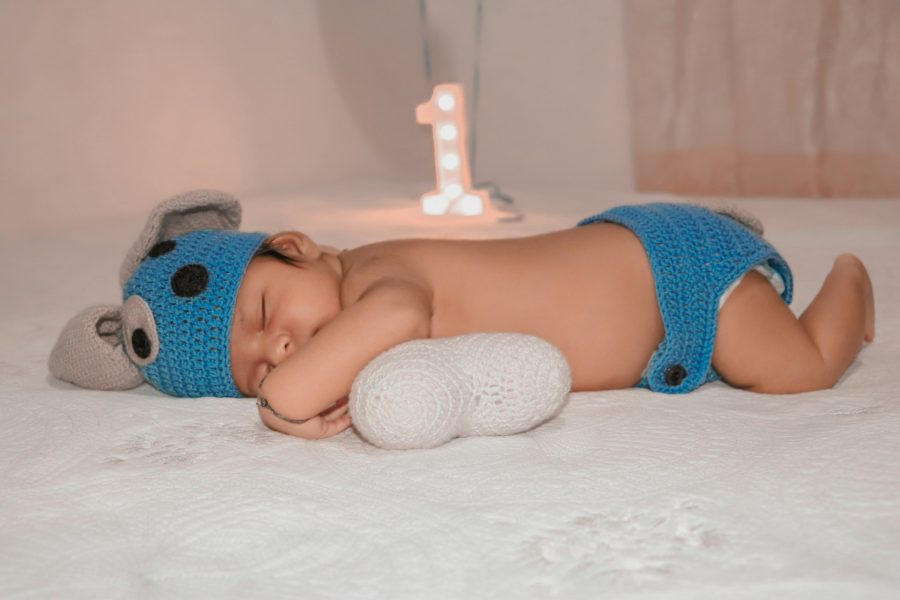
Picture: pillows do not belong in newborn cribs.
In general, the pillow should only be used to support the head and neck and should therefore end at the shoulder area. If you let children sleep on a pillow that is too big and overstuffed, they may start to get headaches and neck pain. A poorly chosen pillow can cause unhealthy body development.
Good advice: If you’re putting a pillow in your baby’s crib for the first time, wait for his reaction. If he cries, he may be uncomfortable sleeping on the pillow. So wait a little longer and let your baby sleep without a pillow.
Everything you need to know about the baby blanket
Just like a pillow, a comforter is not put in a newborn’s crib. When swinging arms and legs, the baby could pull it over his head and suffocate. That is why it is recommended to use swaddles or sleeping bags in the beginning.
As soon as the baby grows up, put a baby blanket in the crib that is breathable and won’t make the baby sweat. Crib blankets for toddlers and babies are usually 90 × 130 cm. For older children from about 4 years of age, the same size duvet is used as for adults. The most common size is 140 × 200 cm.
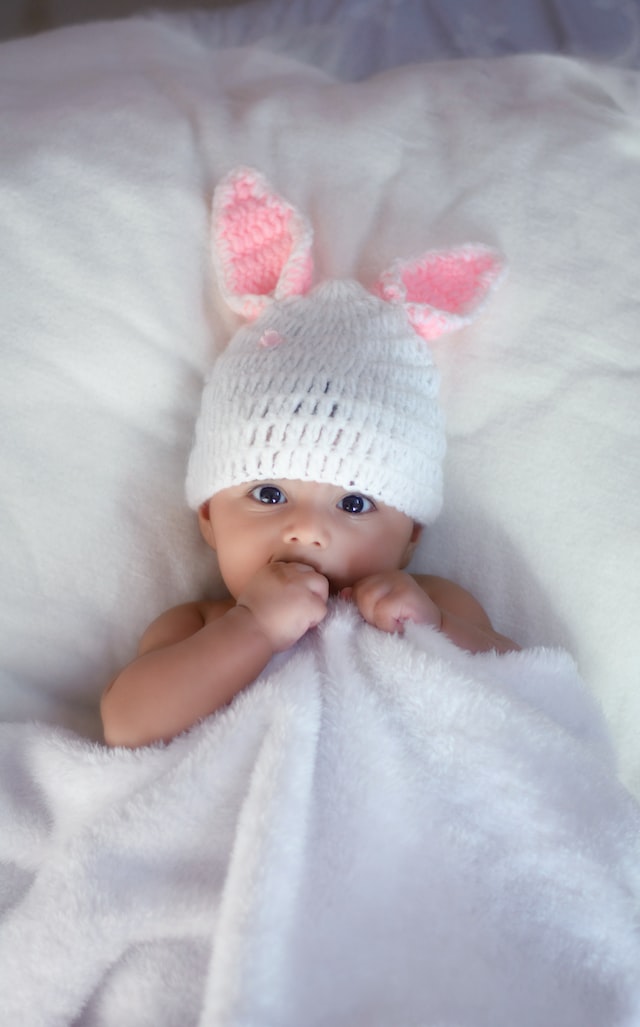
Image: the blanket for the baby should be breathable.
Types of blankets for babies
Baby blankets are distinguished according to whether they are suitable for warmer or colder seasons. In addition, also take into account the coldness of your offspring. If he is constantly kicking off, reach for a thinner blanket. In the case of a ‘hibernator’, a warmer blanket is worthwhile.
Thinner blankets – they are especially suitable for summer. They absorb and wick away sweat. They are breathable and boast excellent thermoregulating properties. In summer, the blanket should feel cool. An antibacterial finish is definitely recommended.
Medium warm bedding – usually used all year round. In summer they can feel cool and perfectly wick away sweat, in winter they warm up. As with the summer duvets, the antibacterial design pays off.
Winter blankets – they are lightweight, but at the same time extremely warm. They have great thermal insulation properties, are airy and fluffy. Antibacterial treatment is a matter of course.
The most used fillings for blankets and pillows for children
When choosing duvets and pillows, you will not only be looking for the right size, but above all for the filling. You can choose from synthetic and natural fillings. If your child suffers from allergies, reach for bedding that can be washed at least at 60 °C, a temperature that kills bacteria. The most popular types of fillings are:
Hollow fibre – used most often because it is suitable for allergy sufferers. In addition, it is easier to maintain than, for example, feathers. Hollow fibre is suitable for children who are allergic to dust.
Microfibre – often confused with hollow fibre. However, microfibre is about 10 times smaller in diameter. It boasts excellent thermoregulating properties, is moisture-wicking, breathable, washable at 60 °C and suitable for allergy sufferers.
Lyocell fibre – Lyocell is a natural material that is made from wood pulp. It is breathable, so it is especially suitable for summer. It is great for those who sweat a lot and have sensitive skin. Loycell fiber is naturally antibacterial.
Feathers – especially in winter, but also in homes where it is colder. It is soft, fluffy and adapts perfectly to the body. With feather pillows and baby blankets, you most often have to go to the dry cleaners, while hollow fibre, for example, can be washed at home in the washing machine. While some down products can be washed at home, there is a risk of washing them in the wrong detergent and the down losing its texture. In addition, it is difficult to dry. Not suitable for allergy sufferers.
Wool – can adapt to the temperature of the human body, so it cools in summer and warms in winter. It sucks well and gets dirty very little. However, cleaning is only done by professionals.
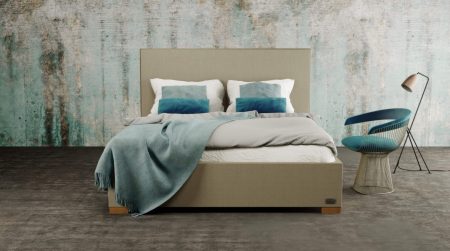
Image: feathers are not suitable for allergy sufferers.
How to wash duvets and pillows?
Taking care of the bedding and mattress is crucial if you want your baby to live in a healthy environment. When washing and cleaning blankets and pillows for babies and children, it is essential to follow the manufacturer’s advice, which you will most often find on the information label.
How to wash duvets and pillows? The cleaning method depends on the type of material. Memory foam pillows do not belong in the washing machine or dryer. Hand wash using liquid detergent. If the manufacturer allows it, you can wash down pillows and blankets at around 30 °C. Some washing machines have a special washing programme for feathers. Special detergents are used that will not wash away the feathers.
How to wash duvets and pillows made of hollow fibre? Hollow fibre can usually be washed at home in the washing machine. Remember that the fibre will swell up quite a lot after soaking, so the washing machine should only be filled to a third of its capacity. Wash in a mild detergent.
Hardness – a mattress with one hardness belongs in a cot. Hard mattresses are recommended for the proper development of the child’s spine.
Thickness – the mattress should not sag after the baby is laid down, so a thickness of around 10 cm is recommended.
Breathability – the mattress must be sufficiently breathable and able to wick away moisture. Mattresses made of natural materials are best.
Thermoregulation – the baby should not overheat unnecessarily on the mattress. Proper thermoregulation is important for a restful and comfortable sleep.
Dimensions – the mattress must completely fill the surface of the cot. There must not be a gap between the springs and the mattress into which the child’s foot or hand could become wedged.
Material – The best children’s mattresses are made of cold or HR foam, PUR foam, coir or Biogreen natural foam.
A mattress for children aged 3-4 years should meet the following requirements:
Match the size of the bed – at this time children are already sleeping in large beds, so you will probably choose from 90 × 200 cm or 180 × 200 cm. A space-saving bunk bed is also a common choice for children’s rooms.
Firmness – a firmer or medium-firm mattress without zones is ideal for beds for schoolchildren and preschoolers.
Height – the height of the mattress should be around 15 cm.
Material – the ideal production material is latex, coir or horsehair. Memory foam mattresses are not recommended.
How to clean the mattress from the most common baby stains?
The mattress needs to be cleaned regularly, especially as dust, microscopic skin particles and sweat settle in the mattress. All this leads to the growth of bacteria and mould.
In children, one of the most common accidents is bedwetting. To best protect the mattress, it is best to provide it with a protective cover or pad.
If drenching occurs, make a cleaning mixture with these ingredients:
3 tablespoons of baking soda,
240 ml of hydrogen peroxide,
2 drops of dishwashing liquid.
Although cleaning urine from the mattress is challenging, it is not impossible. Make a mixture of all the ingredients and rub it on the stain. But don’t scrub the soiled area. Let the wet spot dry and you’re done.
Abychom poskytli co nejlepší služby, používáme k ukládání a/nebo přístupu k informacím o zařízení, technologie jako jsou soubory cookies. Souhlas s těmito technologiemi nám umožní zpracovávat údaje, jako je chování při procházení nebo jedinečná ID na tomto webu. Nesouhlas nebo odvolání souhlasu může nepříznivě ovlivnit určité vlastnosti a funkce.
Funkční
Always active
Technické uložení nebo přístup je nezbytně nutný pro legitimní účel umožnění použití konkrétní služby, kterou si odběratel nebo uživatel výslovně vyžádal, nebo pouze za účelem provedení přenosu sdělení prostřednictvím sítě elektronických komunikací.
Předvolby
Technické uložení nebo přístup je nezbytný pro legitimní účel ukládání preferencí, které nejsou požadovány odběratelem nebo uživatelem.
Statistiky
Technické uložení nebo přístup, který se používá výhradně pro statistické účely.Technické uložení nebo přístup, který se používá výhradně pro anonymní statistické účely. Bez předvolání, dobrovolného plnění ze strany vašeho Poskytovatele internetových služeb nebo dalších záznamů od třetí strany nelze informace, uložené nebo získané pouze pro tento účel, obvykle použít k vaší identifikaci.
Marketing
Technické uložení nebo přístup je nutný k vytvoření uživatelských profilů za účelem zasílání reklamy nebo sledování uživatele na webových stránkách nebo několika webových stránkách pro podobné marketingové účely.