How to choose bed linen and bed sheets: dimensions, materials and fastening
7 minutes of reading
05
Nov
You know the saying: as one makes his bed, so he lies down? You should definitely keep it in mind when choosing your bed linen and sheets. Focus on quality materials, the right dimensions, but also on fastenings that make it easier to change your linen. What is worth knowing before buying?
The quality of the bed reflects on the quality of sleep
If you want to enjoy a healthy and restorative sleep, nothing is more important than choosing the right bed and its equipment. The bed frame is important because of the design, but the rest reflects on the comfort of your rest. The right choice of mattress is extremely important, as it has the biggest impact on the quality of your sleep. The mattress should provide sufficient support for your spine. Choose the firmness according to your weight and preferred sleeping position. A mattress protector should be placed on top of the mattress to make the bed more hygienic.
Once you’ve chosen a suitable mattress, you need to focus on choosingduvets, pillows and their covers. Among the most popular duvet covers are those made of hollow fibre, which are perfectly breathable, which you will appreciate especially in summer. In the winter, hollow fibre is great at insulating heat, so you won’t feel cold under your duvet.
In terms of benefits for your health and quality sleep, anatomical pillows with a specific curvature are the most popular. With several design options, you can choose a pillow that provides the support that matches your sleeping position or relieves cervical spine problems.
Choose the sheet according to the size of the mattress
When choosing a sheet, remember that it comes into contact with your skin. It is therefore important that it feels comfortable to the touch. You should also pay attention to its quality. Remember that the sheets must be able to withstand your tossing and turning, and poor quality would mean quick wear and tear.
Sheet type
When choosing a sheet, you will come across two designs.
Sheet – this is a classic cotton sheet that looks like a sail. It has enough overlap, so it folds easily under the mattress. With this type, keep in mind that it can bunch up during sleep.
Tensioning – one of the most popular. There is an elastic seam around the entire perimeter that naturally bends under the mattress. The tension sheet is easy to place on the mattress and the rubber perimeter means there is no risk of it shifting or fraying.
Image: the sheet does not have an elastic band and can bunch up on the mattress.
Correct sheet size
The size of the sheet depends on the size of the mattress. In addition to the width and length, the height of the mattress is also important. Whereas mattresses used to be available in heights of around 15-20 cm, today you can choose from designs with heights of over 30 cm. If your mattress is higher than 20 cm, choose a sheet for high mattresses. This will ensure that the mattress is completely “wrapped” in the sheet.
The sheets are available for classic single beds in the size 90 × 200 cm, but also for double beds 180 × 200 cm. The sheets are produced in the same sizes as the mattresses. Remember that if you have an atypical or extended mattress at home, you also need to choose the right size of sheets.
Sheets by material
Sheets are available in a wide range of materials:
Cotton – it is a natural material that can withstand washing even at high temperatures, so even allergy sufferers can use it. Cotton absorbs sweat well, cools in summer and warms in winter. However, it must be ironed.
Jersey – this is a knitted fabric consisting of cotton and elastic fibres. The material is similar to a t-shirt. Jersey sheets do not need to be ironed and can be used all year round.
Terry – they have high corners, so they adapt easily to higher mattresses. It is a three-dimensional material, with the third dimension being the loops. They make the fabric feel like moss. Made from cotton, terry is soft and warm, so it is particularly suitable in winter.
Flannel – a densely woven fabric made from cotton and then treated by combing. This creates a soft, fine pile on the surface. Flannel sheets are pleasant to the touch and warm. Ideal for winter evenings.
Microfibre – this is 100% polyester, a man-made fibre that does not harbour bacteria and is therefore suitable for allergy sufferers. It is a warm and soft material, which is mainly used in winter.
When it comes to bed linen, consider the dimensions, but also the design
Bed linen is a dominant accessory in the bedroom. Therefore, it should match the overall concept of the bedroom. Geometric and abstract shapes are suitable for minimalist bedrooms. For vintage or village style, a print of flowers, stripes or checks will be perfect. Polka dots also look cute. The bed linen should match the bed.
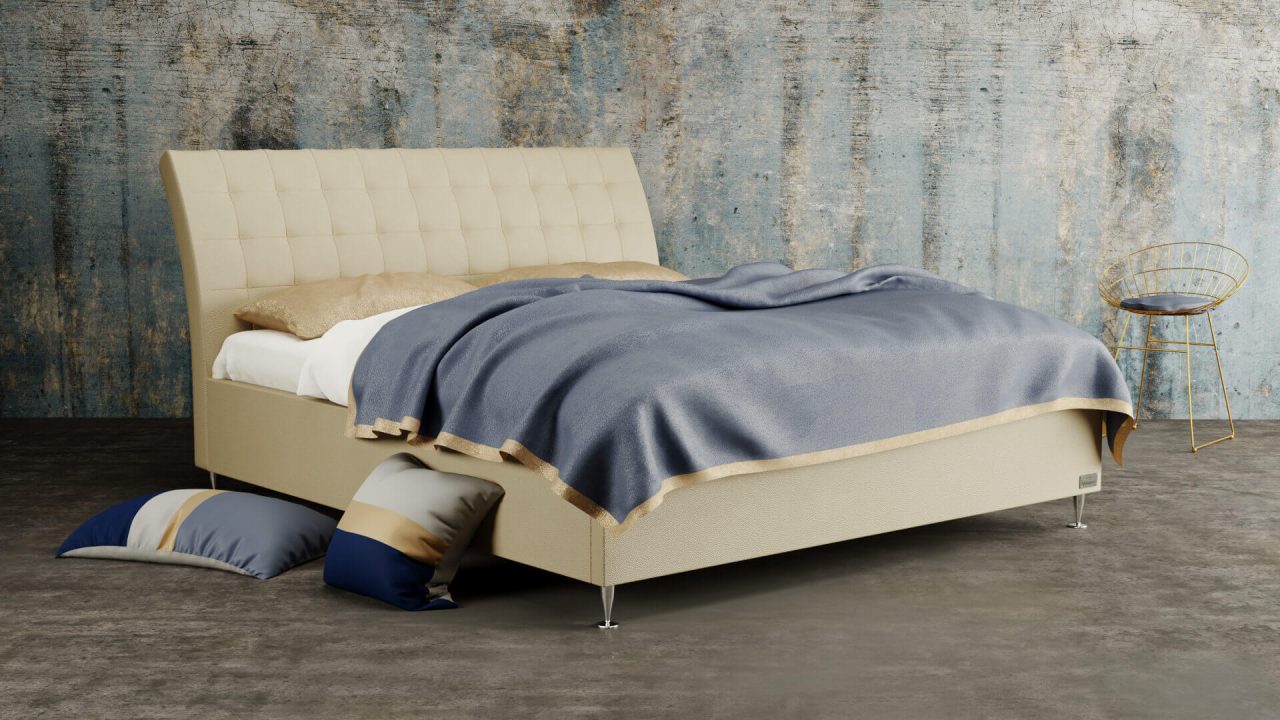
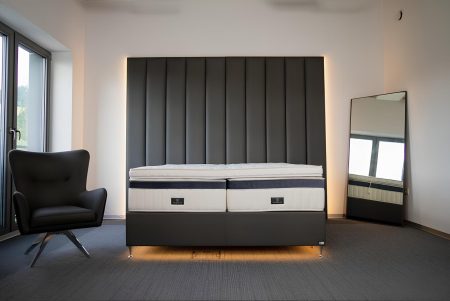
Did you know that at Materasso we make beds to measure? You can choose the colour of the upholstery, our swatch book includes more than 150 shades. You will also find eco leather in the range. In addition to the colours, you can choose the headboard design and also the footboard. You can see our beds for yourself at Materasso dealers.
Image: the bed linen should match the sheets and the bed.
Bed linen looks best in pastel colours, yellow, brown, orange or green. You can also choose more garish colours. If you get bored of them, simply replace the bed linen.
Which material to choose?
Just like the sheets, the sheets are available in a wide range of materials.
Cotton – this is a classic that has been very popular for a long time. Cotton bed linen is soft, breathable and sucks well. The disadvantage is the maintenance, which requires ironing.
Crepe – this is cotton that is machine processed. It alternates between plain and crinkled stripes. Thanks to this, crepe bed linen does not iron. However, not everyone is comfortable with the treatment.
Microfibre – this is a fine fabric made of man-made fibres. Most often it is 100% polyester. These sheets are suitable for allergy sufferers as they do not harbour bacteria and dust mites. The fabric dries quickly and does not wrinkle.
Flannel – this is cotton that is combed on both sides. Therefore, the fabric is soft to the touch and warms. It absorbs sweat and insulates well.
Satin – bed linen is most often made from cotton sateen, which is amazing to the touch and looks beautiful too. It has the advantage of not having to be ironed. Moreover, it maintains its colour fastness for a long time.
Methods of fastening
When choosing bed linen, do not forget about the fastening. It affects how easy it will be to handle.
Zipper – nowadays the most popular and most modern. The zipper is easy to handle, so changing the sheets is quick. The zipper should be covered with fabric so that it does not scratch anywhere.
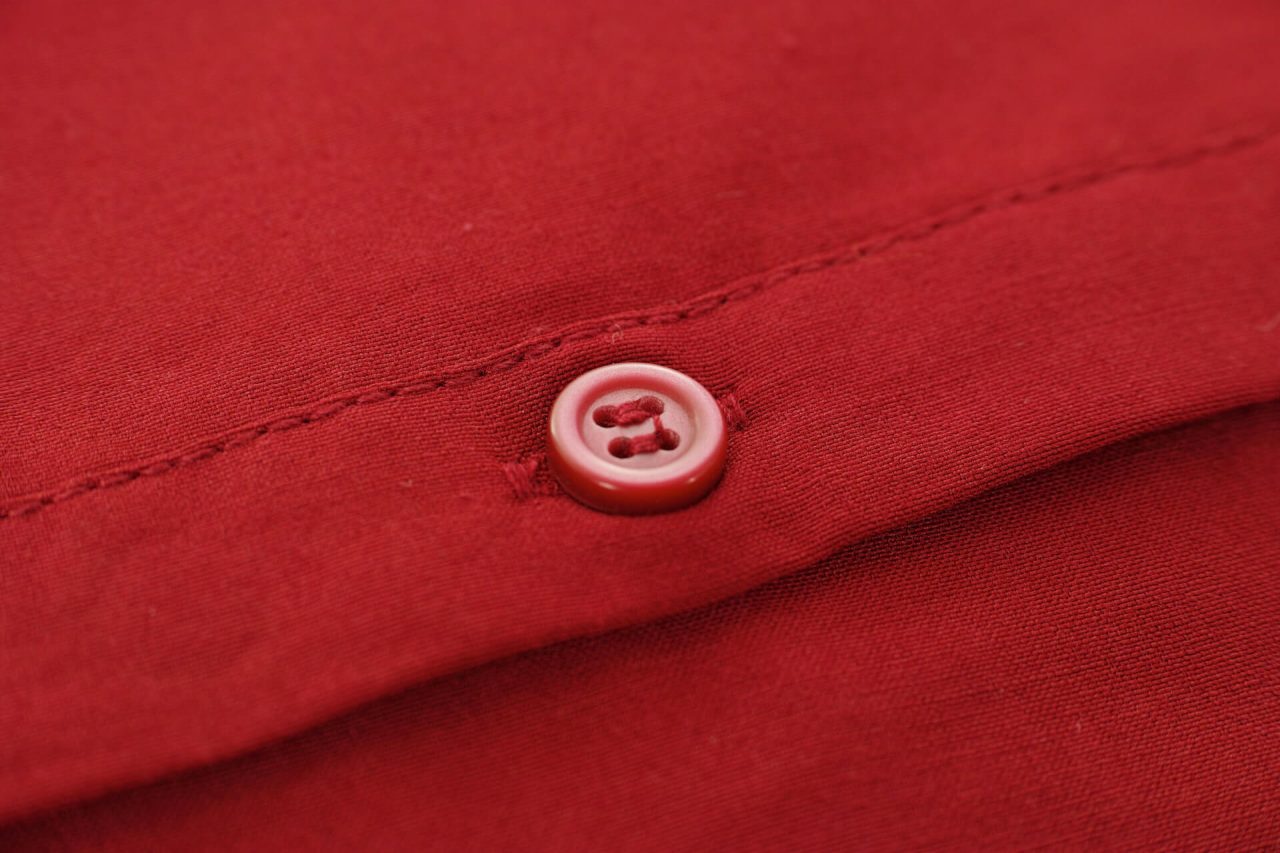
Buttons – they used to be one of the most used fasteners and you can still find them today. But they are more time-consuming to work with, so zippers are replacing them.
Picture: button fastening replaces the increasingly popular zipper.
Linen size
When choosing your bed linen, make sure you measure the dimensions of the duvets and pillows well. Standard bed linen for one duvet is 140 × 200 cm. In the case of an extended duvet cover, it is 140 × 220 cm. For a standard pillow, the size of the sheet is 70 × 90 cm. In the case of a French duvet, i.e. one large blanket under which two people can sleep, the size is 200 × 200 cm or 240 × 240 cm.
Proper care of bed linen
Also choose bed linen with maintenance in mind. Since the bed is a haven for dust mites and bacteria, you should change your bed linen at least once every two weeks. In order to get rid of any dirt, you should be able to wash your bed linen and sheets at least at 60 °C. This is the temperature at which you will destroy all micro-organisms. If you do not suffer from allergies, you can also wash at 40 °C. Remember to wash your new bed linen before the first use. Linen and sheets come into direct contact with your skin, so allow plenty of time when choosing your linen. Also remember that bed linen should match the whole bedroom.
Abychom poskytli co nejlepší služby, používáme k ukládání a/nebo přístupu k informacím o zařízení, technologie jako jsou soubory cookies. Souhlas s těmito technologiemi nám umožní zpracovávat údaje, jako je chování při procházení nebo jedinečná ID na tomto webu. Nesouhlas nebo odvolání souhlasu může nepříznivě ovlivnit určité vlastnosti a funkce.
Funkční
Always active
Technické uložení nebo přístup je nezbytně nutný pro legitimní účel umožnění použití konkrétní služby, kterou si odběratel nebo uživatel výslovně vyžádal, nebo pouze za účelem provedení přenosu sdělení prostřednictvím sítě elektronických komunikací.
Předvolby
Technické uložení nebo přístup je nezbytný pro legitimní účel ukládání preferencí, které nejsou požadovány odběratelem nebo uživatelem.
Statistiky
Technické uložení nebo přístup, který se používá výhradně pro statistické účely.Technické uložení nebo přístup, který se používá výhradně pro anonymní statistické účely. Bez předvolání, dobrovolného plnění ze strany vašeho Poskytovatele internetových služeb nebo dalších záznamů od třetí strany nelze informace, uložené nebo získané pouze pro tento účel, obvykle použít k vaší identifikaci.
Marketing
Technické uložení nebo přístup je nutný k vytvoření uživatelských profilů za účelem zasílání reklamy nebo sledování uživatele na webových stránkách nebo několika webových stránkách pro podobné marketingové účely.