The effect of clean air on the body and healthy sleep
6 minutes of reading
28
Dec
Did you know that during the course of a day a person takes about 20,000 breaths? Every day, a person uses approximately 15 kg of air. But do you have any idea what kind of air you breathe at home? In this article, you will learn what the consequences of breathing bad air are and also how to achieve clean air in the bedroom and other rooms.
Consequences of breathing bad air
Breathing bad air can lead to fatigue and long-term chronic health problems. Research has shown that even small concentrations of pollutants in the air can contribute to the onset or worsening of some of the diseases of civilisation, including respiratory problems, burning eyes, nervousness, fatigue, as well as serious diseases such as cancer.
Fresh air, on the other hand, improves concentration, helps fight fatigue and also strengthens our immunity.
What effect does air pollution have on sleep?
Breathing polluted air also affects the quality of sleep and causes many sleep problems. In fact, if we breathe in harmful substances that settle in the body, breathing can be impaired and regenerative processes slowed down. As a result, you may wake up tired every morning with a headache and irritated mucous membranes.
Are you constantly tired and sleeping badly? Maybe you have poor air quality in your home.
Measuring air quality in the home
First of all, it is important to monitor the CO2 concentration level via sensors. High levels reduce concentration and increase fatigue. A safe and healthy CO2 level is up to 700 ppm.
It should be said that the concentration of harmful substances is two to five times higher indoors than outdoors. In addition to the presence of pollutants in the air, you should also measure the temperature and humidity and the possible presence of gases in the workplace.
Temperature in the bedroom
The optimum temperature is between 18 °C and 20 °C. If it is lower, it is harder to fall asleep and the deep sleep phase is shortened (the body defends itself against hypothermia). At a higher temperature, we fall asleep more easily, but at night we start to sweat, REM is shortened and we tend to kick back, which is not good for our joints.
Did you know that the bedroom should be about 4 degrees lower than the rest of the apartment? Especially in summer, this can be a problem. So check out our mobile air conditioner comparison and enjoy the best quality sleep possible.
What is the optimum humidity in the bedroom?
You’ll agree that the right temperature in the bedroom is important for a good, deep sleep. However, humidity is equally important. It should be between 45 and 60% in winter and between 40 and 55% in summer. Too low and too high humidity is not good for our health.
How to achieve clean air?
The answer is proper ventilation in the room and also humidifying the air. However, in some locations the air is polluted, so if you ventilate, you will let the polluted air into the bedroom.
In the Czech Republic, air pollution is a long-term problem and is the cause of many diseases. Unfortunately, the majority of people currently live in an unsuitable environment. But you may not feel like taking out a mortgage to build a house in the middle of idyllic nature just to get enough fresh air. But there is an alternative that won’t put you in debt for the next 30 years. An air purifier or humidifier can become your ideal companion. These devices will provide you with fresh air without having to change your lifestyle or move. You can stay in the comfort of your home while breathing the clean air you would find in nature, away from the distractions of city life.
Ventilation brings fresh air into your home, but also a lot of pollutants.
Air purifier for healthy sleep
Air purifiers are an easy and quick way to achieve ideal air in the bedroom. These should be an integral part of homes where people with allergies or respiratory diseases live. However, they are suitable for anyone who wants to breathe clean air. The right air purifier can capture almost 100% of pollutants in the form of dust, pollen, mites and mould, smoke, bacteria, allergens and viruses.
TIP: Philips 4000i Series Air Purifier
A good choice is the Philips 4000i Series air purifier, which can capture and remove up to 99.97% of unwanted particulates and gases. This purifier can clean the air in a 20 m2 bedroom in just 6 minutes. If you need absolute silence at night, you’ll be pleased to know that the air purifier reduces the noise and light emitted to a minimum.
Humidifiers
In case you want to have optimal humidity in your bedroom, humidifiers come in handy, which, thanks to evaporative technology, prevent the spread of bacteria and also white dust from the minerals contained in the water. In addition, you can also opt for combination devices, which both clean the air and humidify it.
Air purifiers not only for the bedroom
Since clean air affects the quality of sleep, it is very important to have it in the bedroom, where we spend about a third of our lives. You should not miss an air purifier in your bedroom due to the difficulty of ventilation during the night.
Another room you should let clean air into is the living room. People spend a lot of time there too. While the living room usually offers more ventilation options than the bedroom, regular ventilation, on the other hand, can be associated with letting in more pollutants from outside.
Clean air for the office and workplace
Do you work from home in your office? You’ve probably guessed correctly that it’s important to breathe fresh air during the day, which affects our attention and health.
Of course, clean air should also be present in the workplace. We spend about a third of the day working and fresh air has an impact on the quality of our work. In simple terms, we could say that clean air should ideally be breathed wherever we spend our time on a regular basis.
What else affects the quality of sleep?
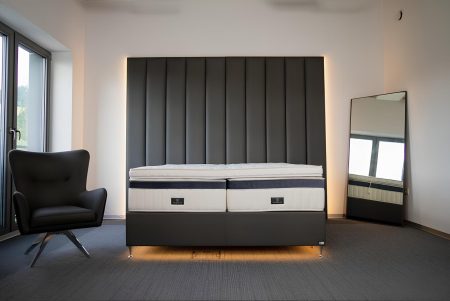
In addition to clean air, many other things affect the quality of sleep. These include a good quality mattress that provides enough support for the body, and a bed that is big enough and comfortable enough for a healthy night’s sleep. You will also fall asleep and sleep better if you choose a suitable pillow.
And what are some other recommendations for people who sleep poorly at night and are troubled by lack of sleep? You should avoid blue light from screens for at least an hour before bedtime, and you should also avoid drinking alcohol and caffeinated drinks. A healthy diet and plenty of exercise can also help you sleep better.
A few tips for the end
Air circulation in the room can be affected by poorly placed furniture or curtains. So if you are going to ventilate, make sure there is clear space for air to flow. Remember that furniture should not be too close to the walls, as mould can form in these areas. The distance between the wall and the furniture should be about 10 cm.
In case you get an air purifier, do not have the windows open while cleaning the air. This is because the process is only effective in enclosed spaces.
Abychom poskytli co nejlepší služby, používáme k ukládání a/nebo přístupu k informacím o zařízení, technologie jako jsou soubory cookies. Souhlas s těmito technologiemi nám umožní zpracovávat údaje, jako je chování při procházení nebo jedinečná ID na tomto webu. Nesouhlas nebo odvolání souhlasu může nepříznivě ovlivnit určité vlastnosti a funkce.
Funkční
Always active
Technické uložení nebo přístup je nezbytně nutný pro legitimní účel umožnění použití konkrétní služby, kterou si odběratel nebo uživatel výslovně vyžádal, nebo pouze za účelem provedení přenosu sdělení prostřednictvím sítě elektronických komunikací.
Předvolby
Technické uložení nebo přístup je nezbytný pro legitimní účel ukládání preferencí, které nejsou požadovány odběratelem nebo uživatelem.
Statistiky
Technické uložení nebo přístup, který se používá výhradně pro statistické účely.Technické uložení nebo přístup, který se používá výhradně pro anonymní statistické účely. Bez předvolání, dobrovolného plnění ze strany vašeho Poskytovatele internetových služeb nebo dalších záznamů od třetí strany nelze informace, uložené nebo získané pouze pro tento účel, obvykle použít k vaší identifikaci.
Marketing
Technické uložení nebo přístup je nutný k vytvoření uživatelských profilů za účelem zasílání reklamy nebo sledování uživatele na webových stránkách nebo několika webových stránkách pro podobné marketingové účely.