Find out what an anti-substance abuse mattress is and who it’s for
6 minutes of reading
29
Sep
When choosing a mattress for a person who does not suffer from serious health problems or is not bedridden for a long time, you are unlikely to come across an anti-substance abuse mattress. However, if you fall into the aforementioned group, an anti-substance abuse mattress, or anti-bedsore mattress, should be at the centre of your search. This is because it contributes significantly to bed comfort and patient health.
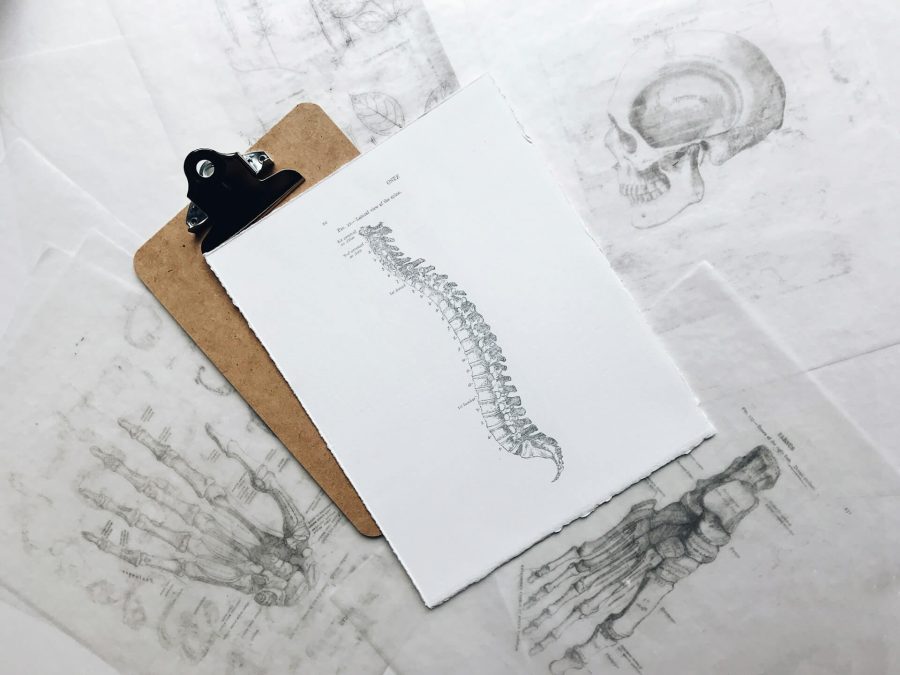
Image: An anti-bedsore mattress prevents bedsores.
Why does the mattress have the term “anti-kneeling” in its name?
Anti-bedsore mattresses, or anti-cubit mattresses, get their name from decubitus, which in medical terminology means bedsore. Bedsores are a serious health problem that is difficult to treat and therefore better prevented. Anti-ecubitus mattresses will help prevent bedsores, but they will also help in their treatment. These mattresses act on the body similar to a massage, which stimulates blood circulation not only in the skin but also in the deep tissues.
Bedsores in a nutshell
Decubitus ulcers are large wounds that occur mainly in people who are bedridden for long periods of time. This may not only be the elderly, but also athletes or younger people after an accident with a long recovery period.
Bedsores are a reaction to local pressure on the skin. They usually appear in places where there is a small layer of fatty or muscular tissue. The pressure that builds up between the skin and the support (bed or mattress) compresses the tissues. The tissues stop circulating and oxygenating, leading to their death or necrosis, which is followed by infection.
The tissues on the bony prominences are most exposed to dangerous pressure. We are talking about the hip joints, sacral processes, sacrum or coccyx. However, they can also occur on:
heels,
the back of the head,
shoulders,
on the side of the knees,
on the ankles,
around the shoulder blades.
Pressure sores are divided according to their severity into a pre-stage, where there is still a good chance that the painful pressure sore can be prevented, and then into 4 stages according to severity. The fourth stage is the worst.
It is better to prevent decubitus ulcers, even a mattress against pressure sores can help
The simplest protection against pressure sores is to avoid or relieve pressure on the most vulnerable areas of the body. How to do it?
Regular positioning is essential, i.e. alternating the patient’s lying position,
use of anti-disability mattresses together with other aids (heel supports, elbow rests, positioning wedges, rollers, etc.),
careful hygiene and creaming of the skin if red spots have already appeared,
a diet rich in quality protein and sufficient drinking,
consultation with a doctor.
2 basic types of mattresses against bedsores
There are two types of anti-substance mattresses on the market, which differ in appearance and function.
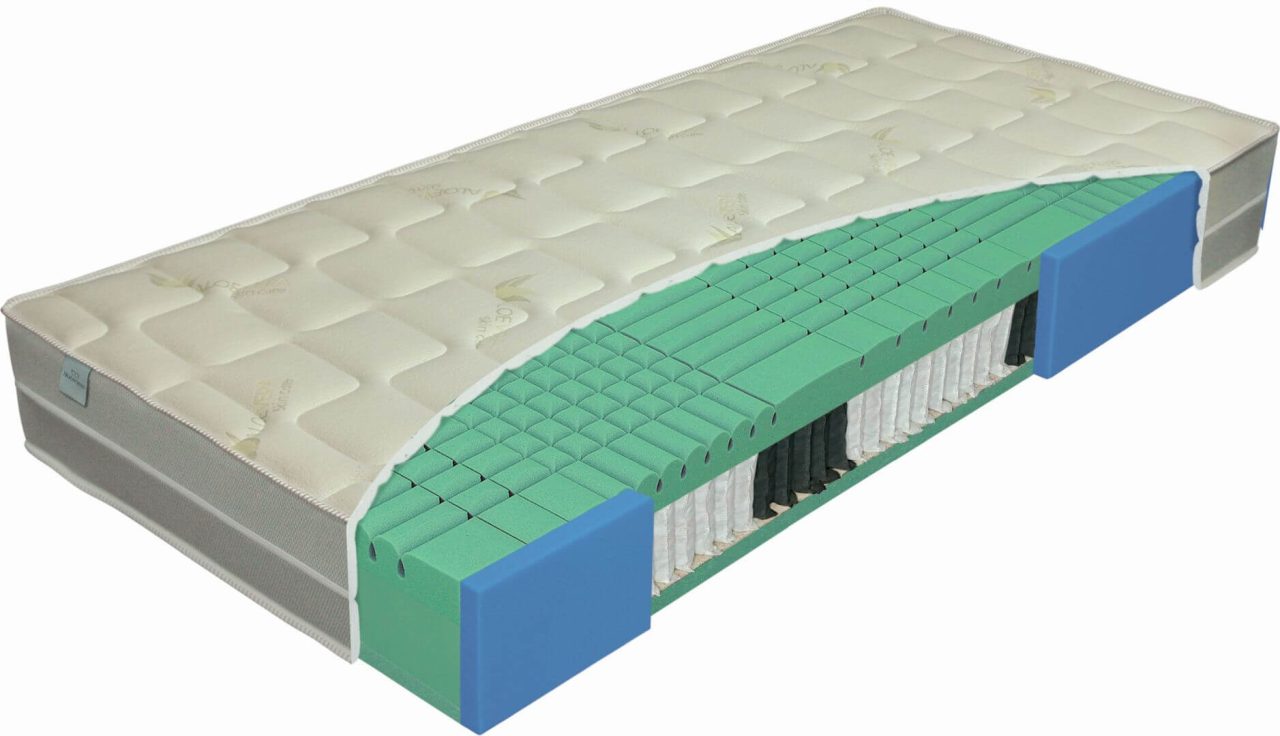
Image: Anti-fatigue mattress with special coating.
1. Active anti-disability mattress
They can simply be described as movable air mattresses. They consist of several air chambers that alternately inflate and deflate. An electric compressor is responsible for the air movement. By alternating the pressure on different parts of the body, the risk of decubitus is reduced. Depending on the design, you may come across:
bubble and cylindrical models without foam backing – they are placed on top of the existing mattress,
mattress with foam pad – it is placed directly on the bed grid. The lower part is made up of a supporting structure, the upper part is equipped with an inflatable system.
Some active mattresses also have additional features, including:
setting the cycle time between inflation and deflation,
a separate circuit for the pillow,
quick deflation and inflation,
pressure indicator,
static mode.
2. Passive anti-disability mattresses
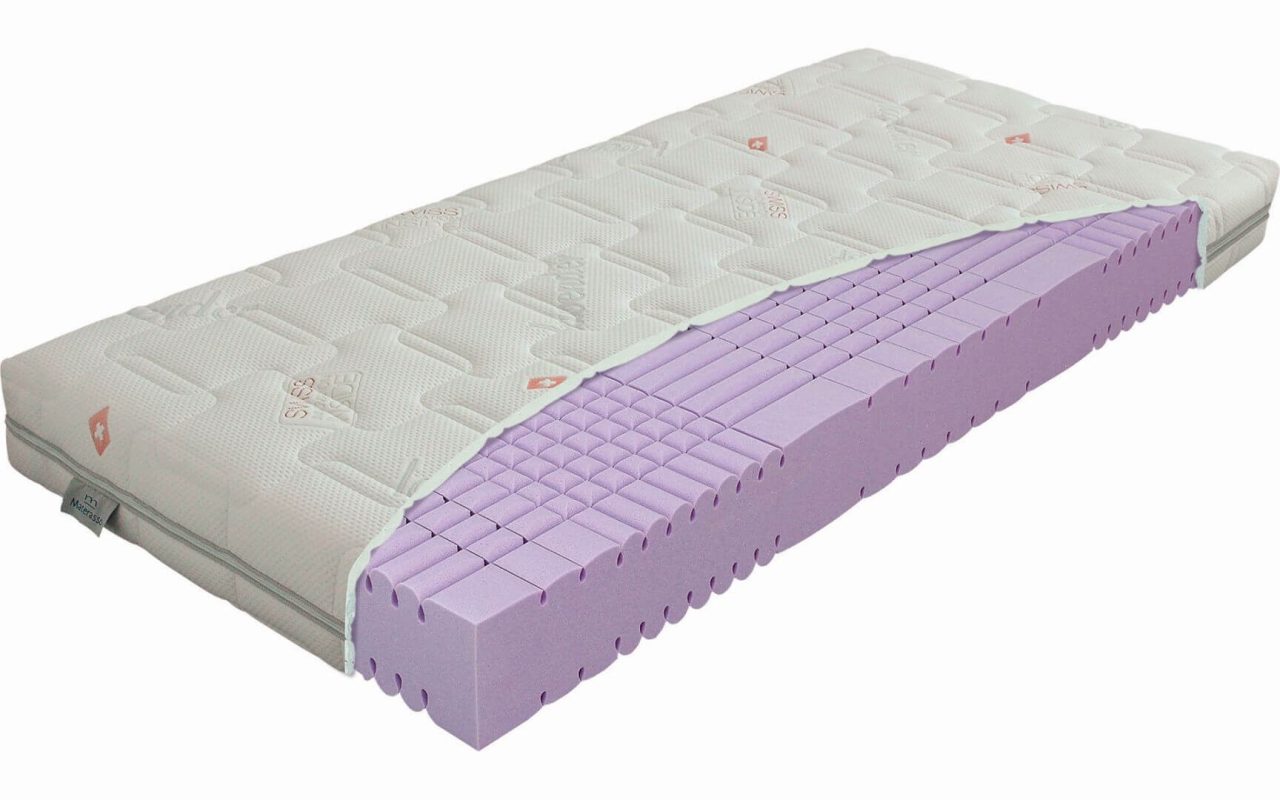
At first glance, passive mattresses resemble conventional mattresses and can be used as such. They can be used by both long-term bedridden people and all those who value quality sleep. They are usually made of high-quality foams and have a special treatment. The construction of such a bedsore mattress is divided into anatomical zones and its top layer is perforated both transversely and longitudinally. These indentations ensure even weight distribution, but also optimal air circulation, moisture removal and proper thermoregulation. Some passive anti-substance mattresses are double-sided, with each side having a different firmness.
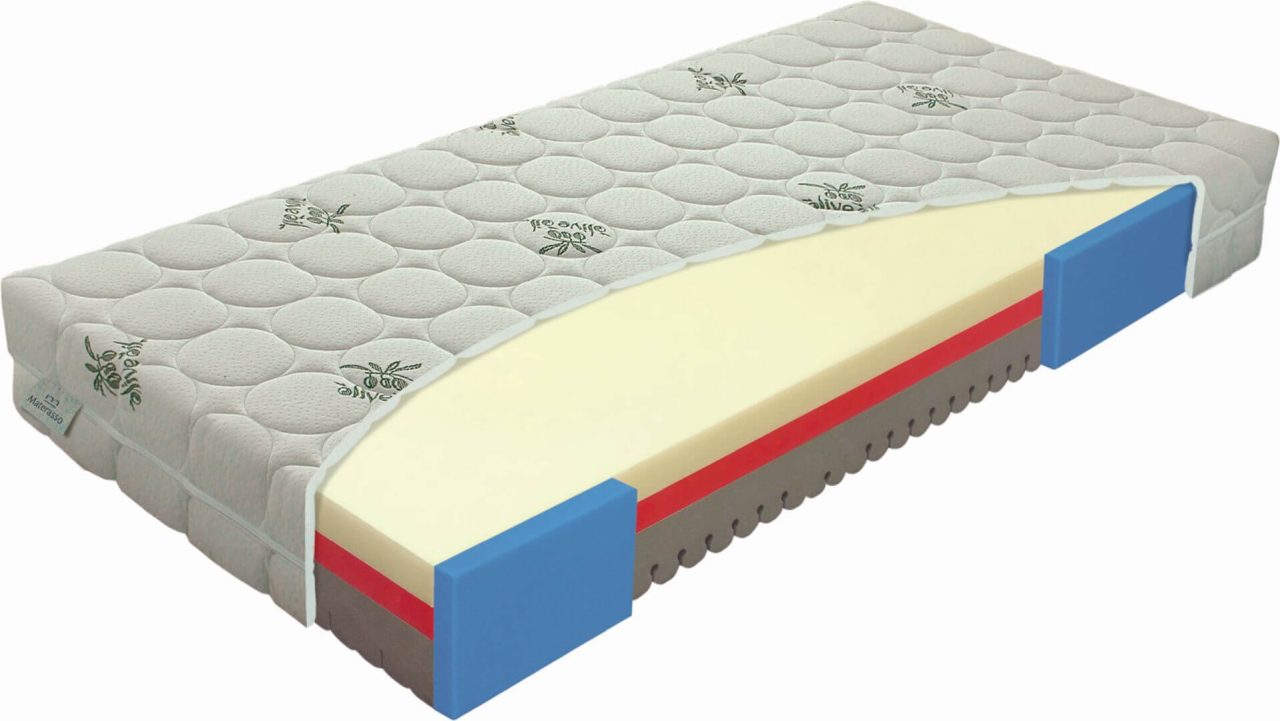
Image: Reversible passive mattress against bedsores.
Anti-bedsore mattresses are usually fitted with a removable and washable cover. A zipper around the perimeter can be fitted with a flap to protect the mattress against liquid contamination. Some covers may be antibacterial, vapour permeable or have a waterproof finish.
The mattress must get along with the grid
Anti-fatigue mattresses can usually be placed on either an adjustable or a conventional mattress. The manufacturer should inform you directly about the appropriate type of grid. Since long-lying patients need to be positioned, it is advisable to opt for a reclining grating.
The grates can be manually or electrically adjustable. You can opt for designs that allow you to position only the head or legs, but also for those that allow greater variability in positioning.
The anti-disability mattress is not only used by long-term patients
The bedsore mattress is not just for the bedridden elderly. It is also recommended for:
post-trauma convalescents,
lying patients with orthopaedic problems,
children with health problems that limit their mobility.
What benefits does this type of mattress offer?
It acts as a prevention against the development of bedsores,
can help in the treatment of decubitus ulcers,
thanks to the massage effect , it helps blood circulation in the affected parts of the body.
Anti-displacement mattresses from the Materasso range
The Aloe Senior mattress is made up of aloe vera foam with a pocket spring in the core. The upper part of the mattress has a special anti-knockout profile, which ensures perfect weight distribution and excellent air circulation. The mattress has 7 anatomical firmness zones and a specially reinforced side for easier getting out of bed. The height of the mattress is 25 cm and the load capacity is 140 kg. The cover is washable at 60 °C. The mattress is suitable for a fixed grid (board, slats).
Comfort Senior
Comfort Senior is a mattress suitable for long-term patients. A special anti-couch profile protects against bedsores. The mattress is suitable for both manually and electrically adjustable grates. The double-sided mattress is made up of viscoelastic foam on one side and NIGHTFLY foam on the other side. The centre of the core is reinforced with antibacterial foam. The mattress has 7 anatomical zones and a height of 22 cm. The cover is of course removable and washable at 60 °C.
Swiss magic
The Swiss magic mattress is made of Avent O2 cold foam, which is enriched with natural ingredients from lavender and medicinal alpine herbs. Of course, the anti-kneading cross-section promotes gentle support of the spine and takes care of the perfect dissipation of excess heat. The foam boasts a long service life, material resistance to moisture and temperature as well as functional stability. It has 7 zones of stiffness, a load capacity of 130 kg and a height of 22 cm. For maximum hygiene, the mattress cover is removable and washable at 60 °C.
Image: Anti-disability mattress with herbal extracts.
Anti-bedsore mattresses should be essential equipment for people with reduced mobility, but they will also find a place in the beds of those who want to sleep soundly.
Abychom poskytli co nejlepší služby, používáme k ukládání a/nebo přístupu k informacím o zařízení, technologie jako jsou soubory cookies. Souhlas s těmito technologiemi nám umožní zpracovávat údaje, jako je chování při procházení nebo jedinečná ID na tomto webu. Nesouhlas nebo odvolání souhlasu může nepříznivě ovlivnit určité vlastnosti a funkce.
Funkční
Always active
Technické uložení nebo přístup je nezbytně nutný pro legitimní účel umožnění použití konkrétní služby, kterou si odběratel nebo uživatel výslovně vyžádal, nebo pouze za účelem provedení přenosu sdělení prostřednictvím sítě elektronických komunikací.
Předvolby
Technické uložení nebo přístup je nezbytný pro legitimní účel ukládání preferencí, které nejsou požadovány odběratelem nebo uživatelem.
Statistiky
Technické uložení nebo přístup, který se používá výhradně pro statistické účely.Technické uložení nebo přístup, který se používá výhradně pro anonymní statistické účely. Bez předvolání, dobrovolného plnění ze strany vašeho Poskytovatele internetových služeb nebo dalších záznamů od třetí strany nelze informace, uložené nebo získané pouze pro tento účel, obvykle použít k vaší identifikaci.
Marketing
Technické uložení nebo přístup je nutný k vytvoření uživatelských profilů za účelem zasílání reklamy nebo sledování uživatele na webových stránkách nebo několika webových stránkách pro podobné marketingové účely.