Do you know what to look for when choosing a mattress for baby and older children?
6 minutes of reading
26
Aug
Choosing a mattress for children is usually underestimated. However, this is a crucial step that affects the healthy development of a child’s spine. Children grow quickly and therefore need a quality mattress that adapts to their rapid development. With the right model, you can prevent scoliosis of the spine and other orthopaedic problems that can cause great mischief in adulthood.
Mattresses for children: adapt the choice to their age
Age plays an important role in choosing the right mattress for your child. For example, babies and newborns have different requirements than teenage children. However, harder mattresses with a single firmness are always preferable. Zone mattresses are only suitable for adults whose bodies have already developed. Remember also that no memory foam mattress belongs in any children’s bed. This is because memory foam creates a “form” of body imprint and the body “sinks” into the foam, which is contrary to the requirements for rapid growth. This could lead to various growth deformities as the child’s body develops.
How to proceed when choosing a mattress for babies
Did you know that young children sleep up to 4,000 hours a year, more than 40% of their lives? During sleep, children grow, but they also regenerate. They regain strength and energy for the next day. That’s why we need to give them everything they need for a good night’s sleep.
Basic requirements for a crib mattress
The cot mattress should meet the following requirements:
Hardness – a rather hard mattress belongs in the crib, which not only promotes proper development of the baby’s spine, but also reduces the risk of sudden infant death syndrome, or SIDS. A soft mattress could puncture the body and cause breathing problems.
Thickness – the children’s mattress must not sag under any circumstances. The mattress must not “sag” when the child is placed in the cot. Therefore, it should be at least 7 cm thick, but preferably 10 cm.
Breathability – a children’s mattress must be sufficiently breathable and have the ability to wick away moisture. Otherwise, there is a risk of mould forming, which is harmful to the child’s health.
Temperature regulation – the mattress in the cot should not cause the baby to overheat unnecessarily. Thanks to the temperature regulation, the baby will fall asleep and sleep comfortably.
Safety is paramount
From a safety point of view, it is important that the mattress completely fills the surface of the cot. There must never be a space between the mattress and the springs where the baby could wedge his or her hand or foot. As babies grow incredibly fast in the first stage of their lives, avoid a memory foam mattress, which is completely unsuitable for baby’s development. A firm mattress is recommended for newborns.
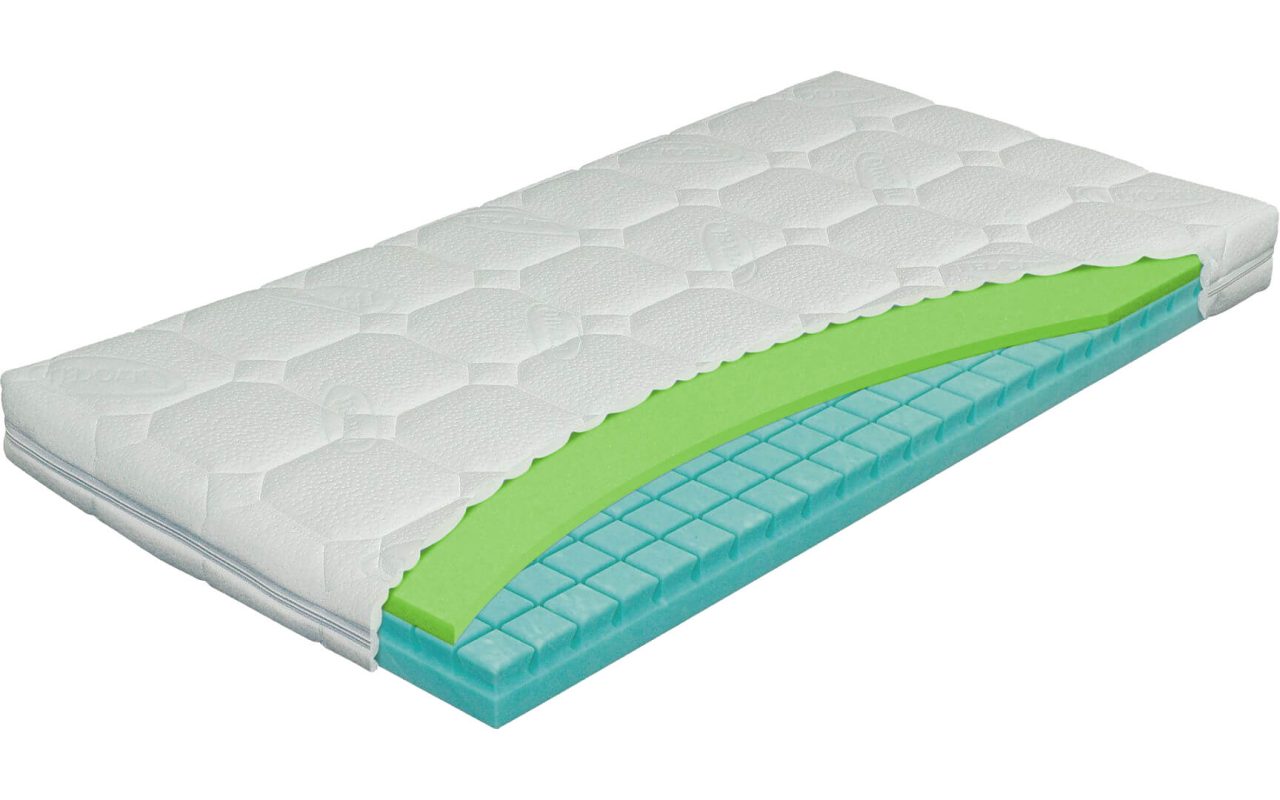
Image: Natural bio foam mattress.
Choosing a mattress for babies by material
As with mattresses for adults, you can choose from a variety of materials that promote breathability as well as the healthy development of your baby’s spine.
Cold or HR foam – provides optimal spinal support and does not create any obstacles to proper growth during sleep. Mattresses made of this material are long-lasting, flexible and airy at the same time.
PUR foam – PUR foam mattresses are firm and light. Thanks to their good airiness, air circulates sufficiently through them. The hard core ensures optimal support for the baby’s back muscles.
Coconut fibre – mattresses with a coconut board are popular for their excellent orthopaedic properties, sufficient firmness and above all excellent breathability.
Biogreen – the Biogreen natural foam mattress is based on castor oil and also contains aloe vera. This increases the hygiene of the mattress. Of course, it is sufficiently breathable, long-lasting, highly elastic and dimensionally stable.
Choosing a mattress for older children who have outgrown their cribs
At about 3 to 4 years of age, the child will already have a big bedwhich will fit a classic mattress for single beds of 90 × 200 cm, or 180 × 200 cm for a double bed. Even for these children, it is not worth underestimating the choice of mattress. They are still growing and need a quality product that will enable them to develop a correct and healthy support system.
For children aged 3 years and older, mattresses made of:
latex,
coir,
horsehair and natural materials in general, which ensure the mattress is breathable.
Of course, you can also supplement your child’s bed with a foam mattress of medium firmness. For babies and smaller children, it is not a bad idea to provide the mattress with a mattress protector, which has an impermeable layer so that liquid does not soak into the mattress in case of wetting. The mattress protector is easy to put on the mattress thanks to the 4 elastic bands, but also easy to take off. It is machine washable at higher temperatures, so you can reliably remove all bacteria and allergens. For hygiene reasons, it is advisable to replace the children’s mattress with a new one after 5 years. We advise on the best way to clean the mattress.
Zone mattresses are not suitable for smaller children. They grow quickly and often turn over in their sleep, so a zone mattress would be unnecessary for them. Even a memory foam mattress is not suitable for children under 12. Children over the age of 12 can have a mattress with a maximum of 2cm of memory foam. A mattress for school children should be firmer or medium-firm and the height of the mattress should be around 15 cm.
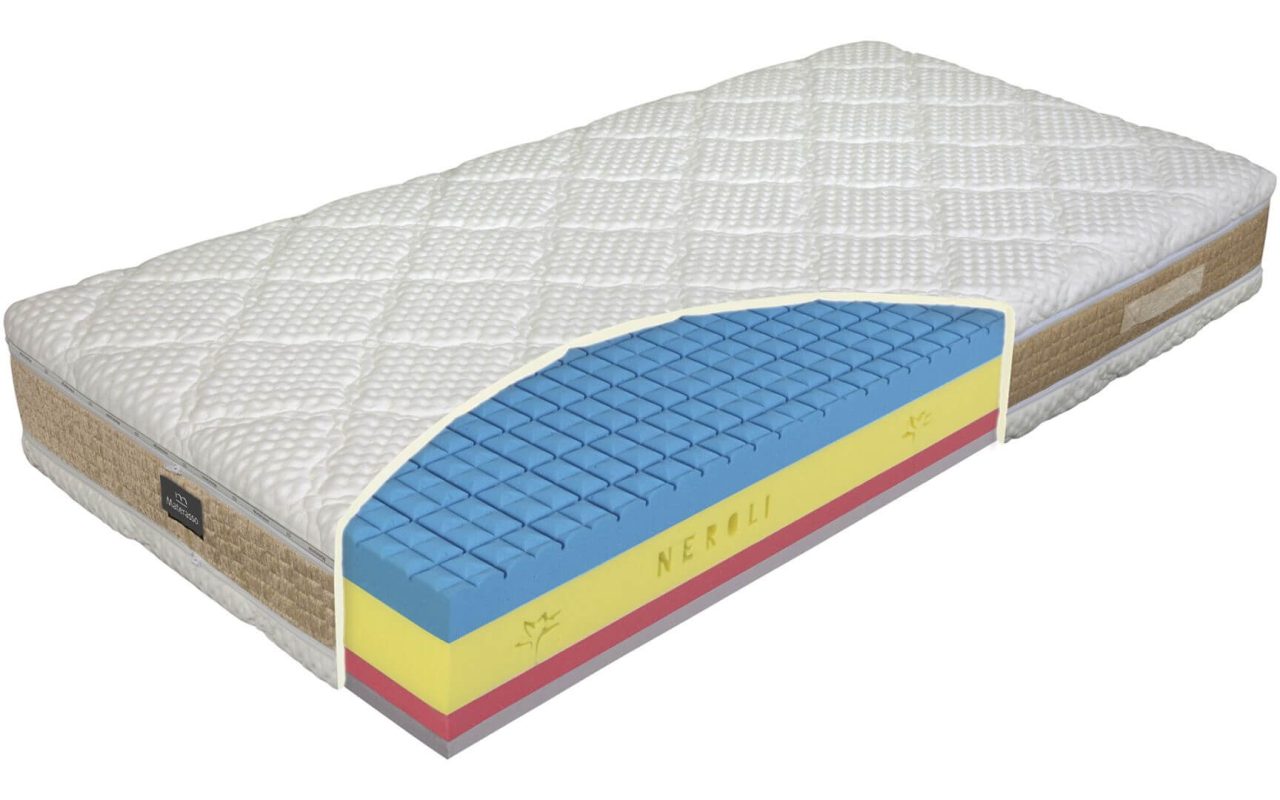
Picture: student mattress with 7 zones.
Mattresses for teenagers
The right mattress for youngsters should be breathable and elastic. Of course, it must provide sufficient support for the developing body. At this age, parents most often get them bunk beds or bunk beds. Materials such as foam, latex and springs are therefore ideal. Foam mattresses are among the most popular as they are:
airy,
flexible,
resistant,
easy to maintain,
have excellent orthopaedic properties.
Mattresses for students
In adolescence, the choice of mattress is similar to that of an adult. You need to take into account whether you have an athlete or a computer expert at home. Mattresses for older students (18 and over) may already have zoning or dual firmness. For teenagers under 18, harder mattresses are recommended.
The choice of a suitable mattress should take into account the weight of the sleeper. It is important that the spine does not bend when sleeping on the side or on the back, especially in the lumbar region. The overall height of the bed, including the mattress, should be approximately 50 cm.
With the right mattress, you’re not only enjoying quality sleep, but you’re also doing something for the health of your family.
Abychom poskytli co nejlepší služby, používáme k ukládání a/nebo přístupu k informacím o zařízení, technologie jako jsou soubory cookies. Souhlas s těmito technologiemi nám umožní zpracovávat údaje, jako je chování při procházení nebo jedinečná ID na tomto webu. Nesouhlas nebo odvolání souhlasu může nepříznivě ovlivnit určité vlastnosti a funkce.
Funkční
Always active
Technické uložení nebo přístup je nezbytně nutný pro legitimní účel umožnění použití konkrétní služby, kterou si odběratel nebo uživatel výslovně vyžádal, nebo pouze za účelem provedení přenosu sdělení prostřednictvím sítě elektronických komunikací.
Předvolby
Technické uložení nebo přístup je nezbytný pro legitimní účel ukládání preferencí, které nejsou požadovány odběratelem nebo uživatelem.
Statistiky
Technické uložení nebo přístup, který se používá výhradně pro statistické účely.Technické uložení nebo přístup, který se používá výhradně pro anonymní statistické účely. Bez předvolání, dobrovolného plnění ze strany vašeho Poskytovatele internetových služeb nebo dalších záznamů od třetí strany nelze informace, uložené nebo získané pouze pro tento účel, obvykle použít k vaší identifikaci.
Marketing
Technické uložení nebo přístup je nutný k vytvoření uživatelských profilů za účelem zasílání reklamy nebo sledování uživatele na webových stránkách nebo několika webových stránkách pro podobné marketingové účely.